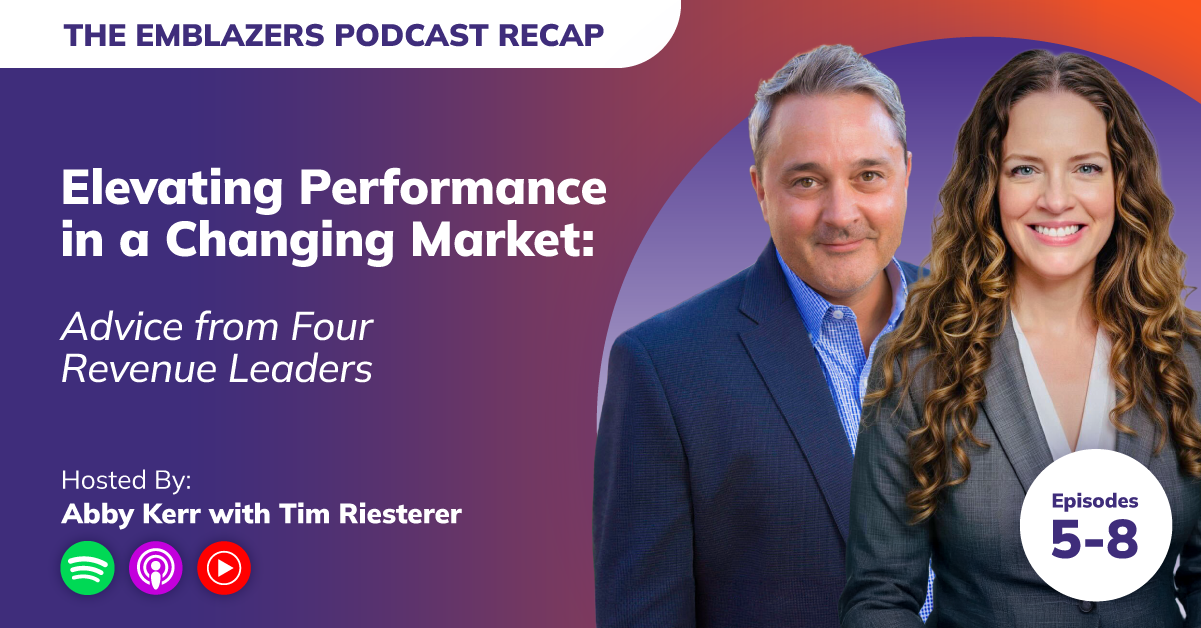
Season two of The Emblazers Show continues to surface the ideas and research shaping the future of revenue. In Episodes five through eight, four leaders shared practical insight on strengthening talent, refining customer health strategies, modernizing win-loss analysis, and driving differentiated performance in a crowded, AI-shaped market.
Together, these conversations give you an edge as you lead teams through changing buyer expectations, shifting talent demands, and tighter growth pressures.
Here are the highlights from each episode.
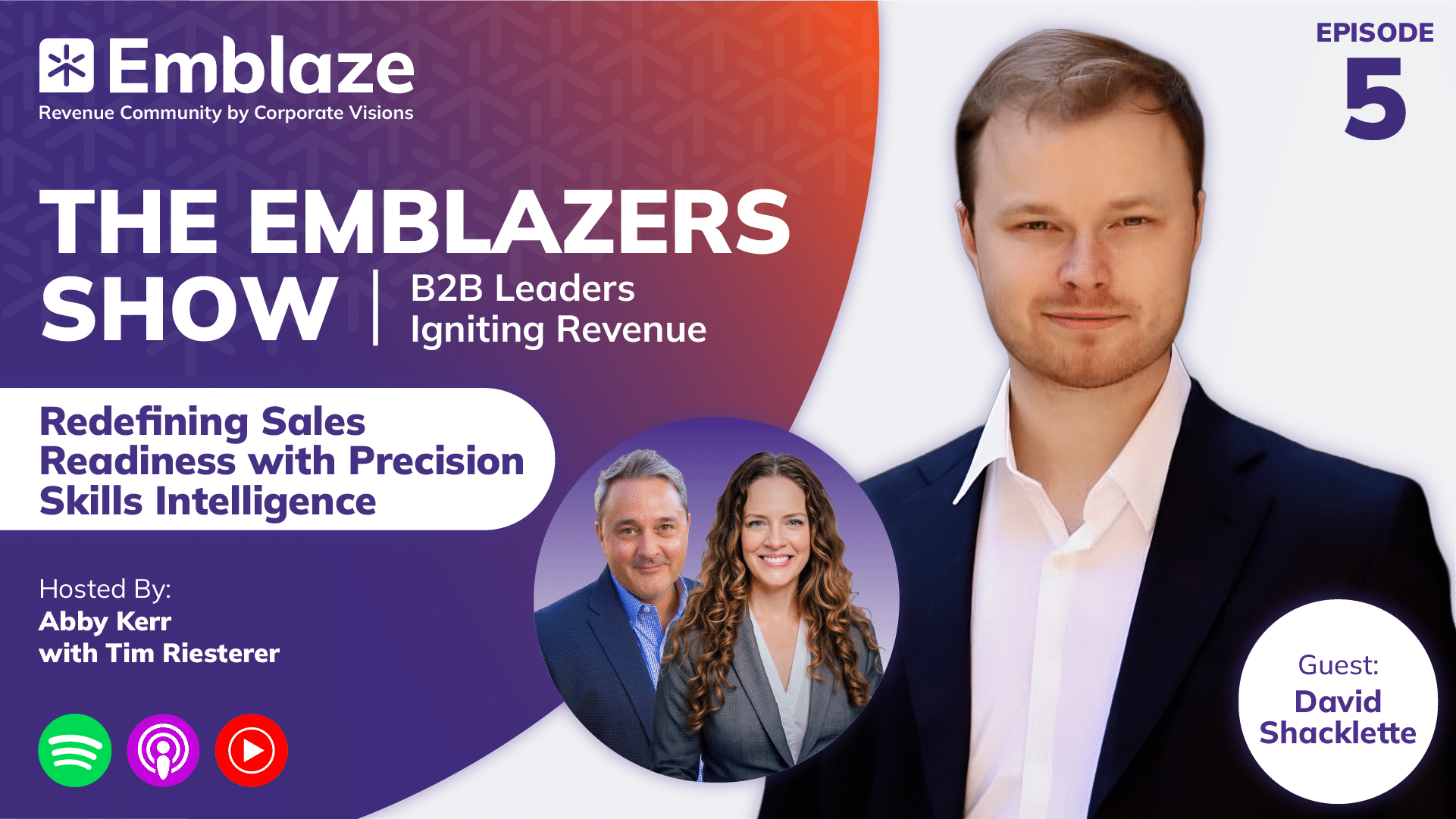
David Shacklette – Redefining Sales Readiness with Precision Skills Intelligence
David Shacklette, neuroscientist and founder of Skillcraft, explained why sales organizations need more accurate ways to understand the skills that truly drive performance. He shared that most companies rely on lagging indicators—pipeline, activity, close rates—without enough visibility into the human skills that shape those outcomes.
He introduced the concept of precision skills intelligence: a scientific approach to diagnosing the specific skills behind results. Instead of self-assessments or manager ratings, he emphasized performance-based measurement and the need for inputs that are “scientifically accurate and helpful,” so that talent decisions and coaching are grounded in real evidence.
Shacklette also contrasted “declared” skill with “revealed” skill—what people say they can do versus how they actually perform under pressure. That distinction matters when you build onboarding, coaching, or promotion plans around the wrong assumptions. As he put it, once you can name the real gap, you can finally intervene in a way that’s targeted and meaningful.
His point is simple: If you can’t define the skill gap, you can’t fix it. With more precise insight, onboarding becomes individualized, coaching becomes sharper, and talent decisions become less subjective and more defensible.
Listen to the full episode on Spotify, Apple Podcasts, or YouTube.
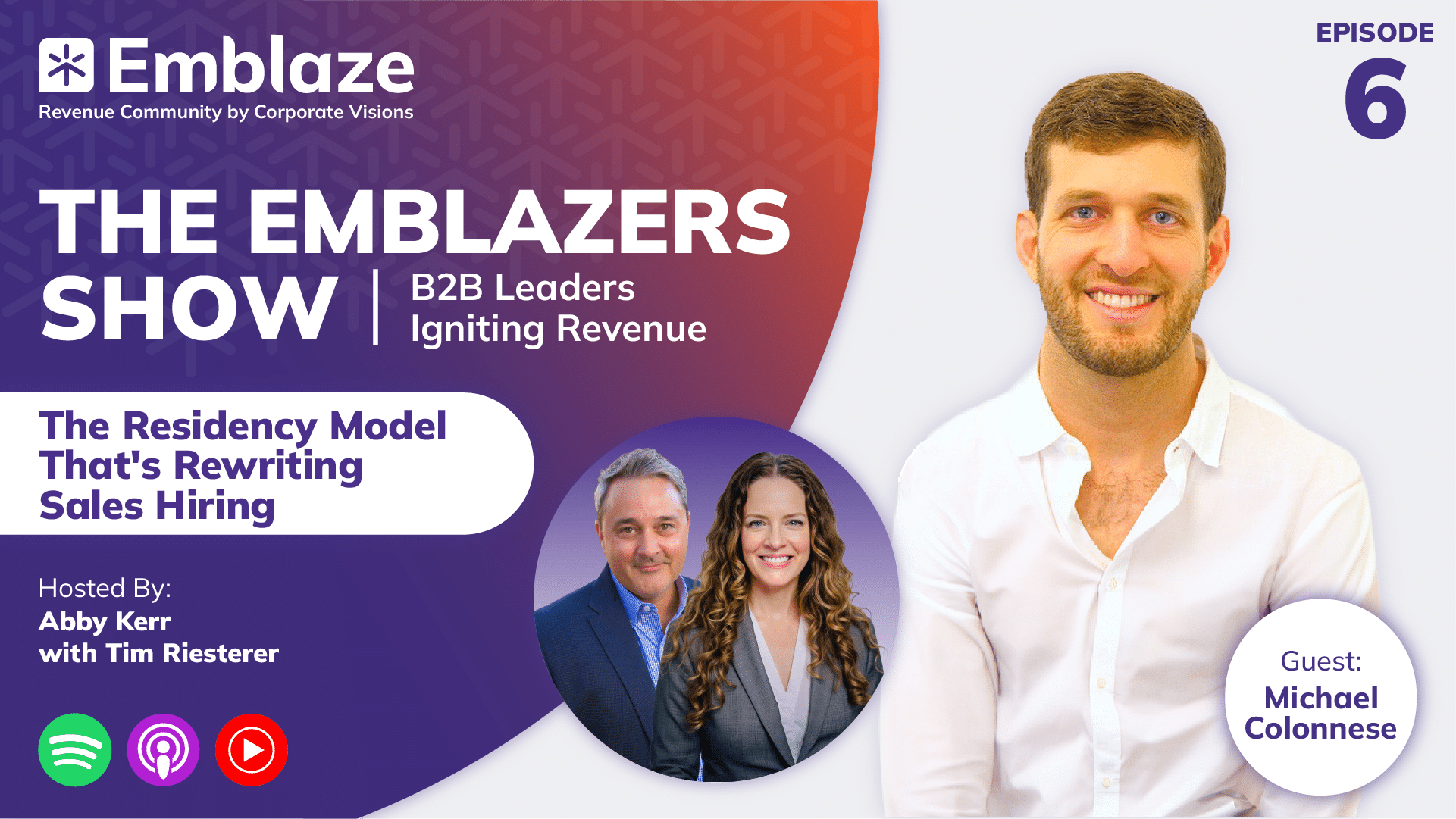
Michael Colonnese – The Residency Model That’s Rewriting Sales Hiring
Michael Colonnese, CEO of SV Academy, focused on a different kind of performance challenge: how you find, develop, and retain tomorrow’s revenue talent in a market that keeps changing. He described how traditional hiring practices in sales and customer success often screen for pedigree instead of potential, shutting out high-capability candidates from non-traditional backgrounds and leaving leaders with a narrow, expensive talent pool. SV Academy was built to solve that problem by creating structured pathways into go-to-market roles for people who might otherwise never get a first look.
Colonnese explained SV Academy’s residency model, where aspiring sellers and customer success professionals complete intensive, practical training and then enter a time-bound residency with employer partners. SV Academy handles recruiting and early development, while employers get access to candidates who have already been coached on the realities of modern B2B selling, collaboration, and customer management. That structure helps companies de-risk early-career hiring, improve ramp, and build more diverse, resilient teams, without shouldering the entire burden of sourcing and onboarding alone.
For revenue leaders, his message is clear: In a tight talent market, you may not be able to hire experience at scale, but you can build it. By rethinking how you spot potential and partnering on programs that blend training with real-world residency, you give your managers better talent to work with, while giving new entrants a fair shot at careers in sales and customer success.
Listen to the full episode on Spotify, Apple Podcasts, or YouTube.
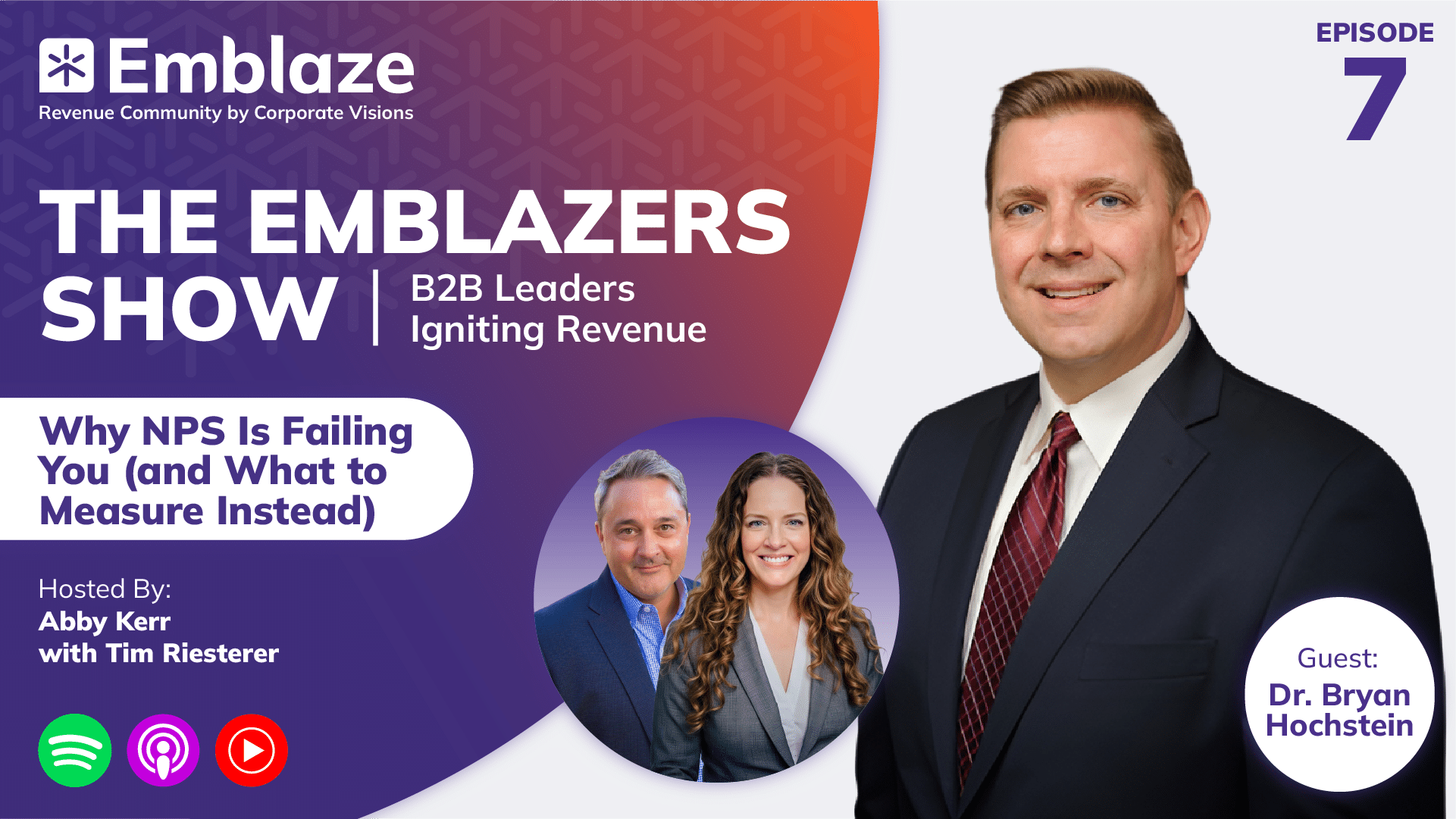
Dr. Bryan Hochstein – Why NPS is Failing You (and What to Measure Instead)
Dr. Bryan Hochstein, researcher and director at the University of Alabama, shared findings from his work on customer health scoring—an increasingly essential practice as companies look to existing customers as the core of their growth engine. He described a good customer health score as a predictive metric, often giving you a six- to nine-month window into whether a customer is likely to renew.
Hochstein outlined three building blocks of a reliable health score:
- Relationship quality – How well you’re engaged across executives, day-to-day contacts, and end users, not just one champion.
- Product usage – Who is actually using the solution, how often, and in which parts of the business. Usage patterns tell you whether your product is embedded or optional.
- Value realization – Whether the customer can see and measure business impact from your solution, not just satisfaction scores or activity metrics.
He shared how one SaaS company used its health score to segment accounts into “great health,” “good health,” and “at risk.” Less than one percent of customers in the top bands churned, while most churn came from the at-risk segment. That clarity helped the team prioritize interventions, focus expansion efforts, and even feed health data back into their ideal customer profile to target prospects who looked like their healthiest customers.
Hochstein framed well-designed health scoring as a holistic revenue engine: It strengthens retention, informs acquisition targeting, and guides cross-functional focus on where your time and resources matter most.
Listen to the full episode on Spotify, Apple Podcasts, or YouTube.
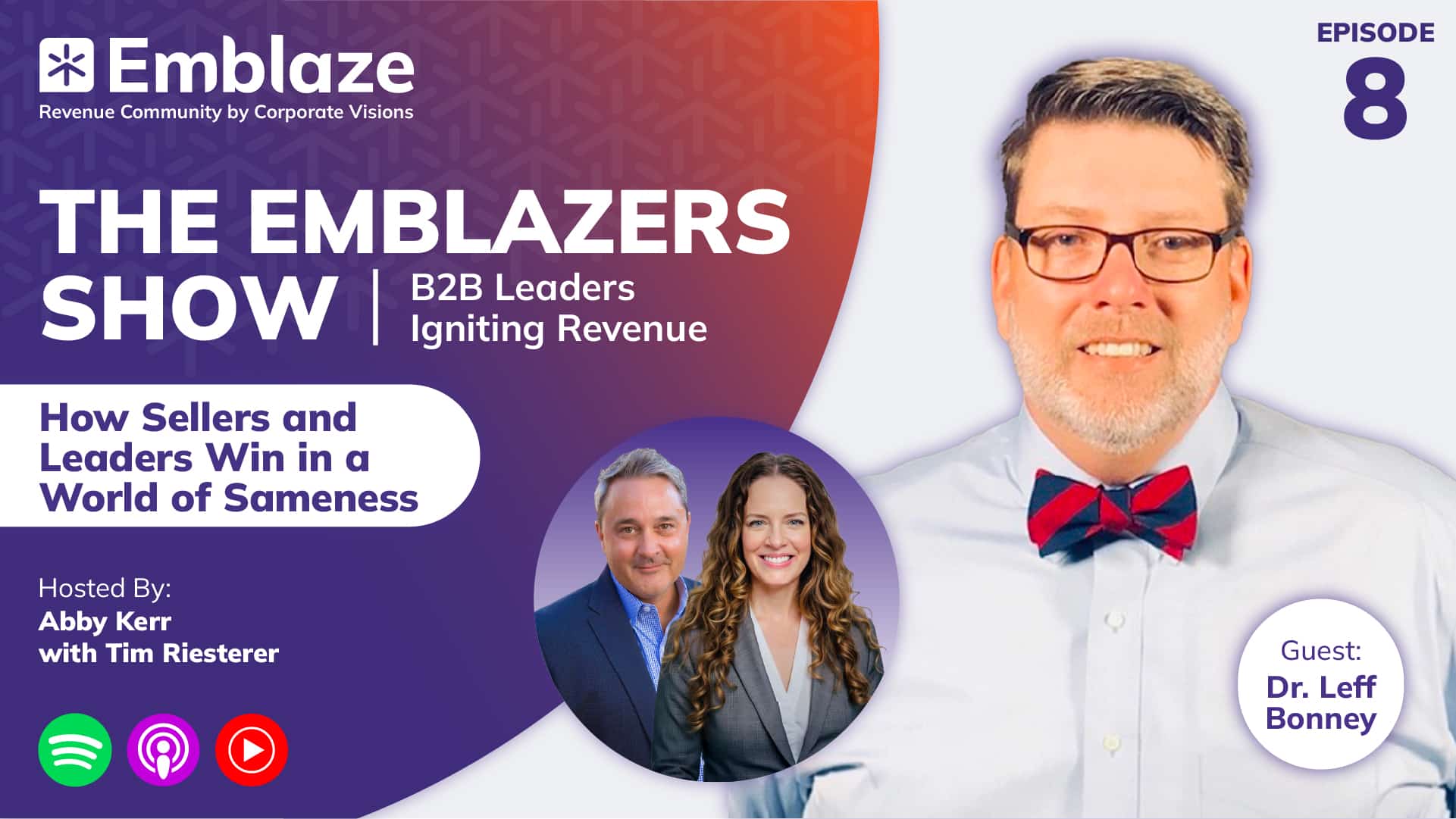
Dr. Leff Bonney – How Sellers and Leaders Win in a World of Sameness
Dr. Leff Bonney, behavioral scientist and Founder and Research Director at the Florida State University Sales Institute, shared research on differentiation in an era where AI accelerates sameness. As teams adopt the same tools, methodologies, and rubrics, he warned, they risk creating a stalemate, where every seller shows up with similar decks, discovery questions, and “best practice” talk tracks.
He argued that meaningful differentiation now comes from the seller’s creativity and the experience they create. In one example, Bonney described a tactic he calls “seeding”—helping buyers anticipate what other providers are likely to do in the evaluation, in a neutral and credible way. When competitors then behave exactly as predicted, the buyer sees your team as more insightful and experienced.
Another tactic is “surprising” the customer—breaking the pattern they expect from a standard sales call. That could be the structure of the conversation, the way you frame trade-offs, or the specificity of the insight you bring. Pattern-breaking moments increase attention, memorability, and perceived innovation, often leading buyers to infer that your solution is more innovative as well, even when the products are objectively similar.
Bonney also shared findings from his leadership research. Instead of asking managers to use one playbook across a mixed team, he and his partners tested a model where managers specialize by rep type: new hires, struggling reps, solid “middle,” or all-stars. When managers focused on the segment they were best at developing, performance, growth, and satisfaction all improved.
The throughline: in a world where AI trains everyone to the same standard, your edge comes from how your people sell and how you lead them—not just what you sell.
Listen to the full episode on Spotify, Apple Podcasts, or YouTube.
Precision Matters
Across these four conversations, one theme stands out: Performance improves when you get more precise. Whether you’re diagnosing seller skills, training up new talent, measuring customer health, or coaching teams to differentiate, clarity gives you leverage. These leaders offer a practical path to elevate performance in a market that’s moving fast and expects more from every seller.