MEASURE AND MANAGE PERFORMANCE

Build a Sales Performance Management System You Can Coach

Most teams can report outcomes. What they can’t report is performance in conversations—what sellers do, what buyers experience, and what managers can coach.
+20%
Increase in Win Rates
+25%
New Opportunities Created
+10%
Increase in Deal Size
-15%
Decrease in Time to Close

Make Sales Performance Visible and Actionable

If you want to manage sales performance more effectively, replace assumptions with evidence—so leaders know where to intervene, what to coach, and which behaviors drive results.
Move Beyond Activity
High activity doesn’t guarantee effectiveness. If you can’t see execution quality, you can’t coach it—so performance management becomes reporting instead of improvement.
Expose Skill Gaps
Performance variation is usually tied to specific skill gaps that separate top performers from the rest. Assessments make those gaps visible—so coaching gets targeted.
See the Buyer Experience
Buyer feedback shows how seller behaviors land with buyers—so you can confirm what sellers specifically need help with.
Manage Performance as a System
Sustainable improvement requires a repeatable system to diagnose, coach, reinforce, and measure how sellers’ behaviors change over time.
WHAT IT LOOKS LIKE

Your Evidence-Backed Path to Performance Visibility

Diagnose Performance Gaps

Diagnose skill gaps, segment sellers by need, and choose the right coaching and training programs—so you invest where it will have the biggest impact.

Validate with Buyer Feedback

Connect buyer feedback to seller behaviors so you can see what your team is doing well and where they need help.

Build the Skills That Sustain Performance

Target training to the measured gaps that are holding performance back—so execution improves where deals are breaking down.

Coach What Changes Results

Turn insights into measurable improvement by equipping managers to coach the specific behaviors that lift performance.
Enlyte logo
“The adoption rate is one of the things that’s been really surprising and delightful to us. Our sales reps now want  to go in and see how they’re doing and understand what their customers are saying.”
Kathy Townend, Customer Insights Lead, Enlyte
RESOURCES

Measure and Manage Performance with These Expert Resources

Research, tools, and insights to understand performance drivers, connect buyer feedback to seller behavior, and improve sales effectiveness over time.
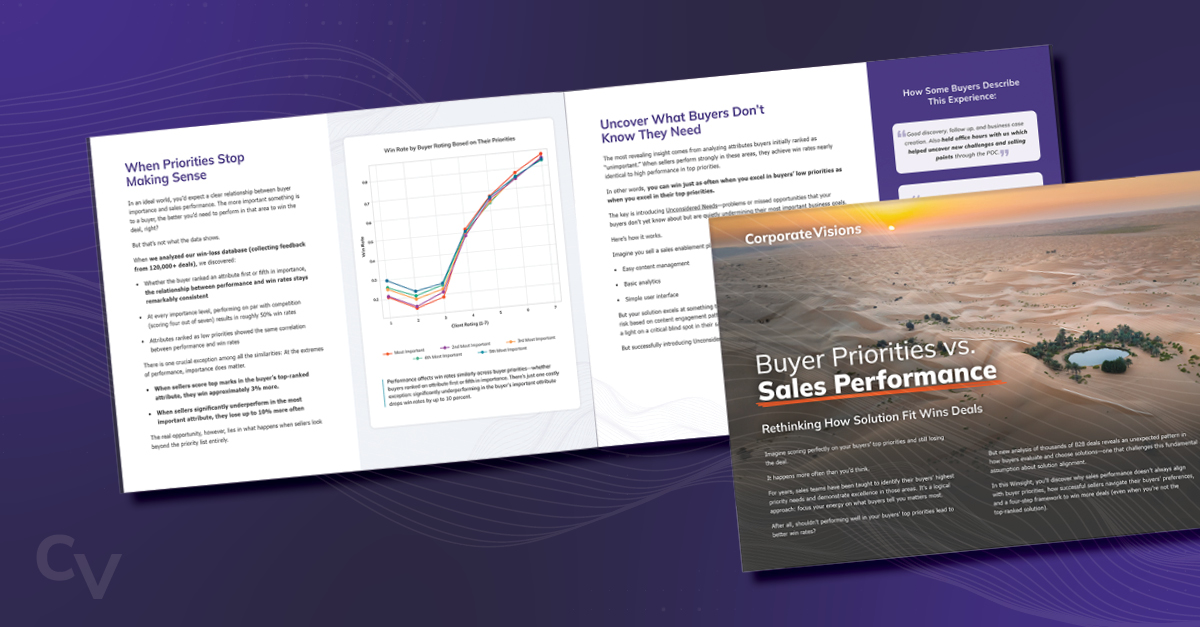
Buyer Priorities vs. Sales Performance
Get It Now
Winsight
FAQs

Frequently Asked Questions About Sales Performance Management

How does this differ from traditional “performance management” that just shows results after the fact?

Traditional performance management tells you what happened—quota, pipeline, bookings—after it’s too late to change it. This approach makes performance visible and coachable by connecting outcomes to what reps say and do in conversations with buyers. You get evidence of execution quality, clear gaps to address, and a repeatable way to coach improvements over time—not just report results.

Start with a balanced set of lagging and leading indicators. Lagging indicators show results (wins/losses, pipeline coverage, forecast accuracy, deal velocity). Leading indicators show what drives those results (execution quality in key conversations, skill proficiency, consistency in core selling behaviors, and buyer confidence signals). The goal is to identify the right few measures that tell you where to coach and what to reinforce.

It turns performance data into coaching priorities. Managers can quickly see where each rep is off-benchmark, what skills or behaviors are most likely driving the gap, and what “good” looks like in real selling situations. That makes 1:1s more focused, coaching more consistent across the team, and improvement easier to track—so managers spend less time diagnosing and more time developing their teams.

It’s designed to fit into existing rhythms, not create a new job. Most managers can review team-level signals, identify one or two priorities per rep, and prepare for coaching conversations in a short weekly block—then reinforce during 1:1s and pipeline reviews. The point is speed to clarity: less digging through reports, more time coaching the few behaviors that change outcomes.

Take Control of Sales Performance
Replace assumptions with evidence, so you know what to coach, what to reinforce, and where to intervene next.