Solutions and such do some things and some other things here Maecenas sed diam eget risus varius blandit sit amet non magna. Aenean lacinia bibendum nulla.
You’re measured on different outcomes—but your success depends on the same buyer decisions. This is where you find the programs and proof built for your goals.
Choose your role to see what that looks like in practice.
When teams rely on opinions, content gets noisy and inconsistent. Our resources are grounded in buyer evidence—so you can sharpen decisions, messaging, and execution.
Find insights, articles, webinars, and more evidence-backed resources to grow revenue.
If you spend your days talking with enablement and revenue leaders, you start to notice a pattern across industries and company sizes: your buyers are changing fast, but much of the sales training world looks exactly the same.
You’ve likely noticed it too.
The way people buy now is anything but simple. It’s complex, cross-functional, and cautious. Buying groups are larger, decisions take longer, and the pressure to prove business impact has never been higher.
Yet, a lot of sales training still focuses on teaching sellers what to do instead of helping them understand how buyers actually decide.
That’s a problem because seller effectiveness now depends on how sellers show up in high-stakes buyer conversations. These moments can’t be reduced to simple scripts or steps, especially since the sales process isn’t as linear as it once was. Sellers need to be fluent in how buyers think, feel, and decide.
That gap appears in nearly every RFP. Companies that come to us for sales training are not asking for another sales process or a calendar of courses. They’re asking for something bigger.
You want systems that help your teams sell the way buyers buy, connect enablement to revenue, and provide measurable impact.
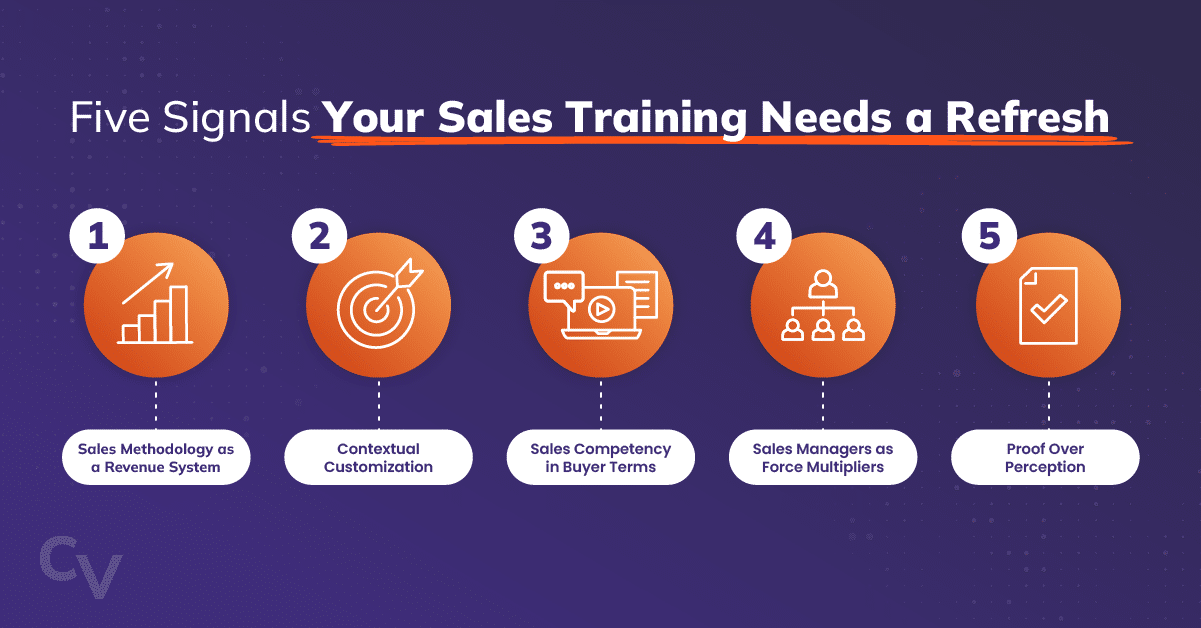
Here are five signals that are showing up across RFPs—what organizations are looking for, where things often go off track, and what strong enablement programs do differently.
1. Sales Methodology as a Revenue System
Companies are now consistently asking for a unified sales methodology that aligns sales motions and creates consistent buyer experiences. It’s the next logical step for organizations that want to bring structure and focus to every stage of the revenue engine.
But too many sales methodologies still look inward. They outline steps for sellers instead of helping buyers make confident decisions. When that happens, methodology turns into a compliance exercise instead of a growth driver.
Top-performing teams treat methodology as a true revenue system by mapping seller actions directly to buyer decision-making patterns. They integrate this framework into CRM and coaching tools, making it an essential part of daily workflows. This transformation positions enablement teams as architects of revenue-critical infrastructure, fundamental to driving sustainable growth.
When your sellers understand why their approach works with buyers (not just what to do next) you get consistency, credibility, and a buyer experience that feels seamless from first contact to final decision.
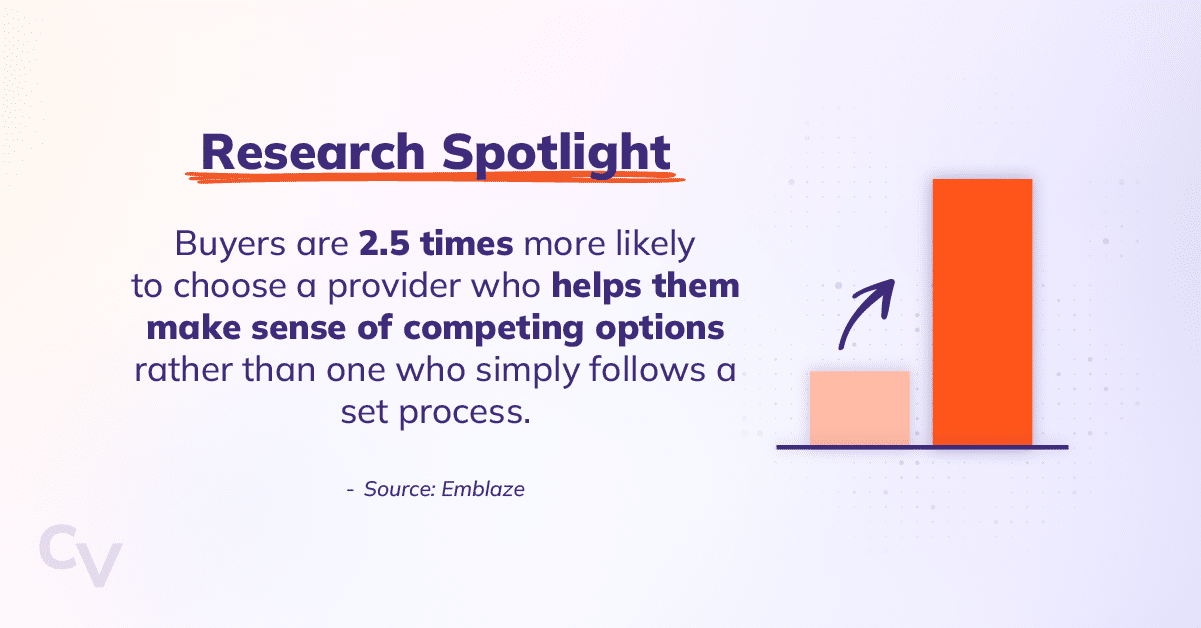
Buyers are 2.5 times more likely to choose a provider who helps them make sense of competing options.
2. Contextual Customization
One-size-fits-all training is over.
Global methodologies may provide a foundation, but adoption now hinges on tailoring training to an individual seller’s specific needs.
The problem is that customization often stops at the surface level. Different acronyms, a few localized examples, or your logo on the slides might look good, but they rarely change behavior.
Sellers can tell when something was built specifically for them or when it wasn’t.
The strongest programs go deeper by customizing training by role, buyer type, and culture. They are also modular and flexible, so the core framework stays consistent while stories, exercises, and proof points flex for different roles and buyer situations. They adapt to the language, challenges, and decision dynamics of your market.
When sellers hear their reality reflected in the content, and buyers hear conversations that sound authentic, you see better engagement and stronger results.
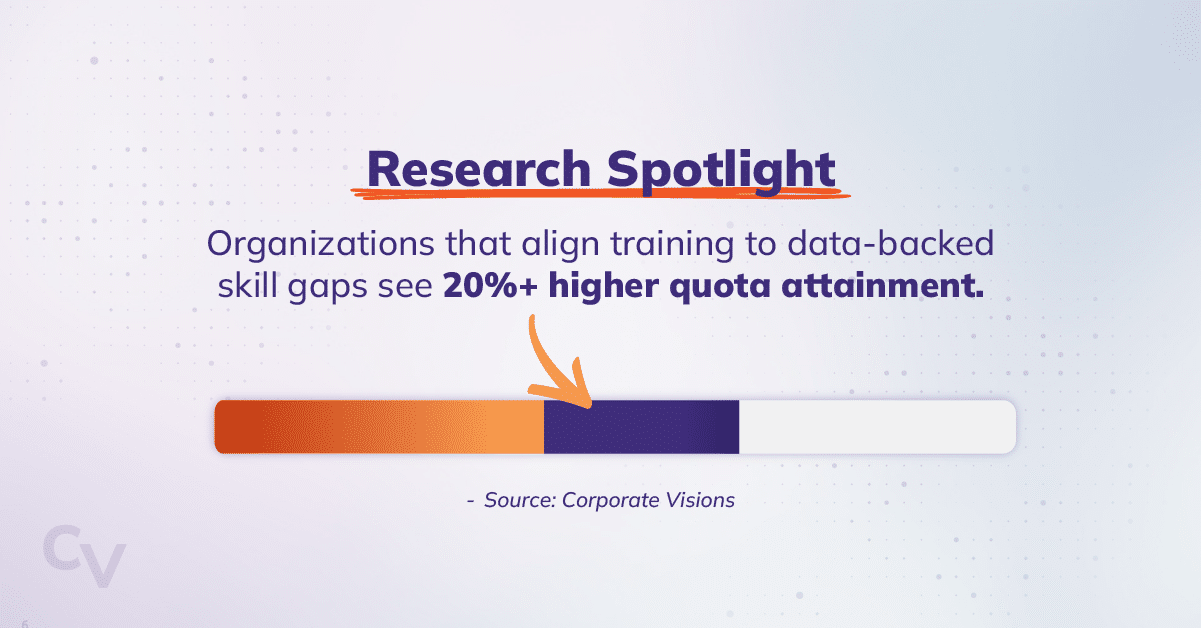
Organizations that align training to data-backed skill gaps see 20%+ higher quota attainment.
3. Sales Competency in Buyer Terms
You want clearer visibility into who can perform. Diagnostics, assessments, and data are at the top of nearly every RFP.
But measurement too often focuses on attendance, completion, or knowledge checks. Those metrics prove participation, not performance.
Real visibility comes from assessing competency in buyer terms. That means evaluating how well sellers deliver in the moments that matter most in real conversations.
Simulations, feedback loops, and coaching data reveal where capability shows up and where it falls short. When you measure what buyers experience, not just what sellers remember, you gain insight that truly drives performance.
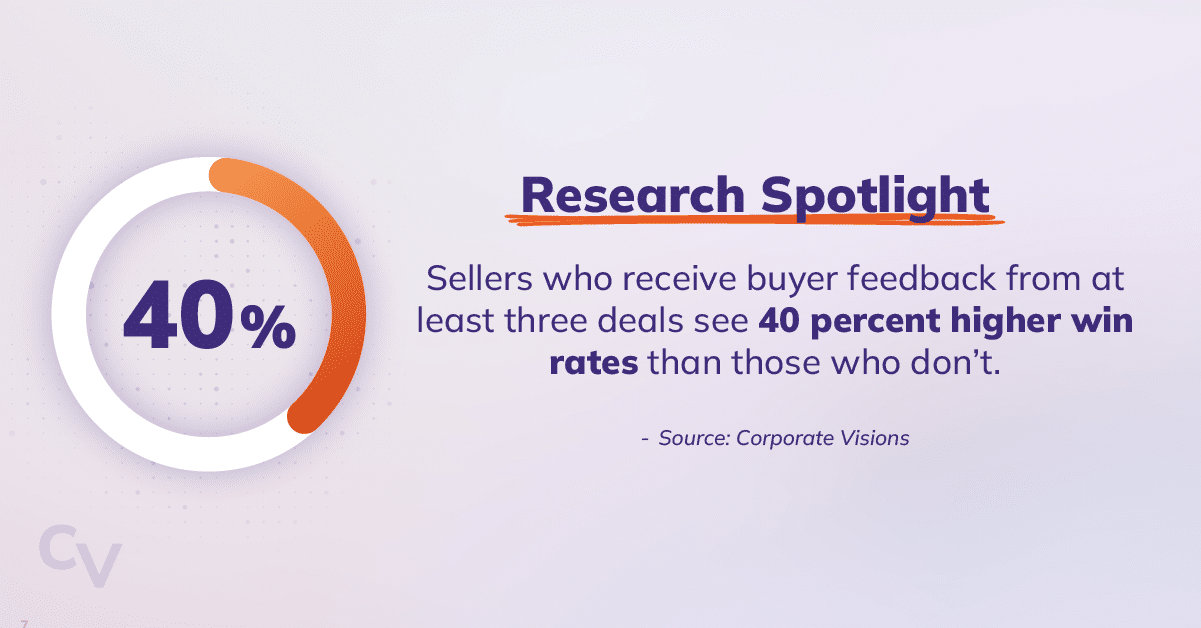
Sellers who receive buyer feedback from at least three deals see 40% higher win rates than those who don’t.
4. Sales Managers as Force Multipliers
Organizations recognize that frontline managers often spend too much time selling and not enough time coaching.
But they aren’t given the resources they need to become effective managers. They attend a kickoff, receive a set of coaching slides, and are left to figure out the rest. The result is inconsistent coaching and skills that fade as quickly as they’re taught.
The best training and enablement programs place managers at the center of the system. They give leaders frameworks, cadences, and accountability tools that make coaching consistent and data driven. They train sales managers to know where to coach and how to do it.
When that happens, sellers get sharper, conversations improve, and buyers feel the difference in every interaction.
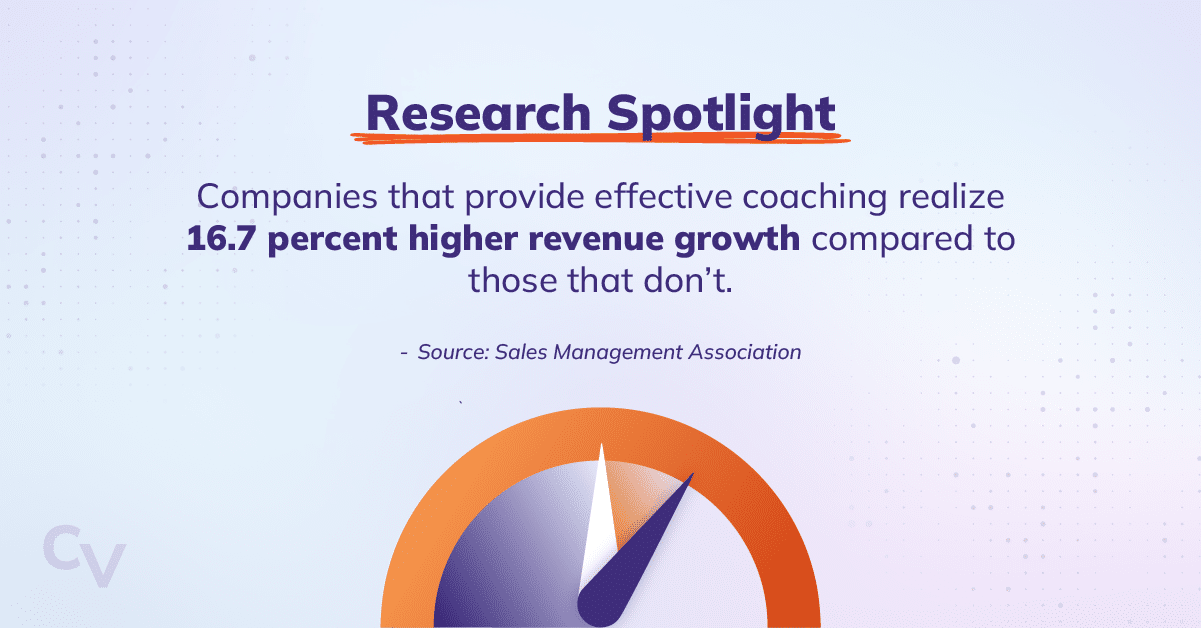
Companies that provide effective coaching realize 16.7% higher revenue growth compared to those that don’t.
5. Proof Over Perception
Every enablement leader is under pressure to prove impact. Participation numbers and satisfaction surveys for scheduled trainings no longer tell the story executives need to hear.
Executives expect enablement to deliver measurable business impact through faster ramp times, higher win rates, shorter cycles, and stronger forecasts. Those who can’t demonstrate clear ROI find their budgets under increasing scrutiny.
The most forward-thinking teams connect enablement metrics directly to performance data and buyer feedback. They use behavioral data from their CRM to show how capability translates into results.
When you can connect improved skills to measurable business outcomes, enablement stops being a cost of doing business and starts showing measurable business growth.
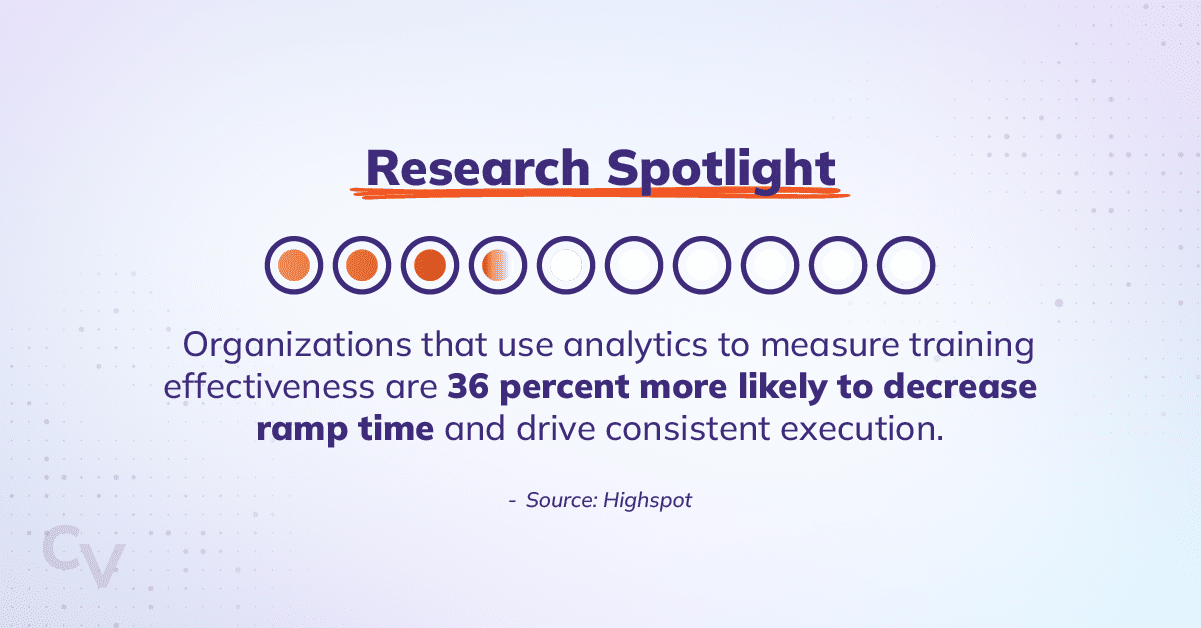
Organizations that use analytics to measure training effectiveness are 36% more likely to decrease ramp time and drive consistent execution.
Building Your Growth Engine
Buying behavior has changed faster than much of the training world has kept up. Your buyers expect clarity, contrast, and confidence in every interaction. They don’t want more information; they want someone who helps them make sense of it.
As you rethink enablement, you’re doing more than just helping your sellers improve. You’re building growth infrastructure. You’re connecting learning to performance and performance to the buyer experience.
When you treat enablement as a system that drives both revenue and confidence, you change how your organization grows.
Eric Nitschke is a sales and marketing veteran with expertise in written and visual storytelling, and a track record of helping companies break down complex ideas and offerings into simple and compelling stories. As VP of Commercial Enablement, Eric develops launch strategies around Corporate Visions’ portfolio of services and ensures the messaging and sales enablement content is consistent and powerful.