Everyone’s feeling it. Markets are wobbling under the weight of tariffs, trade disputes, and a sense of global uncertainty that seems to shift daily.
For B2B sales leaders, that instability shows up fast and painfully. Slower pipelines, longer sales cycles, and more elusive customer decisions.
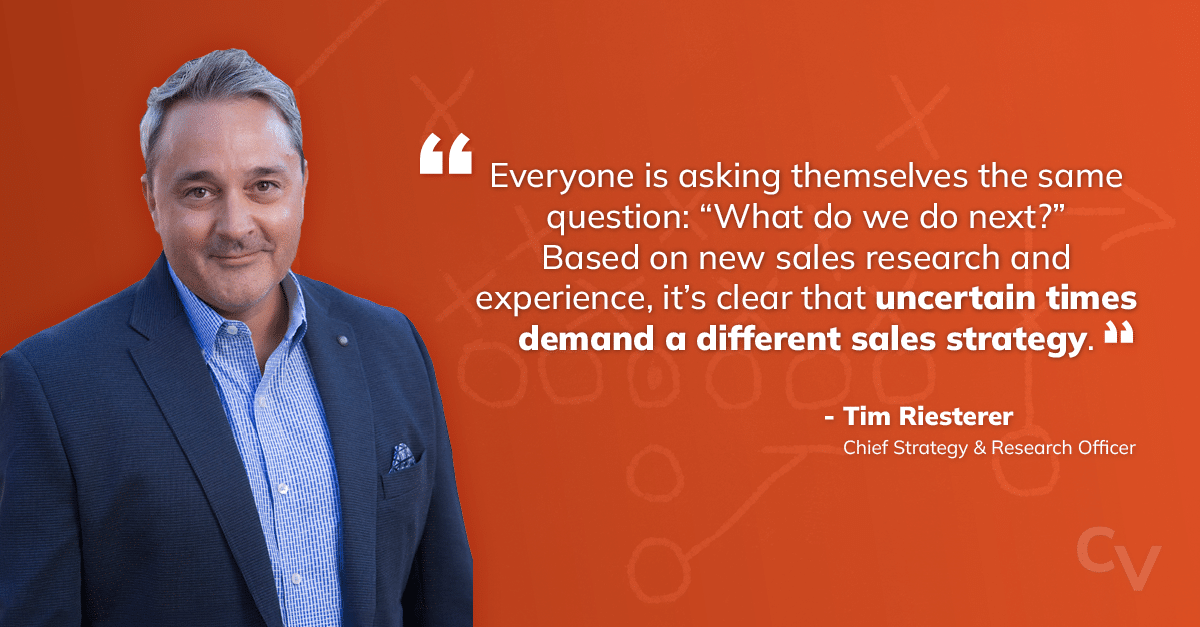
Everyone is asking themselves the same question: “What do we do next?”
Based on new sales research and experience, it’s clear that uncertain times demand a different sales strategy.
Over the past few years, I’ve had the opportunity to collaborate with researchers from the FSU Sales Institute to study B2B buyer behavior during moments of high market stress—originally sparked by the COVID disruptions, and more recently in broader economic turbulence.
What we found may or may not surprise you, but it should absolutely shape how you lead your team today.
1. Buyers Circle the Wagons Around Incumbents
When uncertainty hits, buyers don’t get more adventurous—they get more conservative. We found that B2B purchasing teams often default to incumbent vendors for rebuys or renewals.
Why? Because in uncertain times, risk minimization beats innovation.
In fact, many buyers lock into longer contracts than usual. They’re trying to create stability, not shake things up.
What this means for you:
If you’re the incumbent, lean in. Make it easy for buyers to renew and reassure them with messaging about stability, continuity, and low disruption.
If you’re trying to displace an incumbent, understand that you’re facing uphill inertia. Focus on new problem areas where there is no incumbent to unseat.
2. Prevention Beats Promotion: Message for Risk, Not Reward
Here’s one of the most important psychological shifts we observed.
In uncertain times, B2B buyers adopt a “prevention” mindset. They’re focused on avoiding loss, not chasing gain.
- In stable times, buyers think: “What could we gain by trying something new?”
- In unstable times, buyers think: “What could go wrong if we screw this up?”
In other words, it’s an “avoid sinking the boat” risk. Not doing anything to damage the business, keeping it very stable is a high priority in times of high uncertainty.
In contrast, when things are stable, buying teams tend to take a promotion focus or promotion posture, which is much more focused on “missing the boat” risk.
This is risk associated with not taking advantage of new opportunities or failing to seek out new ways to expand the business.
What this means for you:
Rethink your messaging. Replace hype about upside with urgency about risk. Emphasize the cost of inaction, the risks of staying the same, and the downside of not adapting.
Interestingly, when buyers face brand new challenges caused by uncertainty, they’re actually more open to engaging new vendors. Buyers want outside perspective, fresh thinking, and insight they don’t already have.
You need to build both the story and the skills around these acute, new issues. Then show how you uniquely solve them.
3. Focus on Process Insights Over Product Features
Buyers under pressure don’t want to hear about your shiny new features—they want operational insight.
In our research, buyers in volatile markets responded more positively to messaging about process stability, resilience, and efficiency under stress, rather than product innovation.
What this means for you:
Sell the outcomes of operational certainty. Don’t just pitch what your solution does. Tell stories of how customers have weathered volatility using them.
4. Buying Teams Grow. Decisions Slow. Consensus Breaks.
One of the biggest shifts we’ve seen? Bigger buying committees.
Under stress, companies invite more people into the buying process to spread risk and build internal alignment.
Sounds reasonable, until you realize that:
- Timelines double.
- Misalignment increases.
- Deals die more from internal dysfunction than competitive failure.
What this means for you:
Adapt by mapping the buying group early and deeply. Help your champions build internal alignment. Equip them with consensus-building tools and content. And be patient but proactive.
Here’s What You Can Do
Economic turbulence isn’t going away anytime soon.
But for sales leaders willing to embrace the reality of how buying changes under stress, this is an opportunity to lead smarter, sell sharper, and bring confidence to buyers who are desperate for it.
Here’s the short list of what you can do:
- Coach your team on buyer psychology. Don’t assume the same pitch will work (it won’t).
- Double down on incumbency. If you’re in, stay sticky. If you’re out, go after new problems.
- Flip your messaging. Frame for risk, not reward.
- Elevate insight. Focus on how you help your buyers operate better, not just differently.
- Champion consensus. Be the partner who helps your buyer sell the deal internally.
Help your buyers find some certainty in the uncertainty. In doing so, you’ll help your teams grow even when growth feels hard to come by.