Solutions and such do some things and some other things here Maecenas sed diam eget risus varius blandit sit amet non magna. Aenean lacinia bibendum nulla.
You’re measured on different outcomes—but your success depends on the same buyer decisions. This is where you find the programs and proof built for your goals.
Choose your role to see what that looks like in practice.
When teams rely on opinions, content gets noisy and inconsistent. Our resources are grounded in buyer evidence—so you can sharpen decisions, messaging, and execution.
Find insights, articles, webinars, and more evidence-backed resources to grow revenue.
Win-Loss Done Right: Proven Techniques from the Front Lines of B2B
Anton Rius /
March 16, 2026 /
Win-Loss Analysis
Every B2B company has high hopes when they implement win-loss analysis. But many struggle to extract real value from their programs.
They either collect surface-level feedback that sits unused in spreadsheets, or they rely solely on their sales team’s perspective—missing crucial buyer insights that could transform their win rates.
But there’s a stark difference between companies that just go through the motions and those that turn win-loss analysis into a true competitive advantage.
Drawing from decades of experience and our analysis of over 100,000 B2B purchase decisions across 500 companies and 50 industries, we identified several clear patterns within high-performing win-loss programs.
Use these evidence-based techniques to make sure your win-loss analysis efforts drive measurable business results.
When to Conduct Win-Loss Analysis
The single biggest factor that separates successful win-loss programs from the rest? Consistency.
Organizations that collect ongoing feedback see significantly better results than those gathering feedback sporadically.
According to our data, companies that consistently collect feedback can achieve:
Double the revenue growth
91 percent higher customer support performance
60 percent greater profitability
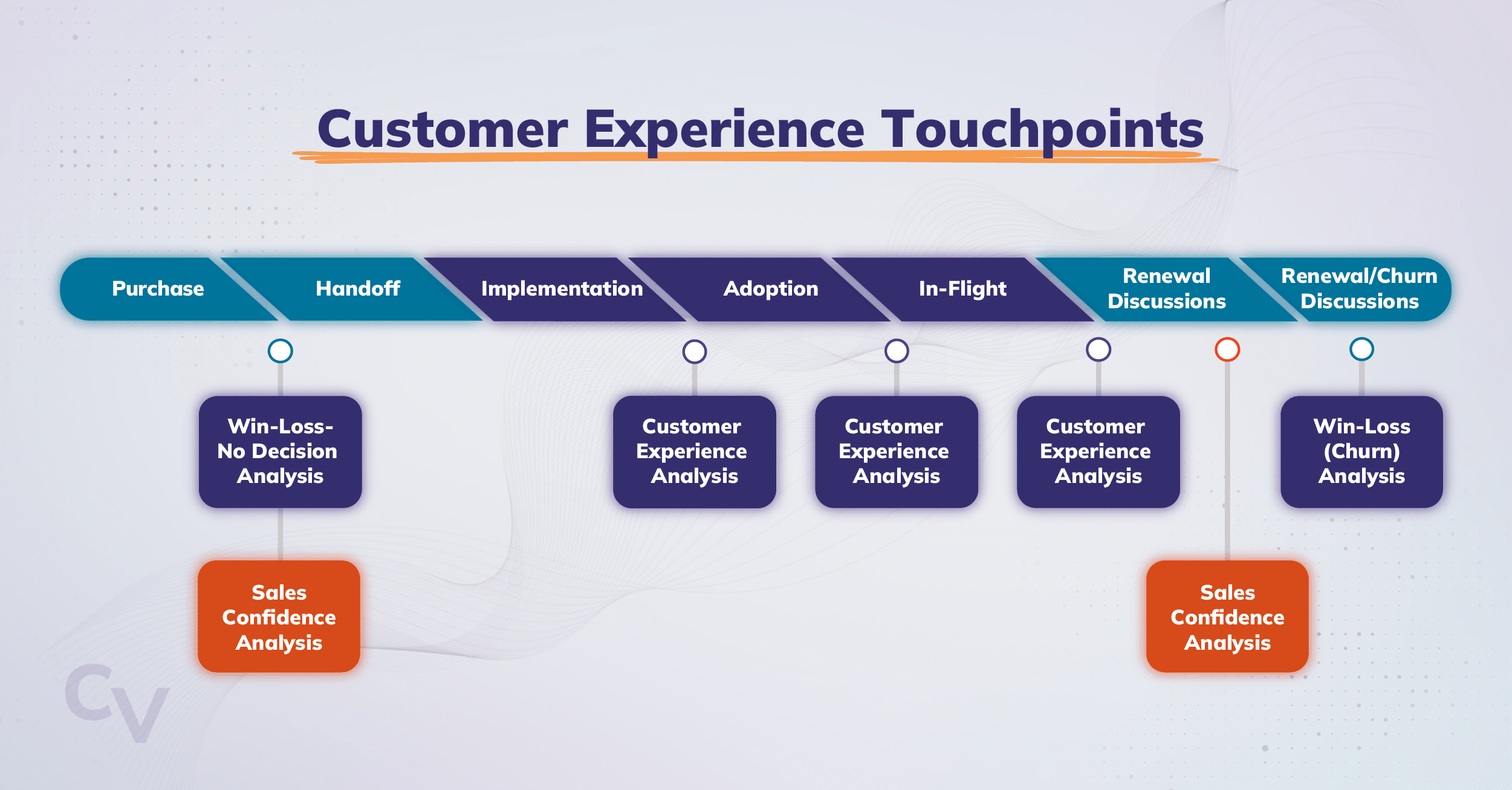
The key is establishing a systematic approach, so you can capture feedback at critical decision points:
Right after purchase decisions (both wins and losses)
During implementation
Before renewal talks
After renewal and expansion opportunities
Pro tip: Set up your CRM to automatically request feedback at these moments.
Capture win-loss insights at critical decision points across the customer experience.
Ask Questions That Get Useful Answers
Here’s something that might surprise you: When you lose a deal, what your sales team thinks happened and what your buyer says happened match only 30-50 percent of the time.
While your sellers might point to price or features, buyers often tell a different story. That’s why you need to go straight to the source.
To capture the complete picture, your win-loss program should explore these four decision drivers that shape every purchase decision:
1. Sales Experience
How effectively did our team understand your business requirements?
How well did we demonstrate the value of our solution?
How responsive was our team to your questions and concerns?
2. Product Performance
Which features or capabilities were most important in your evaluation?
What technical requirements weren’t fully met?
How did our product compare to competitive solutions?
3. Company Perception
What factors influenced your confidence in our company?
What concerns did you have about working with us?
How did our references and customer stories impact your decision?
4. Price Position
How did our pricing align with your expected budget?
What was your perception of our solution’s value for the cost?
How competitive was our pricing model?
This buyer-centric approach provides more valuable insights than traditional seller-focused questions.
Pro tip: Buyers are more likely to give candid feedback to an independent third party.
Build a Process That Sticks
Consistency is the unsung hero of effective win-loss analysis. Random sampling might give you some insights, but you need a systematic approach to see the full picture.
Here’s how to create a win-loss program that delivers consistent value:
1. Get Buy-In From Leadership
Make win-loss data easy to access and understand
Show each department how the insights benefit them
Demonstrate ROI (even a 5 percent win rate boost can mean huge gains)
2. Collect Data Systematically
Look at all deals, not just the big ones
Get both sides of the story (buyers and sellers)
Identify patterns across multiple deals
3. Keep Teams Engaged
Share relevant updates with key players
Follow through on action items
Measure the impact on win rates
Pro tip: Start with a pilot program focused on your most strategic deals. Once you demonstrate value, expanding the program becomes much easier.
Use Technology Wisely
With the right technology, you can scale your win-loss program without losing the human element. Here’s how to strike that balance:
Automate What You Can
Let your CRM do the heavy lifting with automatic feedback requests
Cast a wide net with targeted surveys across your deals
Reserve your team’s time for deep-dive interviews on key accounts
Make Insights Easy to Find
Build simple, focused dashboards
Let users filter data their way (by product, region, deal size)
Embed findings in your existing workflow
Get the Right Info to the Right People
Set up real-time alerts for new feedback
Create custom views for different roles
Provide access to insights in tools they already use
Pro tip: A manual interview process—from finding contacts to conducting the interview and analyzing results—can take up to 10 hours per deal. Let automation handle these routine tasks so your team can focus on turning insights into action.
Put Your Insights to Work
Win-loss analysis only delivers value when insights drive real change. Here’s how leading companies turn feedback into results:
Set Clear Targets
Define clear goals before collecting data
Identify which behaviors need to change
Connect insights to revenue metrics
Build Your Action Plan
Assign clear owners for each initiative
Set realistic timelines for implementation
Track and share progress regularly
Get Your Teams Excited
Give each department insights they can actually use
Show every team member their path to better results
Build momentum with quick, visible wins that matter
Pro tip: Pick one or two high-impact changes to start. Small victories build support faster than trying to fix everything at once.
Go Forth and Analyze
Don’t mistake win-loss analysis for a retrospective tool—it’s actually your blueprint for future success.
A well-executed program will transform your go-to-market strategy, strengthen your competitive position, and help you truly understand what drives buyer decisions.
Start small, but be consistent. Focus on gathering feedback at key moments, asking the right questions, using technology smartly, and applying what you learn to your revenue growth strategy.
Progress beats perfection. Start where you are, use what you have, and keep refining your approach.
Take it from Martin Kurowski at Fiix by Rockwell, who saw firsthand how win-loss analysis improves results: “Just get the pilot up and running. You don’t need a whole lot…As soon as you get that survey out, you’ll see how valuable that information is.”
Win-loss analysis pays off well beyond marketing. See how six teams, from the C-suite to delivery, turn buyer feedback into stronger strategy, sharper coaching, and higher win rates.
Buyer feedback reveals why deals are really won or lost and how to improve the next one. Learn how sales leaders can use buyer insights to improve win rates, and turn lost deals into performance gains.
Anton Rius, Sr. Director of Content Marketing, leads all content marketing strategy and production at Corporate Visions. Anton's extensive experience supporting B2B revenue growth with insightful content has been featured in publications like SalesPOP! and Relevance. Anton writes regularly at Long Tail Thinking.