Solutions and such do some things and some other things here Maecenas sed diam eget risus varius blandit sit amet non magna. Aenean lacinia bibendum nulla.
You’re measured on different outcomes—but your success depends on the same buyer decisions. This is where you find the programs and proof built for your goals.
Choose your role to see what that looks like in practice.
When teams rely on opinions, content gets noisy and inconsistent. Our resources are grounded in buyer evidence—so you can sharpen decisions, messaging, and execution.
Find insights, articles, webinars, and more evidence-backed resources to grow revenue.
Most of your revenue probably doesn’t come from winning new logos. Instead, it comes from the customers you already have.
In fact, a 2024 Forrester survey found that 73 percent of B2B revenue comes from existing customers through renewals, cross-sells, and upsells.
And yet, most organizations don’t treat customer growth like the revenue engine it is.
Companies invest heavily in helping sellers win new deals—training reps to articulate value, differentiate against competitors, and close. But once the contract is signed, many account managers get short shrift. They’re expected to protect and grow accounts without the same level of training or enablement to lead the ongoing commercial conversations that keep customers invested.
To make matters worse, these teams often try to predict renewal and expansion outcomes using surface-level signals like Net Promoter Score (NPS) or customer satisfaction scores. But those metrics offer false comfort.
A high score doesn’t mean your customers are achieving the outcomes that matter to them. And it doesn’t mean they’ll stay loyal when renewal decisions are on the line. Our data analysis found only a 54 percent correlation between NPS and retention likelihood.
If you want to reduce churn and grow existing accounts, you need a clearer view of what’s really driving customer decisions.
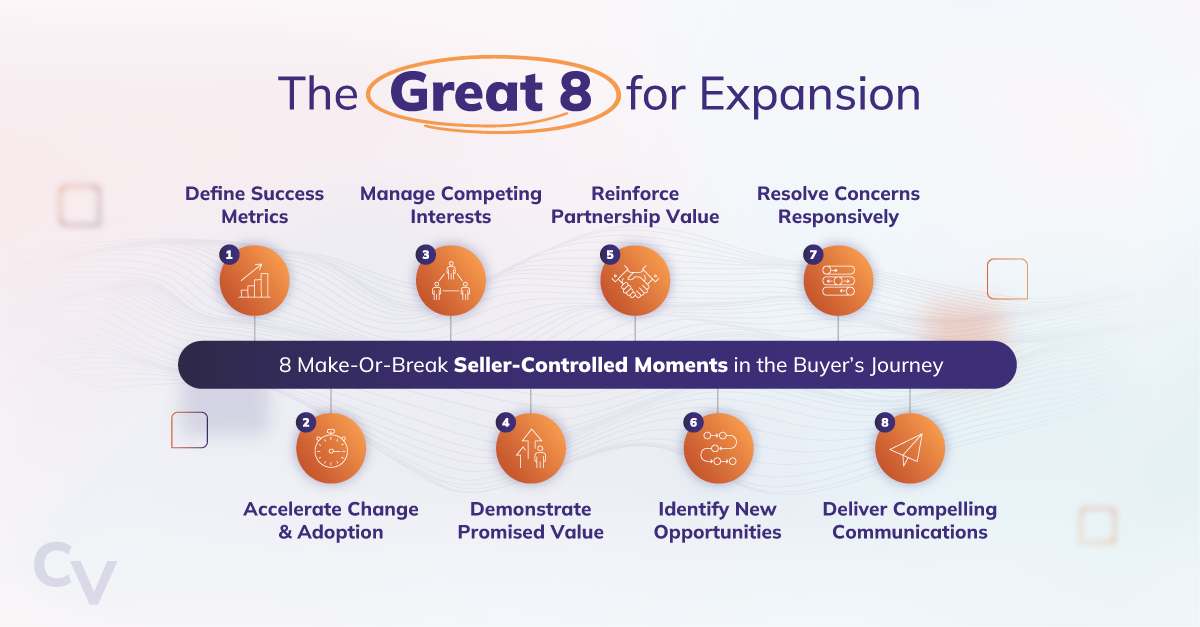
That’s where the Great 8 for Expansion comes in.
By analyzing buyer feedback from more than 150,000 B2B purchase decisions, we identified the sales competencies that shape the outcomes of retention and expansion deals. When you measure and coach to these competencies, you stop guessing where relationships go sideways and start building the kind of customer experience that keeps revenue steady and expansion opportunities open.
Expansion Sales Competencies That Drive Retention and Growth
But once your prospect becomes your customer, you become the status quo. And when you use it well, Status Quo Bias works in your favor. Buyers naturally stick with what feels familiar, safe, and already working.
But that advantage only lasts as long as you keep reinforcing value, proving progress, and building confidence that staying the course is still the customer’s smartest decision. Because the moment customers stop seeing forward progress, they start wondering what they’re missing—and your competition is more than happy to help them explore options.
That’s exactly what the Great 8 competencies for expansion prevent.
It pinpoints the make-or-break moments across the customer lifecycle, from implementation to renewal to growth, where incumbents either strengthen their position or quietly put it at risk.
The Great 8 Sales Competencies for Customer Expansion
When your team masters these eight competencies, you’ll stop relying on goodwill and habit to retain customers. You’ll actively reinforce value, maintain momentum, and earn the right to expand business with them.
Define Success Metrics
Set mutual success metrics and develop a plan for tracking, documenting, and presenting them to the customer.
Usage and adoption metrics are table stakes. What really sustains stakeholder sponsorship is clarity around strategic outcomes.
When you define success metrics tied to leadership priorities, you help customers connect your solution to the results they’re accountable for. That alignment keeps attention high, credibility intact, and the relationship positioned for long-term growth.
One simple way to do this is to use the Triple Metric:
Accelerate Change and Adoption
Manage change to enable on-time implementation, swift adoption, and widespread use.
The people responsible for using your solution often weren’t involved in buying it. And without their buy-in, implementation stalls.
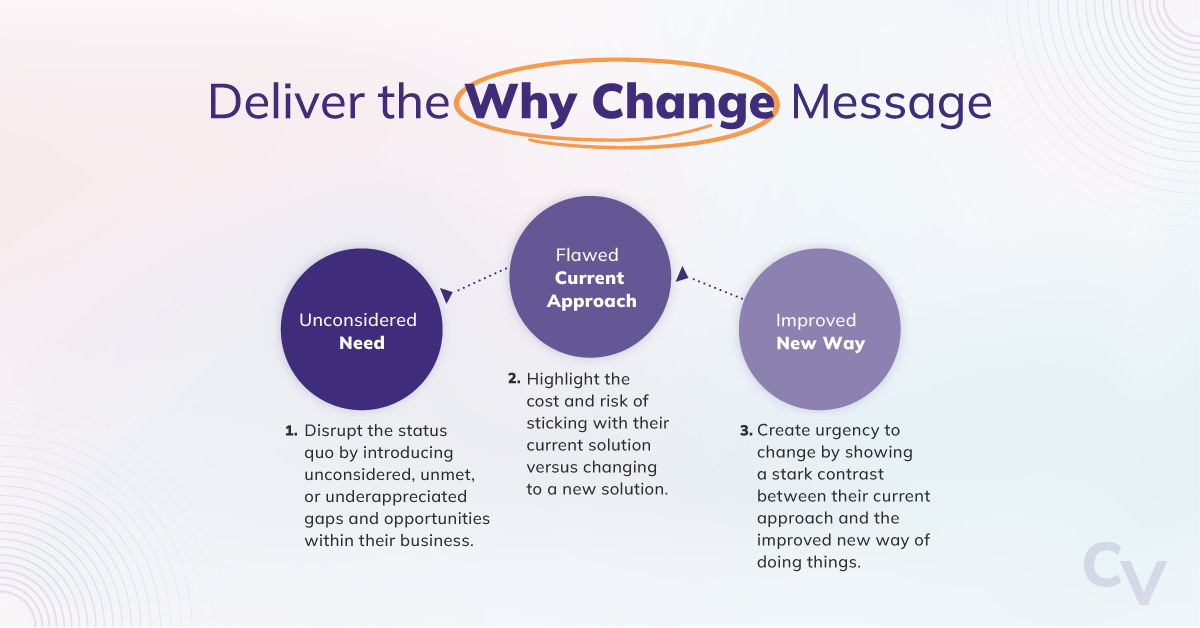
Your job is to help these new users see why their current approach is increasingly risky—and why adopting your solution is the safest path forward. When change feels necessary and relevant, momentum builds quickly and value shows up sooner.
Use a Why Change message to win them over.
Win over new users with a Why Change message that makes adoption feel necessary.
Manage Competing Interests
Control the challenges, differing priorities, and collaboration necessary for the project’s success.
Organizations are full of competing goals. Finance, operations, IT, and marketing rarely want the same things at the same time.
Instead of trying to eliminate that tension, you can surface it and channel it productively. When stakeholders see how their individual wins connect to broader success, resistance turns into progress—and you show up as a trusted advisor, not just a vendor.
Here’s how to navigate tension to manage competing interests:
Demonstrate Promised Value
Show ongoing proof that your team, program, and company are executing the plan with great success.
Many customer relationships weaken—not because your solution failed, but because the value story disappeared.
Business reviews are places to strengthen that story. When you use these meetings to reconnect outcomes to your customer’s strategic goals, they see progress—not just activity. That clarity reduces renewal risk and creates space for expansion conversations.
Share metrics and stories in these reviews to show what your customers have achieved.
Reinforce Partnership Value
Keep your customer focused on the progress they’re making with you and the risks for making a change.
Provocative messages work when you’re trying to displace an incumbent. They backfire when you are the incumbent.
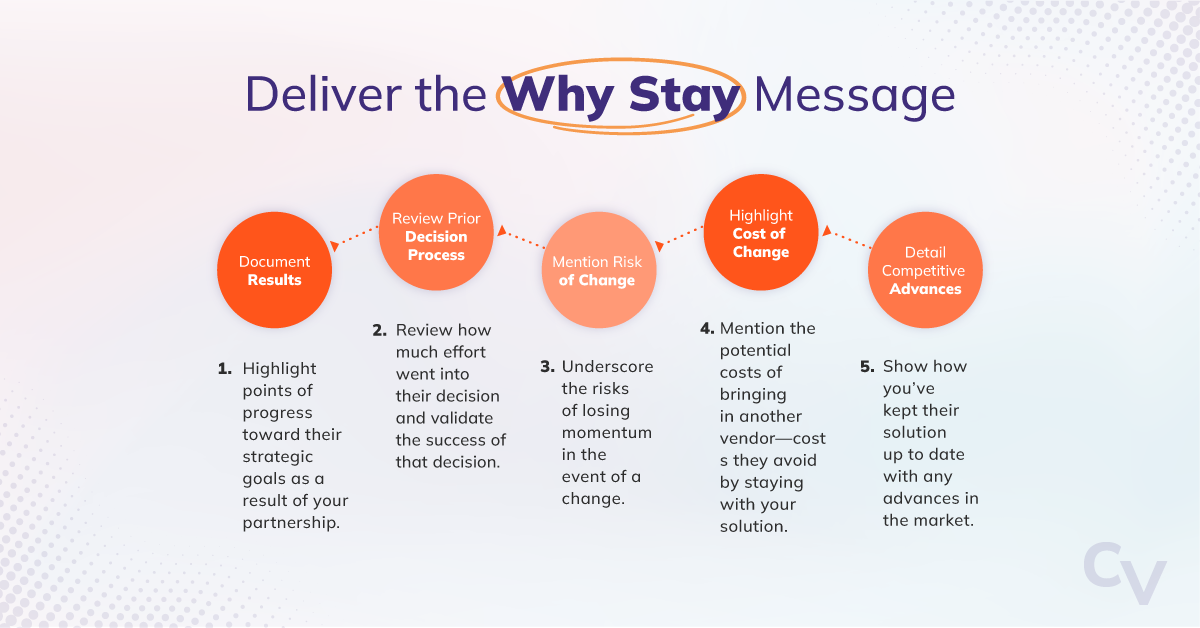
Research shows that reinforcing Status Quo Bias—by highlighting progress and familiarity—increases renewal intent and decreases intentions to switch or shop around. When customers consistently see why staying with you is the best choice, you strengthen loyalty naturally.
Use a Why Stay message to reinforce your position as the status quo:
Show your existing customers the benefits of sticking with your solution with a Why Stay message.
Identify New Opportunities
Share emerging trends and competitive insights to advance the customer’s strategic goals.
Expansion conversations work best when they build on the success of past decisions.
When you connect market shifts and competitive pressure to your customer’s existing goals, you frame expansion as evolution—not disruption. Customers see buying more as a continuation of progress instead of a risky leap.
Here’s one way to frame these conversations with existing customers:
Resolve Concerns Responsively
Quickly understand and resolve any service problems or interruptions.
Service issues happen. What customers remember is how you respond.
Handled correctly, concern resolution can strengthen loyalty, thanks to a phenomenon called the Service Recovery Paradox—a situation where customers think more highly of you after you correct a problem than if it never happened.
Learn about The Service Recovery Paradox and how to use it to your advantage:
Deliver Compelling Communications
Deliver engaging, memorable, and persuasive presentations to key stakeholders.
People naturally forget 90 percent of the information they consume within 48 hours. And the 10 percent they do remember tends to be completely random.
That’s why every customer presentation needs a clear 10% message—the one takeaway you want them to remember, repeat, and act on. When stakeholders can recall your main message clearly, they’re more prepared to advocate for your solution internally.
See how to make your key points unforgettable:
Monitor the Moments That Decide Deals
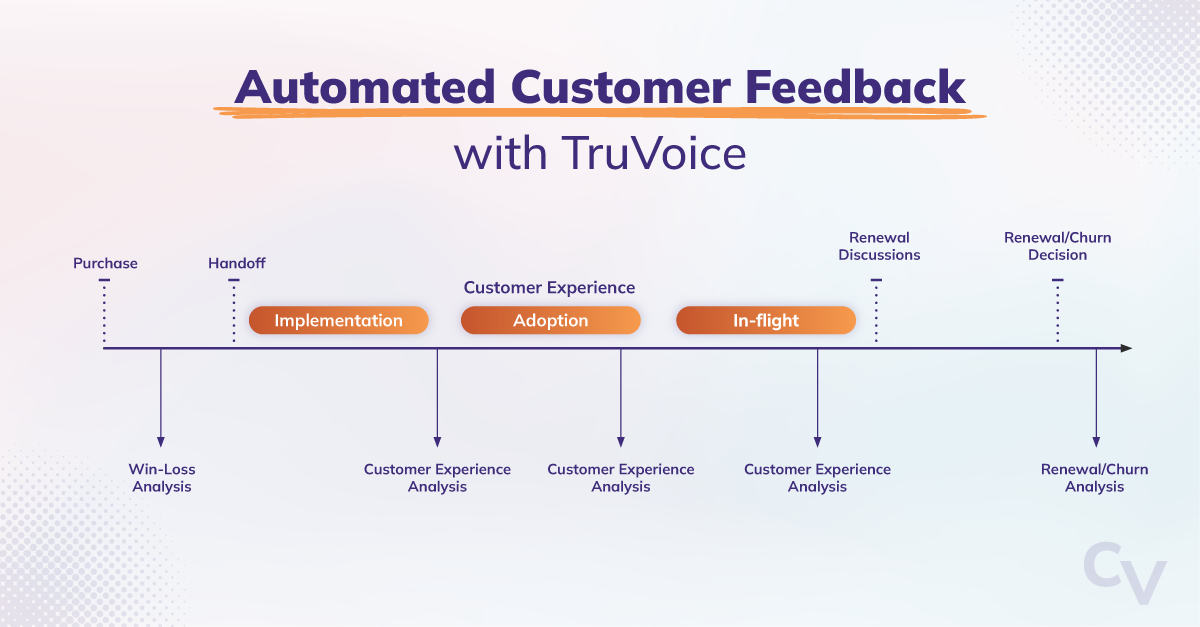
The highest-performing sales and customer success organizations don’t guess what’s working. They ground performance improvement in objective buyer feedback—captured at key points across the customer lifecycle, like after implementation, throughout the relationship, and before and after renewal discussions.
By gathering customer experience feedback at predetermined moments, you can spot warning signs early, reinforce what’s driving success, and uncover expansion opportunities that might have otherwise slipped by.
Spot churn risk and expansion opportunities early by deploying automated surveys at key points in the customer lifecycle.
When you continually measure performance against the Great 8 in your customer interactions, you can monitor your team’s performance and deliver targeted training and coaching that reduces churn, increases expansion wins, and improves the customer experience.
Master the Great 8 Sales Competencies for Expansion
Revenue decisions don’t happen all at once. They take shape in key moments throughout a customer relationship.
Tools and automation can support the process. But customers don’t renew or buy more because of a dashboard. They do it because your team shows up with the right skills, in the right conversations, at the right time.
When your sellers consistently demonstrate these expansion sales competencies, they reinforce value, protect momentum, and make growth feel like the obvious next step for your customers.
Tim Riesterer, Chief Strategy Officer at Corporate Visions, is the sought after expert on evidence-based revenue growth using counterintuitive approaches. Known for his candid thought leadership and engaging keynotes, he’s spent decades testing and refining go-to-market strategies that put buyers squarely at the center. Tim is the author of four insightful books, including Customer Message Management, Conversations that Win the Complex Sale, The Three Value Conversations, and The Expansion Sale.