AI is accelerating. Automation is expanding. Buyers are researching independently, building shortlists before your team ever enters the conversation.
And yet, when a deal is won or lost, the buyer still points to the human.
In a keynote delivered at Emblaze Revenue Summit last spring, Tim Riesterer shared a data point that should reset how you think about performance: In losses, buyers say 53 percent of the time the outcome could have been different based on what the seller did or did not do. In other words, the human in the room still changes the result.
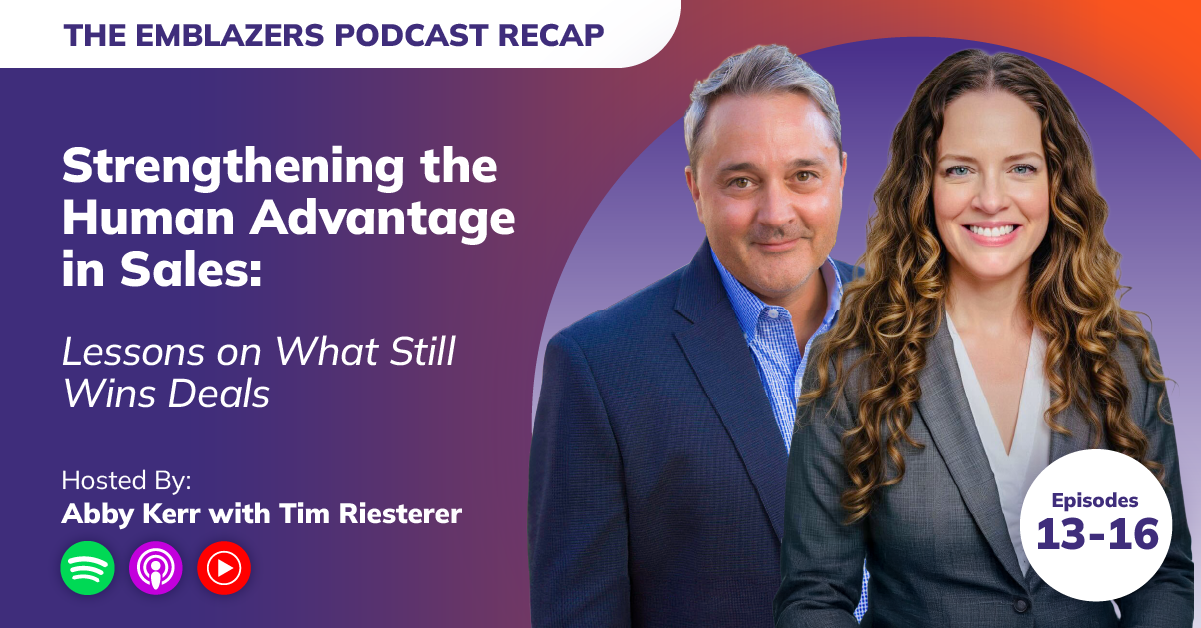
Episodes 13 through 16 of The Emblazers Show build on that idea from four angles: leadership development, competency clarity, executive selling, and CRO accountability. Together, they outline a practical mandate: If humans remain the differentiator, you need to strengthen the human advantage with intention.
Here’s what you can take from each conversation.
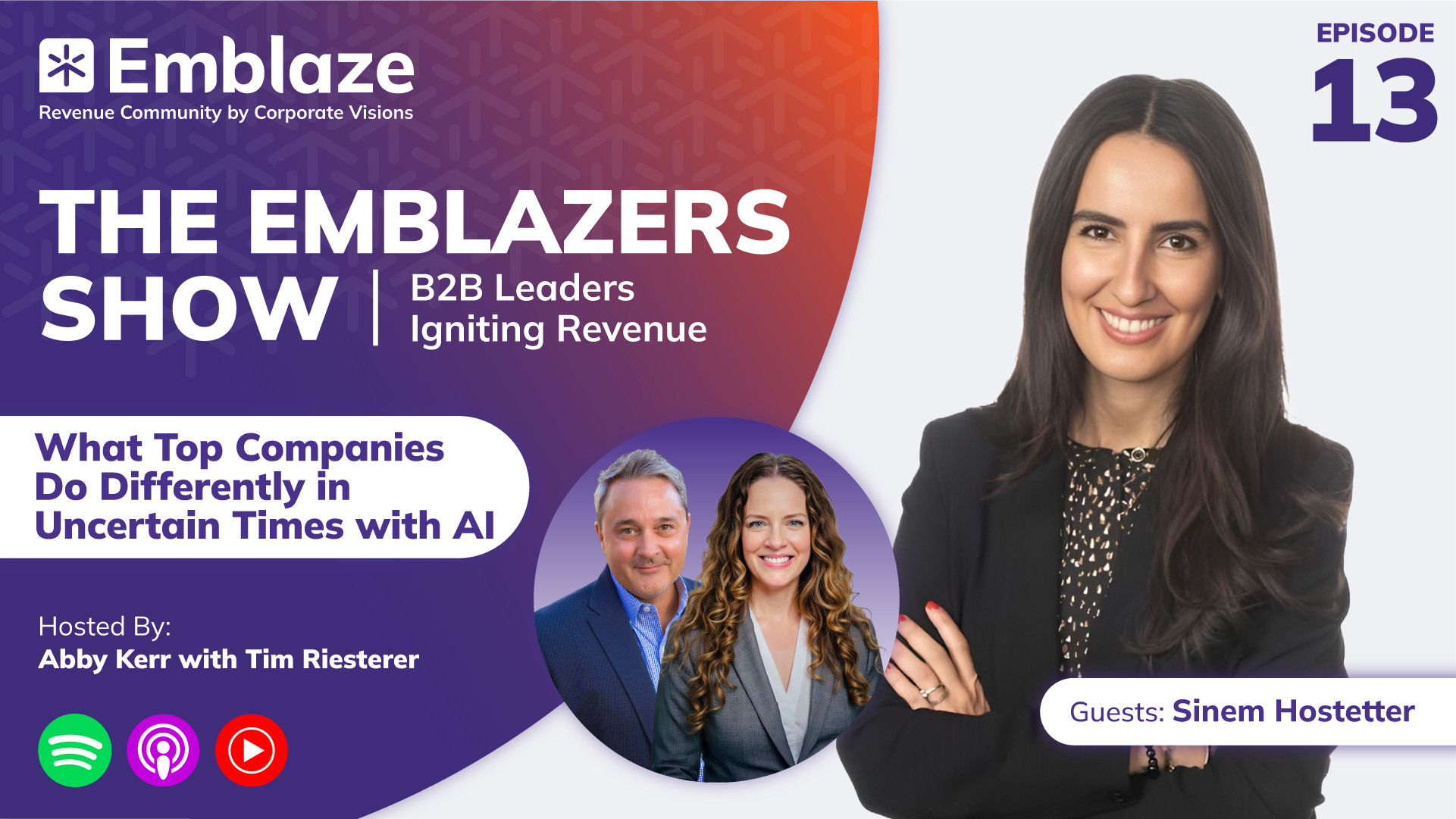
S2Ep13: Sinem Hostetter – Develop Sellers Who Think, Not Sellers Who Script
Sinem Hostetter’s conversation centered on a leadership truth that often gets overlooked: You do not build high-performing teams by tightening control. You build them by developing judgment.
In complex revenue environments, sellers face ambiguity daily. Deals stall. Stakeholders disagree. Priorities shift. A script cannot navigate that terrain. A confident, well-developed seller can.
Hostetter emphasized the importance of coaching that builds ownership. When managers move beyond inspection and into development, they help sellers understand why decisions matter, not just what steps to follow. That shift builds confidence. And confidence changes how a seller shows up in front of a buyer.
Strengthening the human advantage starts internally. Before your team can create better buyer experiences, they need clarity, empowerment, and a culture that values thoughtful execution.
If you want better performance, begin by developing sellers who can think independently under pressure.
Listen to the full episode on Spotify, Apple Podcasts, or YouTube.
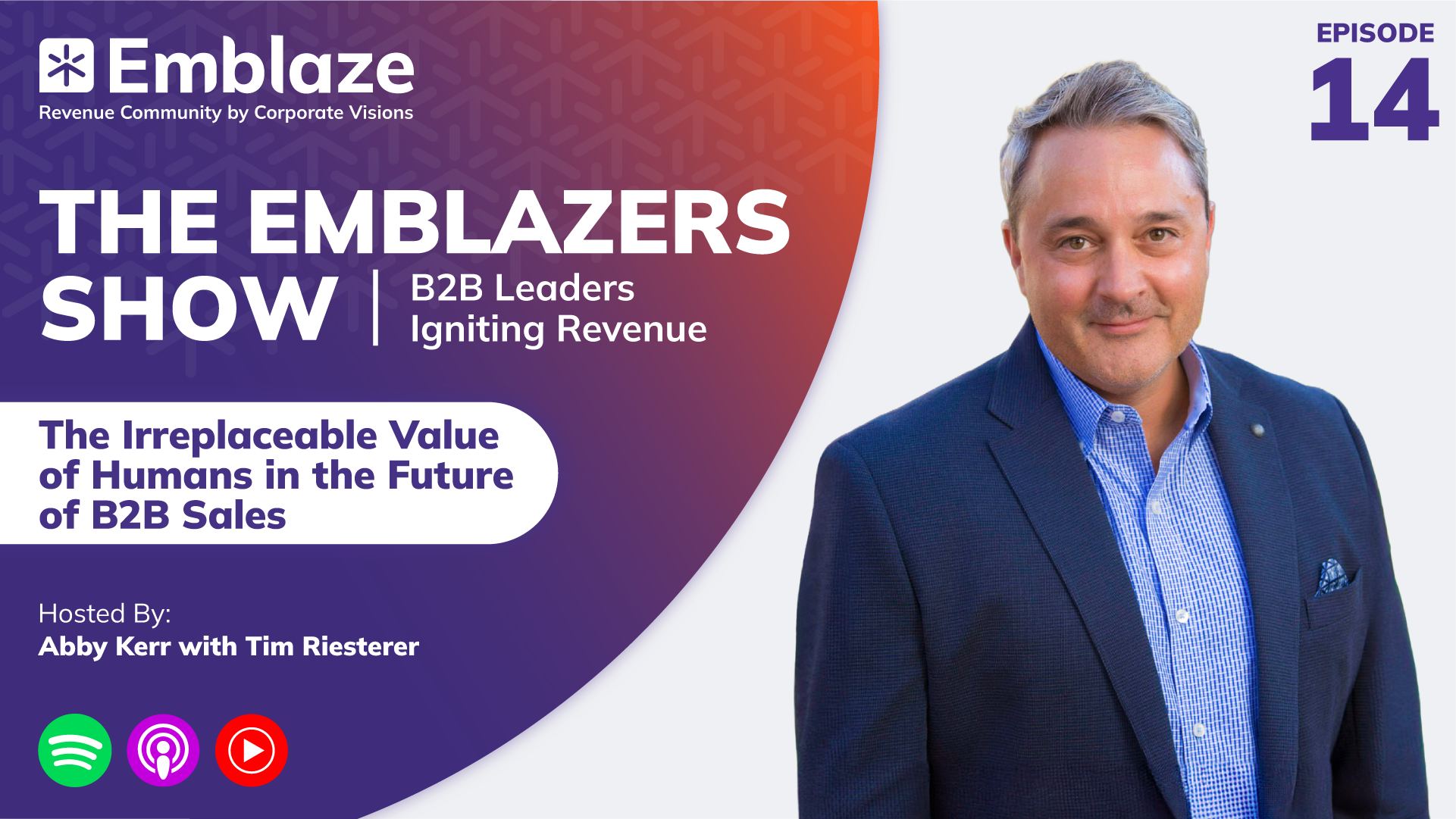
S2Ep14: Tim Riesterer – The Competencies That Make Humans Irreplaceable
Tim’s keynote sharpened the case with buyer-backed evidence. He outlined eight predictive experiences that determine wins and losses—competencies buyers can score, compare, and articulate.
For acquisition sales, these include aligning solutions to needs, making a case for change, articulating value, creating differentiation, justifying decisions, negotiating creatively, resolving concerns responsibly, and being compelling enough to help buyers build internal consensus.
The critical insight is not that these competencies exist. It’s that buyers can measure them. And when buyers give low scores, deals are lost.
Perhaps most striking was this: Sellers frequently attribute losses to external factors pricing, politics, product gap— while buyers identify seller behavior as the decisive factor. The discrepancy matters. It means your win rates are not fixed. They are influenced by human execution.
Tim also argued that traditional training models fall short when they treat development like a blanket exercise. Spreading enablement “like peanut butter” across the team does not close skill gaps. Precision skills intelligence—assessing the right competencies and delivering targeted development—is what turns insight into performance.
The human advantage is measurable. If you align skills, competencies, and assessment to what buyers actually value, you strengthen the one element AI cannot replace.
Listen to the full episode on Spotify, Apple Podcasts, or YouTube.
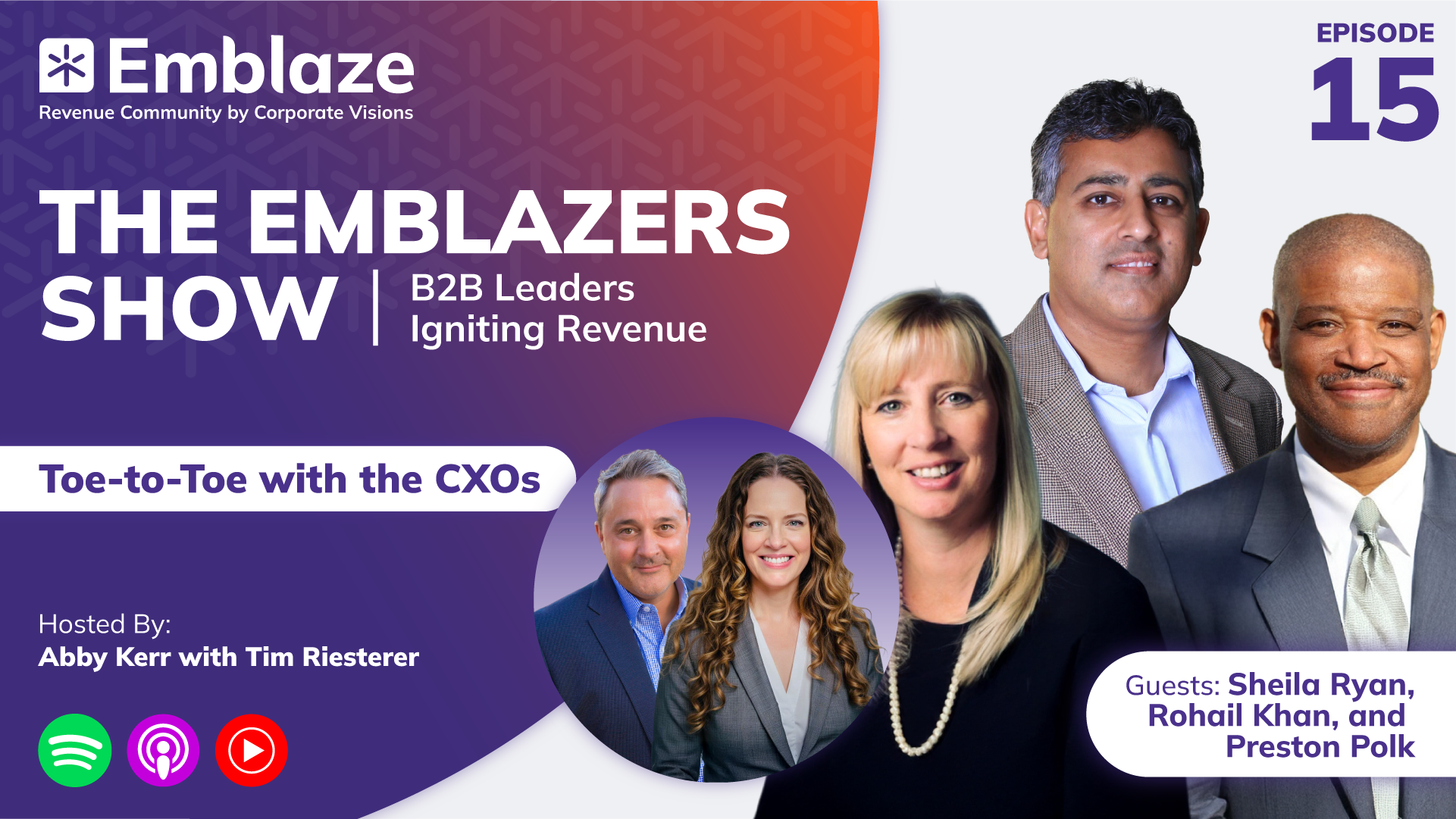
S2Ep15: Toe-to-Toe with the CXOs – Executive Selling Demands Elevated Skill
Episode 15 moved the conversation into the C-suite. Three executive leaders—Rohail Khan, Sheila Ryan, and Preston Polk—shared how selling to executive buyers is not an extension of mid-level selling. It is a different game.
Executives expect business fluency. They expect clarity. They expect relevance to enterprise-level priorities. If a seller cannot connect the conversation to strategic outcomes, credibility erodes quickly.
Executive selling also requires the ability to help leaders justify decisions internally. Risk is higher. Visibility is greater. Human interaction carries more weight.
What becomes evident in this episode is that executive presence is not charisma. It is preparation, perspective, and the ability to guide a business conversation without retreating into product detail.
AI can summarize a report. It cannot build executive trust. That trust is earned in the moment, through disciplined thinking and confident delivery.
If you want to compete at the highest levels, you must equip sellers with the skills to operate comfortably in that environment.
Listen to the full episode on Spotify, Apple Podcasts, or YouTube.
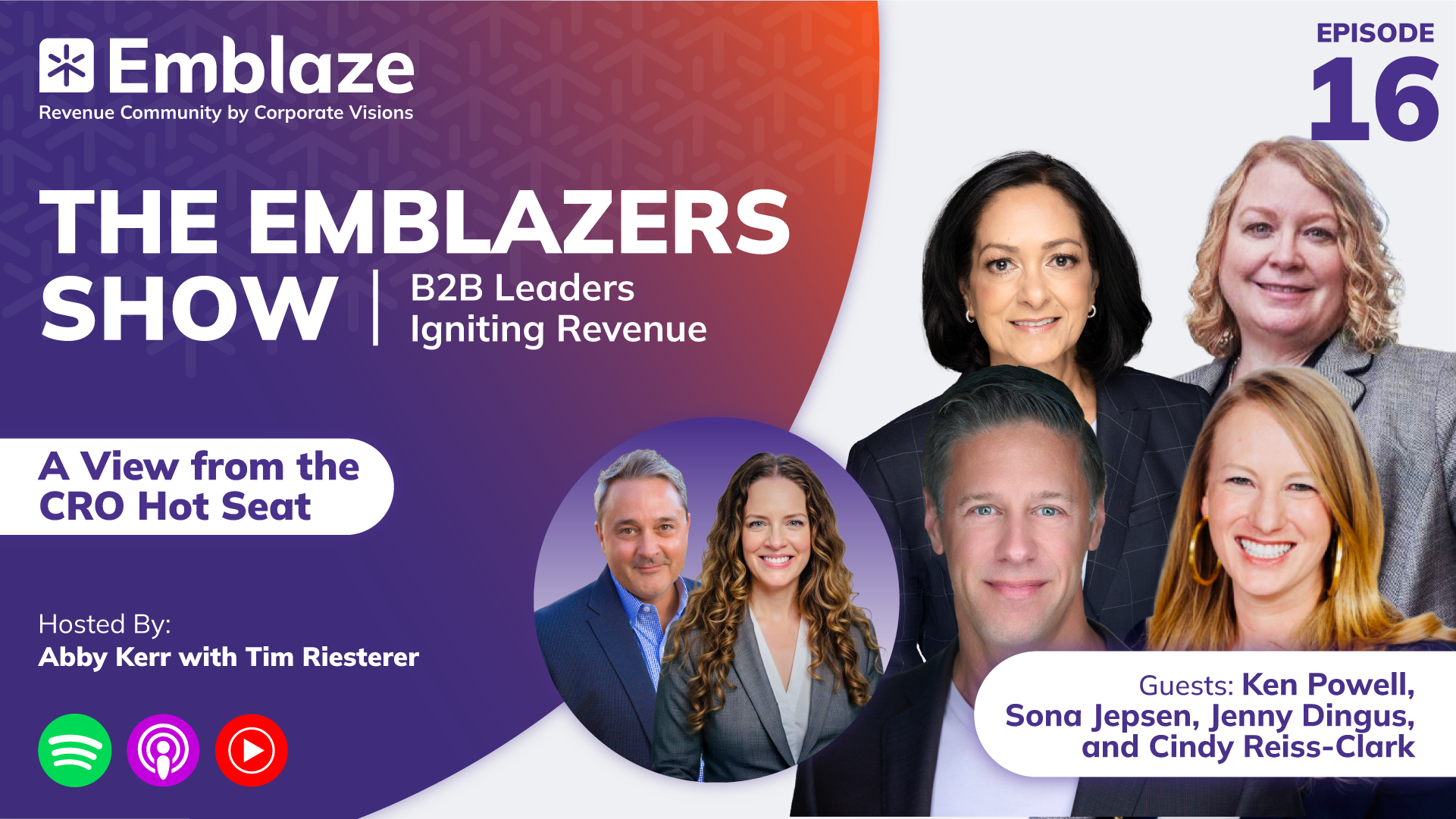
S2Ep16: A View from the CRO Hot Seat – Leadership Standards Shape Seller Performance
The final episode in this set shifts attention upward. A panel of four CROs—Ken Powell, Jenny Dingus, Sona Jepsen, and Cindy Reiss-Clark—say that if humans remain the differentiator, the CRO sets the conditions for that differentiation.
From the hot seat, performance is not abstract. It is measurable. Forecast accuracy, pipeline health, deal progression, accountability. Standards must be clear. Expectations must be consistent.
When leadership tolerates inconsistency, sellers internalize it. When accountability varies, discipline fades. Strengthening the human advantage requires clarity at the top—clarity about what good looks like and how it will be reinforced.
This episode reinforces a hard truth: Culture is built in daily decisions. In how managers coach. In how performance is reviewed. In how excuses are handled.
If you want sellers who show up prepared, confident, and differentiated, leadership must model precision and discipline first.
Listen to the full episode on Spotify, Apple Podcasts, or YouTube.
The Human Advantage
While AI will automate research, systems will optimize process, and data will scale insight, the seller still determines whether the buyer feels understood, confident, and justified in choosing you.
Strengthening the human advantage is not a sentimental idea, it’s a strategic imperative. It requires developing judgment, aligning competencies to buyer expectations, preparing sellers for executive conversations, and holding leadership standards steady.
The future of sales will include more technology. It will also demand stronger humans.