In a strong win-loss analysis program, you keep more than numbers. You capture the candid conversation: the specific language buyers use about price, competitors, and the sales experience. With that on hand, you can repeat what wins and correct what loses. Here’s how each team puts it to work.
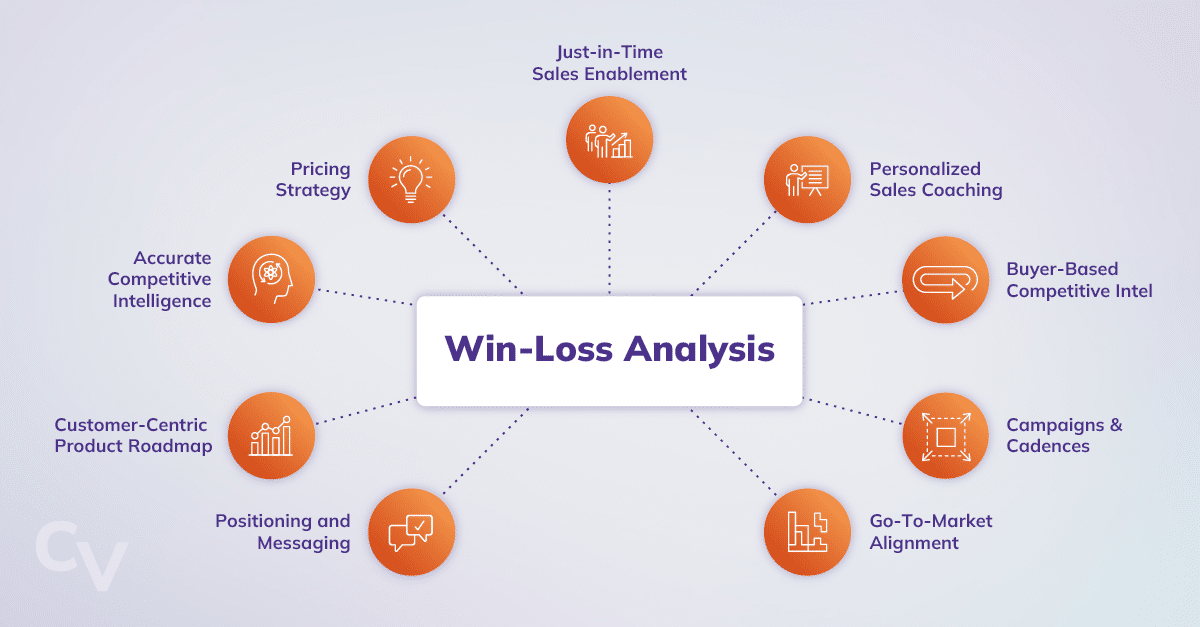
The C-Suite: Steering Strategy with Direct Buyer Feedback
When you share win-loss feedback with executives, they see how buyers think, what they expect during a purchase, and where their needs are heading. Using those insights, C-suite leaders can set direction from what their market says, not from the loudest internal opinion. Bring these leaders in from the start. When they name the burning questions they want buyers to answer, your program stays tied to their strategic priorities.
- Decisions grounded in buyer evidence: Executives can settle the recurring standoff between internal opinion and market reality by anchoring strategy in what buyers want and need.
- Answers to the questions the board is asking: Leaders get data on the specific concerns they raised, so the program earns its place on the agenda.
- A read on where demand is heading:Executives can spot shifts in buyer priorities early and plan for them, rather than reacting once a trend is obvious.
The Sales Team: Turning Insights into Closing Conversations
Sellers can see how buyers experienced their approach in the win-loss feedback. And sellers who get feedback on as few as three deals still improve markedly. In fact, Corporate Visions research finds that sellers who receive buyer feedback from three or more calls win up to 40 percent more often than those who don’t.
This isn’t a scoreboard for ranking reps. Used well, it turns what buyers said into stronger closing conversations.
Crucially, the feedback shouldn’t stop at a report. You turn it into sharper skills, better messaging, and targeted coaching, so what you learn from a lost deal shapes how sellers handle the next one.
- Understand how buyers experience your approach: Sellers can adjust once they see how buyers perceived their effort, not how they assumed it landed.
- Refocus on the moments that decide deals: When sellers see where a pitch fell flat, they can turn to the conversations that change a buyer’s decision.
- Coach with evidence, not instinct: Sales managers can build coaching around what buyers reported, so training reflects live deals instead of generic technique.
Product Development: Building Solutions around Buyer Evidence
Product teams want feedback they can act on. With win-loss analysis, product managers get past feature ratings to the value the buyer wanted, and where the product delivered or fell short. When they review which capabilities influenced buyers most, they can shape the roadmap around what the market will pay for.
- Confirm product-market fit with buyer feedback: Product teams learn which capabilities won deals, so fit rests on evidence rather than assumption.
- Prioritize the roadmap around buyer demand: When you rank features by what influenced buyer decisions, each release solves a problem buyers named instead of adding noise.
- Design around stated buyer needs: Product teams can build the next feature from what buyers explicitly asked for, not from internal guesses about what they’d want.
Customer Success: Turning Feedback into Retention and Growth
Customer success teams get a clear view of what drives satisfaction and what pushes customers toward the exit. When you measure the customer experience at key post-sale moments, a practice Corporate Visions runs as customer experience analysis, you can flag at-risk accounts early, reduce churn, and find expansion openings before a renewal is in question.
- Go past satisfaction scores to root causes: Customer success teams can move from a high-level number to the reasons customers stay or leave, then act on them.
- Turn churn signals into save plays: Knowing why customers leave is as useful as knowing why they stay, and it points to the accounts worth a tailored intervention.
- Find expansion in customer feedback: The strongest upsell openings often sit in what customers say about unmet needs, which opens natural cross-sell and expansion conversations.
Delivery and Fulfillment: Meeting Buyer Expectations
Delivery is often the first team a customer deals with after signing. They own whether the customer gets the results the deal promised. By pairing win-loss analysis with customer experience analysis, delivery teams learn what outcomes the customer expected and how they want them delivered, then measure how close they came.
- Meet the expectations set during the sale: Delivery teams can compare what was promised against what customers experienced, then close any gap before it costs a renewal.
- Replicate what fulfillment does well: With win-loss data on completed deals, delivery teams can identify and repeat the handoffs that produced satisfied customers.
- Catch service issues that sour renewals: Delivery teams often spot the fulfillment problems that quietly erode the customer relationship, so you can fix them before churn follows.
Product Marketing: Sharpening Positioning with Buyer Evidence
Product marketers who work without buyer input are guessing at what lands. With win-loss feedback, they replace that guesswork with the words buyers use, so campaigns, content, and positioning track how buyers describe value and compare you with competitors. This is the Corporate Visions view of messaging: build it on buyer evidence, not gut feel.
- Write messaging in your buyers’ words: Product marketers can see which phrases buyers repeat and which they ignore, then build language that moves a deal forward.
- Position against competitors on evidence: By reviewing how buyers compare you with alternatives, product marketers can sharpen positioning where a live deal is won or lost.
- Base strategy on buyer evidence: With a buyer-informed strategy, every campaign has a clear purpose, because each choice reflects feedback rather than internal preference.
How to Get Started with Win-Loss Analysis
You don’t need a large program to start. A few disciplined steps put buyer evidence to work fast.
- Define the questions. Decide what you want buyers to answer: why they chose you, why they didn’t, and where the process frustrated them.
- Talk to the people who decided. Collect feedback from the buyers and stakeholders who shaped the outcome, on both wins and losses. The full picture takes two conversations: one with the buyer about their decision journey, and one with the seller about why buyers saw it differently.
- Look for patterns. Compare feedback across deals to find the decision drivers that repeat, rather than reacting to a single loud loss.
- Turn findings into action. Route what you learn to the teams that can act on it, from sales coaching to product roadmap to messaging.
One practical note: buyers tend to be more candid with an independent interviewer than with the seller who ran the deal. Removed from the relationship, they share what they’d soften face to face. If you want that objectivity at scale, you can run the interviews through a structured buyer insights program.
Frequently Asked Questions
What Is the Biggest Benefit of Win-Loss Analysis?
The biggest benefit is alignment. With win-loss analysis, sales, product, and marketing work from one evidence-based account of what buyers value, instead of each team acting on its own assumptions. That shared view makes it easier to agree on what to fix first.
How Does Win-Loss Analysis Improve Win Rates?
You improve win rates by surfacing the decision drivers behind wins and losses, then fixing the moments where deals slip away. Once you know which conversations, messages, or gaps cost you a deal, sellers can adjust their approach and managers can coach the right skills.
Should You Study Wins as Well as Losses?
Yes. Wins reveal the behaviors and messages that resonate with buyers, so you can repeat them on purpose instead of by luck. Studying losses shows you what to avoid; studying wins shows you what to reinforce.
Why Interview Buyers through a Third Party?
Buyers are usually more candid with an independent interviewer than with the seller who ran the deal. Removed from the relationship, they share honest feedback about price, competitors, and the sales experience that they might otherwise hold back.
Turn Buyer Evidence into Company-Wide Growth
Keep win-loss insight inside one department, and most of its value disappears. The team that runs the program rarely needs the findings most: the buyer’s comment about a confusing demo belongs with product, the pricing objection belongs with the C-suite, the competitor comparison belongs with product marketing. Set up your win-loss analysis program so every finding routes to the team that can change a skill, a message, or a coaching plan because of it. That’s when buyer evidence stops sitting in a report and starts changing how you acquire, keep, and expand with customers.