Push vs. Pull: Redesign Your Sales Kickoff Agenda from Obligation to Opportunity

Eric Nitschke /
September 9, 2026 /
Sales Kickoffs

Rethinking Your Sales Kickoff Agenda

Sales kickoffs typically involve a lot of pushing.

Your product team pushes out new features or bundles. Your enablement team pushes out a new training calendar. Your executives and sales leaders push out some new process or methodology they read about in a book. Maybe they even have the author come speak and sign copies.

But you know that when you try to push something on people, no one is that excited about it.

So why are you so pushy at your sales kickoff?

Instead of just pushing content to sellers, build an event your sellers want to attend. Design it so they pull a clear growth priority, evidence-backed skill work, and buyer-relevant message practice from every session. When you design your sales kickoff agenda this way, sellers walk away motivated. They leave confident they can hit the numbers they own, instead of only hearing everyone else’s priorities.

What would that do for this year’s bookings? How would that change your enablement strategy?

When sellers pull value instead of absorbing another content dump, you get tighter engagement and sharper learning. You also get a clearer path to the revenue goals the kickoff is supposed to support.

What a Sales Kickoff Is For

A sales kickoff (SKO) is the annual or major mid-cycle commercial gathering. Sales, enablement, and leadership align there on revenue priorities, skills, and messaging. It’s not a party (although it’s a great time to celebrate accomplishments), and it’s not a content dump.

The commercial job of the event is simple. Sellers should leave knowing what to do on Monday, why it matters to buyers, and how managers will reinforce it.

Ground your event in buyer feedback, assessment data, and performance signals instead of seller assumptions alone. That’s how your sales kickoff becomes a targeted performance accelerator, not a one-time pep rally.

How to Stop Pushing and Start Pulling Value at Your Sales Kickoff

There are three moves to reshape your kickoff agenda. First, connect strategy to a named growth priority so sellers see their part in execution. Second, base coaching and workshops on buyer evidence and skill-gap data so practice addresses blind spots sellers cannot see alone. Third, activate your commercial narrative and the competencies tied to that priority, so sellers leave with skills they can demonstrate, not slides they felt obligated to sit through.

Pull Your Teams into Your Growth Priority

Your sales kickoff will include a portion where you communicate your overarching corporate strategy and strategic plans for the year. But often, sellers understand your strategy but don’t have a clear idea of how they’re connected to it. Those high-level goals don’t always translate into concrete actions.

To get every seller in the room on board, name the growth priority under the most pressure for you this cycle. Then show the exact path you (and they) will use to execute it.

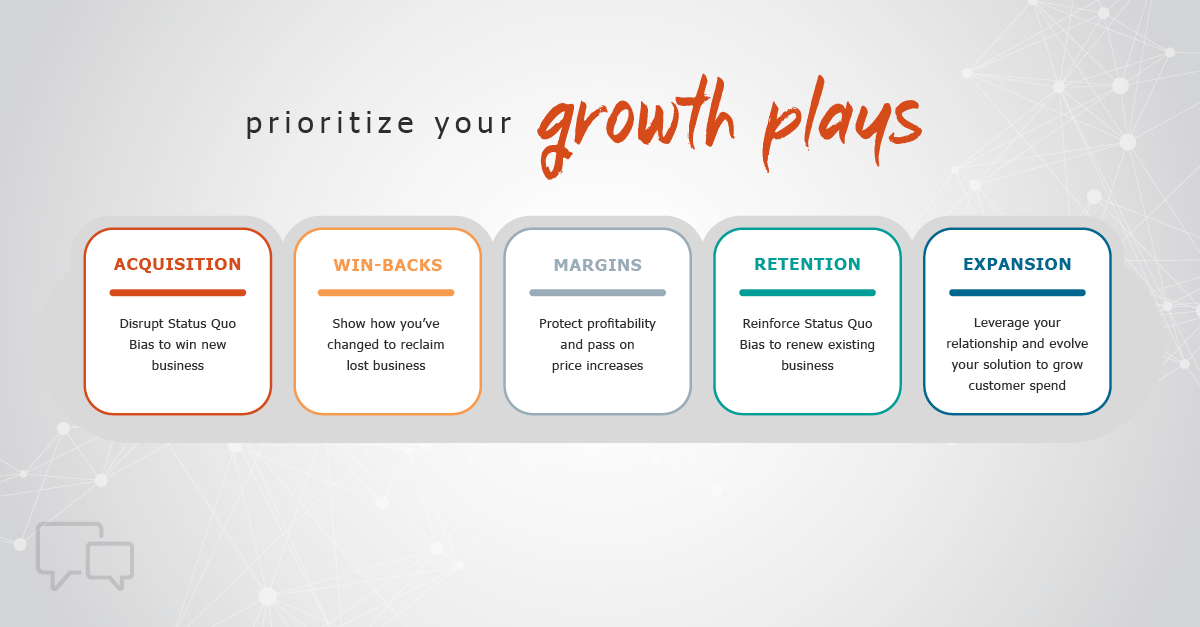
That means re-examining your strategy through the lens of growth priorities you might fund first. Choose a sales kickoff theme that supports a distinct commercial outcome. For example:

  • Acquire more customers when new-logo deals stall because buyers feel too little risk in staying put
  • Expand and retain customers when renewal risk is high and expansion slows
  • Create winnable pipeline when too much of the funnel is thin, stuck, or unlikely to close
  • Improve win rates when you can’t name why deals are won or lost with enough precision to coach
  • Protect profit margins when discounting becomes the default bargaining chip

Once you determine which priority to focus on, identify the teams to execute it, the buyer decisions those teams must win, and the resources they need. This is the foundation for how you plan your kickoff and how you execute your revenue growth strategy.

With this in place, you can communicate exactly what each person needs to do and why they need to do it. When sellers understand the goal and have clear direction on how to reach it, they feel more motivated to execute the plan.

Sellers pull the plan when they can:

  • Join priority-specific breakouts that turn company goals into role-level actions
  • Practice and get proficient on the conversations that priority depends on
  • Leave with named owners, resources, and an execution plan for the weeks that follow

Pull Your Sellers’ Eyes Open to Their Blind Spots

Coaching will be an essential part of your sales kickoff. And it’s probably one area that your sellers feel gets pushed upon them.

You might have picked a training topic that your sellers or sales managers think is a gap. But sellers have a limited perspective and don’t always see what their buyers see. In fact, across win-loss data from more than 150,000 B2B deals, sellers and buyers cite different reasons for losing 50–70 percent of the time.

If you can tell your sellers the training is based on what their buyers say about their performance, they’ll sit up and pay attention.

Start by gathering buyer feedback before your sales kickoff. Pair that evidence with performance-based skills assessments and the performance signals already in your stack. Give yourself enough runway to evaluate recent wins and losses, spot patterns by role or segment, and lock in your training tracks before you finalize the agenda. Use buyer evidence and assessment data to set those tracks before the agenda is locked, not after the hotel block is final.

That sequence is how high-performing commercial teams already use kickoff planning as a diagnostic, not a content dump. Assess first. Name the gaps. Train against those gaps at the event. Then leave sellers with targeted practice paths after they fly home.

After your kickoff, follow up with individualized coaching and development plans based on each seller’s specific needs.

Pull Your Sellers into Message and Skills Activation

At most sales kickoffs, teams treat messaging as a slide share and skills as a lecture stack. Sellers leave inspired for a day but behavior doesn’t change long-term.

Use your SKO to activate a buyer-relevant commercial narrative and address the competency gaps your assessment already flagged. If the company, market, portfolio, or go-to-market strategy has changed, launch your story while the entire team is in the room. Then put sellers into targeted workshops where they practice their delivery and get feedback to improve.

Make the story stick in sales conversations with messaging built for the decisions buyers are making. When you embed that messaging and skill work as the path to the growth priority you named, you pull practice into the agenda instead of enduring another content push.

What Belongs on a Sales Kickoff Agenda

A useful sales kickoff agenda works as a commercial operating plan for the room. Every block should move sellers toward a specific execution behavior they will carry into deals over the next quarter. Keep these three priorities in mind as you build your SKO agenda.

Infographic showing what B2B sales teams need to do before, during, and after sales kickoff to make the event a success.
Make your sales kickoff a success with the right plan before, during, and after the event.

1. Strategy Tied to a Growth Priority

Skip the abstract vision tour. Put strategy time on the agenda only when it answers three questions sellers can act on:

  • Which growth priority is most important this cycle?
  • Who owns execution for that priority by team and role?
  • What “good” looks like in the conversations around the priority?

Spend your time on priority selection, ownership, and the first execution asks that sellers will take into the field. Name the priority in language sellers already use to talk about their pipeline. Every seller in the room should be able to point to the same target instead of trying to interpret their individual contribution.

2. Skills Practice Built on Buyer Evidence

Build practice time around the shortfalls buyers already named and the gaps you found in your assessments, so the agenda reflects evidence instead of the loudest opinion in the planning room.

Build the agenda around:

  • Role-play and teach-backs tied to documented blind spots
  • Message practice against the objections and loss reasons in your win-loss data
  • Cohorts grouped by shared skill gaps, so every group spends its time on the same weak spot

The highest-value block in an SKO is rarely another keynote. It’s sellers in the room practicing in front of peers, making small mistakes, and hearing coaching the whole cohort can use.

3. Manager Coaching and Post-Session Commitments

Managers are the force multiplier after your SKO. Their leadership and coaching skills reinforce the new sales behaviors long after the event. Build agenda time so managers leave with:

  • Inspection criteria for the behaviors you introduced at the kickoff
  • Coaching guides to make those conversations useful and consistent
  • A shared definition of what “adopted” looks like in deals

Without manager commitments on the agenda, all the work you put into kickoff could fade quickly after the event..

Reinforce New Skills After Kickoff

When reinforcement lives outside a seller’s daily workflow, sellers have to go looking for it, but most won’t. Just-in-time enablement moves that reinforcement into the deal itself, so sellers get the coaching or content they need at the moment they need it.

After your SKO, you can:

  • Trigger coaching nudges from deal signals. When a stage stalls past its normal length, the seller and manager both get a nudge tied to the specific skill most likely to move it
  • Surface skill cues during call prep. When call intelligence flags a new competitor mention or objection, sellers see the relevant response before they join the call
  • Set a manager coaching cadence for the following weeks, with named behaviors to observe against what was introduced at kickoff
  • Run a 90-day impact assessment on how the trained skills show up in live conversations, so adoption gets measured on evidence, not attendance

Match reinforcement to the deal stage a seller is in, and deliver it inside the tools they already use. That simple shift keeps new habits from fading once the kickoff energy wears off.

Use Your Sales Kickoff to Pull in More Revenue

Your sales kickoff sets the tone for the year. Pushing coaching and content that isn’t helpful is going to produce mediocre results. You get a more productive SKO when sellers pull into a named growth priority and evidence-backed skill work. Managers then inspect the message practice after the lights go down.

When sellers own their development and success, the payoff shows up in pipeline quality and win behavior, not in applause. An obligation event fills a room. A well-designed sales kickoff is your opportunity to influence your numbers all year.

Related Posts:

FAQs

Frequently Asked Questions

  • blog-faq-question

    A sales kickoff meeting is the major commercial gathering, usually annual, where sales, enablement, and leadership align on revenue priorities, skills, and messaging for the cycle ahead. Sellers should leave knowing what to do next, why buyers will care, and how managers will reinforce the work.

  • blog-faq-question

    Build the agenda around three blocks. Cover strategy tied to a named growth priority, with an owner for execution by team and role. Add skills and message practice built on buyer evidence and assessment data. Close with manager coaching, post-session inspection criteria, and a shared definition of what “adopted” looks like in deals. Cut any content that will not change what a seller does on Monday.

  • blog-faq-question

    Set leading indicators before the event: practice or certification completion, coaching sessions held against the post-SKO plan, and early behavior markers in pipeline, such as discovery quality or message use on the target priority. After the event, track lagging commercial indicators: movement on the growth priority you funded, win/loss/no-decision patterns tied to the skills you trained, and pipeline or conversion shifts you can defend to finance. Event satisfaction scores measure hospitality, and they belong in that category, separate from ROI.

  • blog-faq-question

    Move reinforcement into the seller’s daily workflow instead of a shared drive or a quarterly refresher. Trigger coaching nudges from deal signals, such as a stalled stage, and surface skill cues during call prep when call intelligence flags a new objection. Set a manager coaching cadence in the first two weeks with named behaviors to observe, and require sellers to apply the trained skills on live opportunities in the first 30 days. Pair all of it with the leading and lagging indicators you defined before the event.

  • blog-faq-question

    Four patterns break a kickoff’s impact: strategy time that stays abstract instead of naming a priority and an owner, skills content built on internal opinion instead of documented buyer evidence, no manager coaching plan for after the event, and no leading indicators set before the event to catch whether behaviors are actually changing. When ownership, practice, and manager reinforcement are missing from the agenda, sellers return to old habits as soon as travel ends.

About the Author

Eric Nitschke Avatar

Eric Nitschke

Eric Nitschke is a sales and marketing veteran with expertise in written and visual storytelling, and a track record of helping companies break down complex ideas and offerings into simple and compelling stories. As VP of Commercial Enablement, Eric develops launch strategies around Corporate Visions' portfolio of services and ensures the messaging and sales enablement content is consistent and powerful.

Flip the Script on Your Sales Kickoff

Sellers and buyers disagree about why deals are lost 50–70% of the time. Learn how to ground your kickoff agenda in evidence, not instinct.