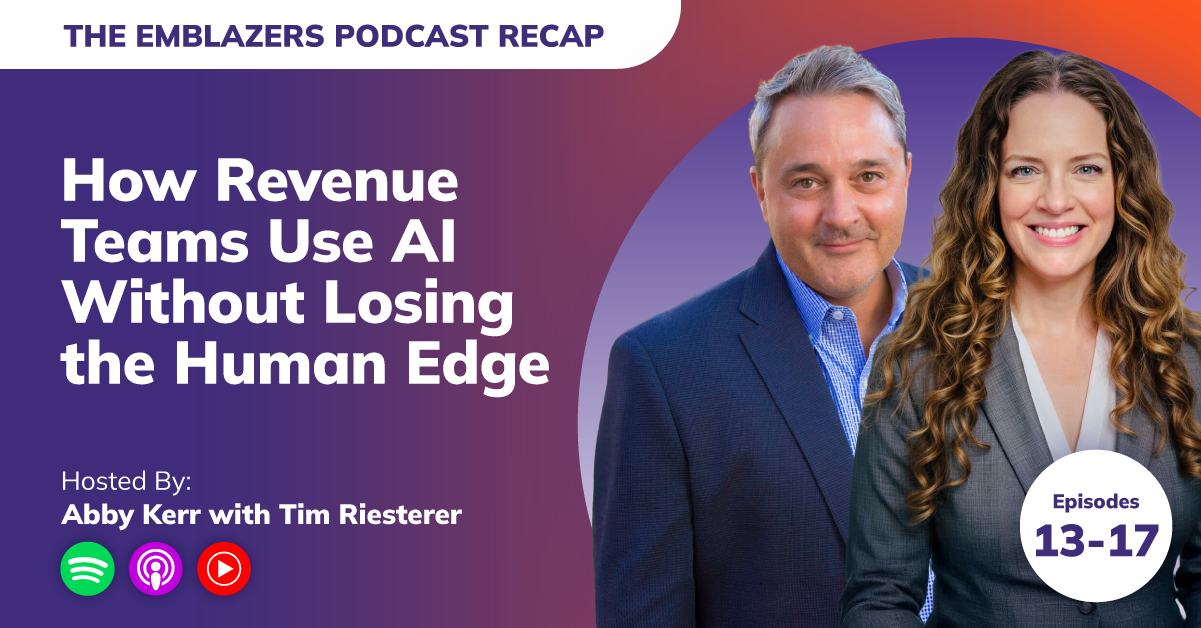
AI is everywhere in revenue, but adoption alone isn’t producing better performance. Teams are adding tools, launching training, and reporting activity while sellers still struggle with ramp, coaching, buyer relevance, and measurable business impact.
Across these five Emblazers Show conversations, a clearer pattern emerges: the strongest revenue organizations aren’t chasing technology for its own sake. They’re building systems around observable skills, commercial outcomes, and human judgment.
- ADP treats enablement as a multiyear development system
- Salesforce connects learning to business metrics
- IBM moves sellers from product explanations to defensible value conversations
- Stripe focuses on the durable skills that make people effective with changing tools
- Constructor ties those ideas together by using AI to expand the team’s leverage, then making human expertise the differentiator
The better question isn’t, “Which AI platform should we add next?” It’s, “What should sellers and leaders do differently, how will we see it, and where does human judgment matter most?”
That shift turns AI from a collection of shiny objects into an operating model for better performance.
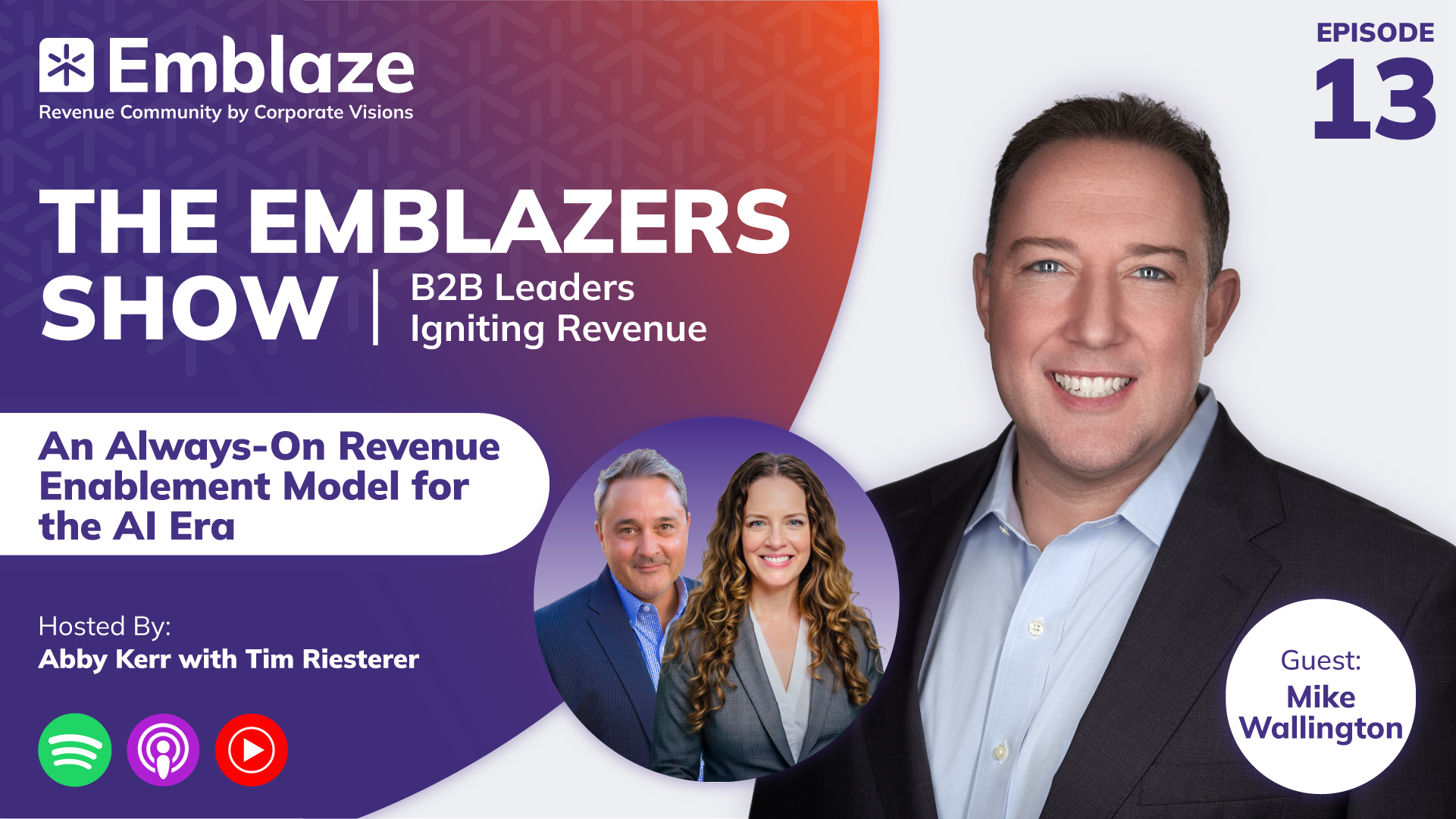
An Always-On Revenue Enablement Model for the AI Era
Most onboarding programs treat day 90 like a finish line.
Mike Wallington, Division Vice President of Global Sales Learning and Leadership Development at ADP, makes the case for a longer runway that treats year one as a 12-month onboarding journey and year two as the critical proficiency phase.
ADP combines structured learning paths, assessments, repeated role-play, searchable knowledge, Gong AI trackers, and performance data to give sellers practice and managers clearer coaching signals. AI avatars extend product training, knowledge sharing, and scenario practice without requiring a larger enablement staff.
Implication: Treat seller development as a multiyear performance system, not a one-time onboarding event.
Listen on: Spotify | Apple Podcasts | YouTube
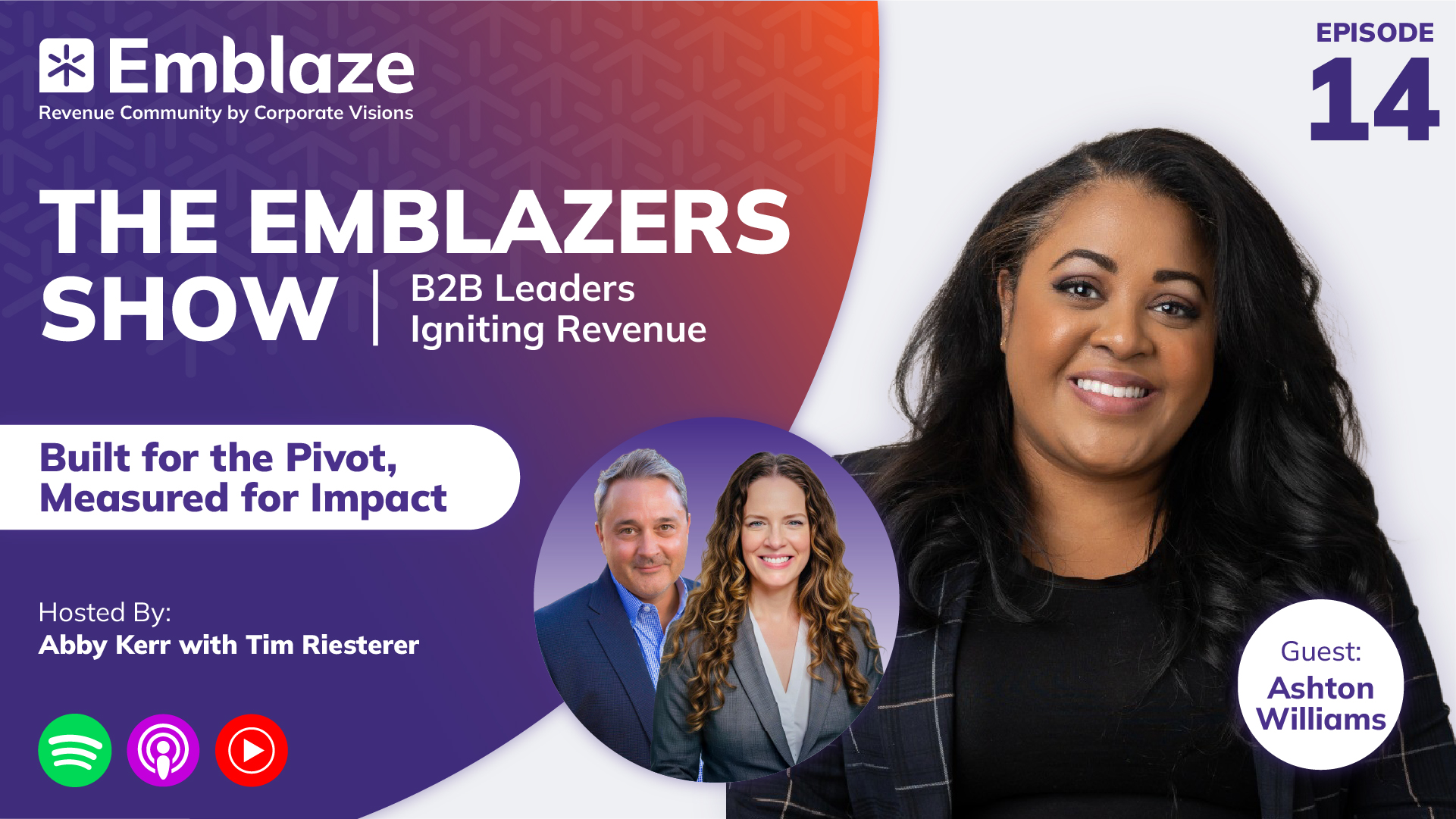
Built for the Pivot, Measured for Impact
Enablement leaders are often asked to prove value with attendance numbers, completion rates, and satisfaction scores.
Ashton Williams, Director of SMB Enablement for the Americas at Salesforce, argues that those metrics show activity—not business impact.
Her framework moves from reach to readiness to results, connecting engagement and skill application to ramp, pipeline progression, and revenue.
Ashton describes partnering with finance, RevOps, HR, and sales to model rep break-even points, study cohorts, and test initiatives through pilots, including a financial fluency program that produced roughly 10 percent revenue uplift before broader rollout showed 15 percent.
Implication: Define the business hypothesis before building the program, then measure the path from learning to behavior to revenue.
Listen on: Spotify | Apple Podcasts | YouTube
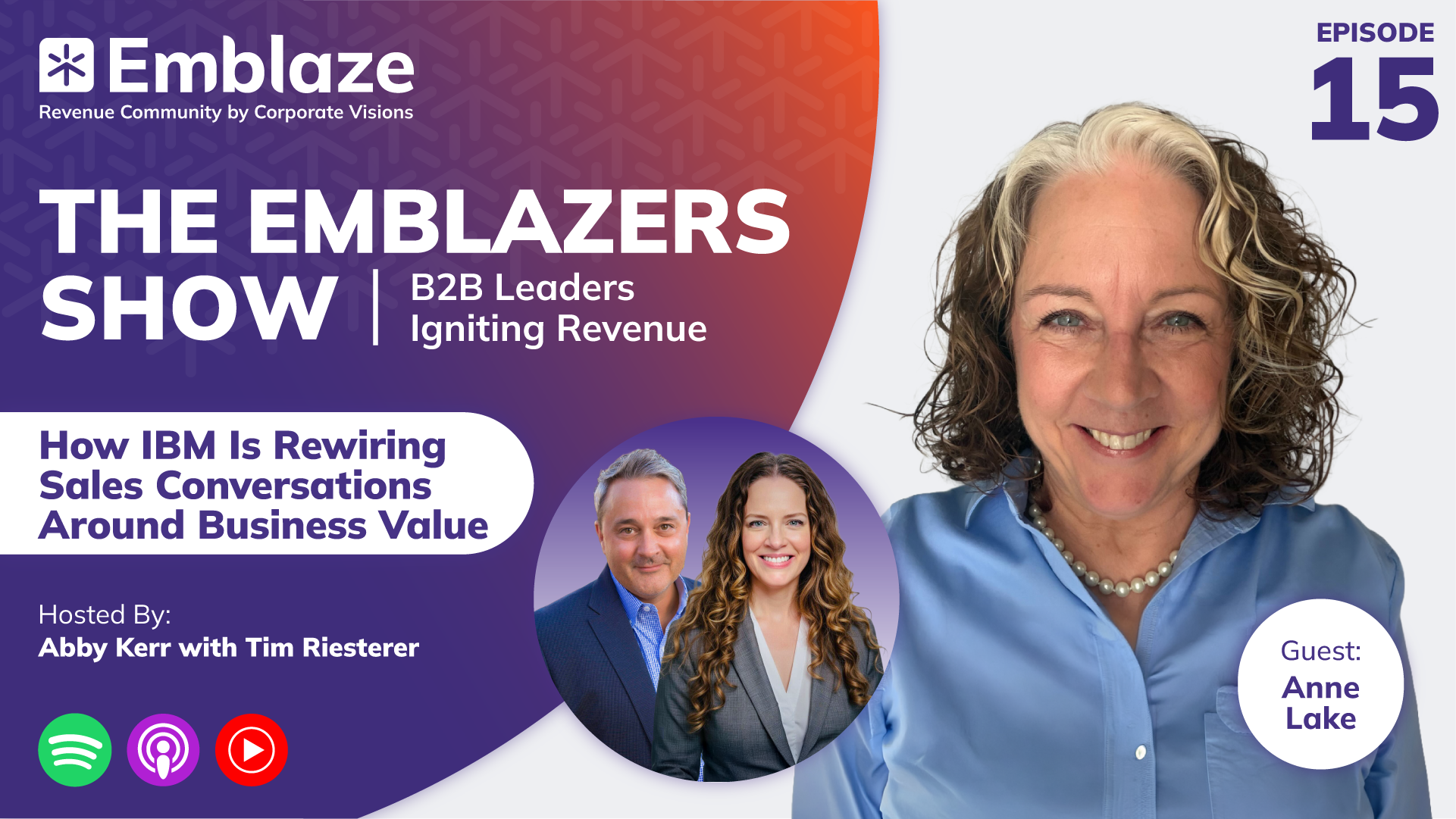
How IBM is Rewiring Sales Conversations Around Business Value
Product knowledge can tell a seller what a solution does, but it doesn’t necessarily give buyers a reason to change.
Anne Lake, Revenue Enablement Leader at IBM, describes how IBM separates product enablement—the “what to sell”—from value enablement—the “how to sell.”
IBM’s Deliver with Impact program combines value messaging, storytelling, whiteboarding, and financial business cases so sellers can explain why change is necessary, why IBM is different, and how the decision creates measurable business impact.
Whiteboarding forces sellers to simplify the story, engage buyers in the construction of the idea, and create something champions can carry into internal conversations.
Implication: Make value selling part of the sales motion itself, not a separate workshop sellers forget after training.
Listen on: Spotify | Apple Podcasts | YouTube
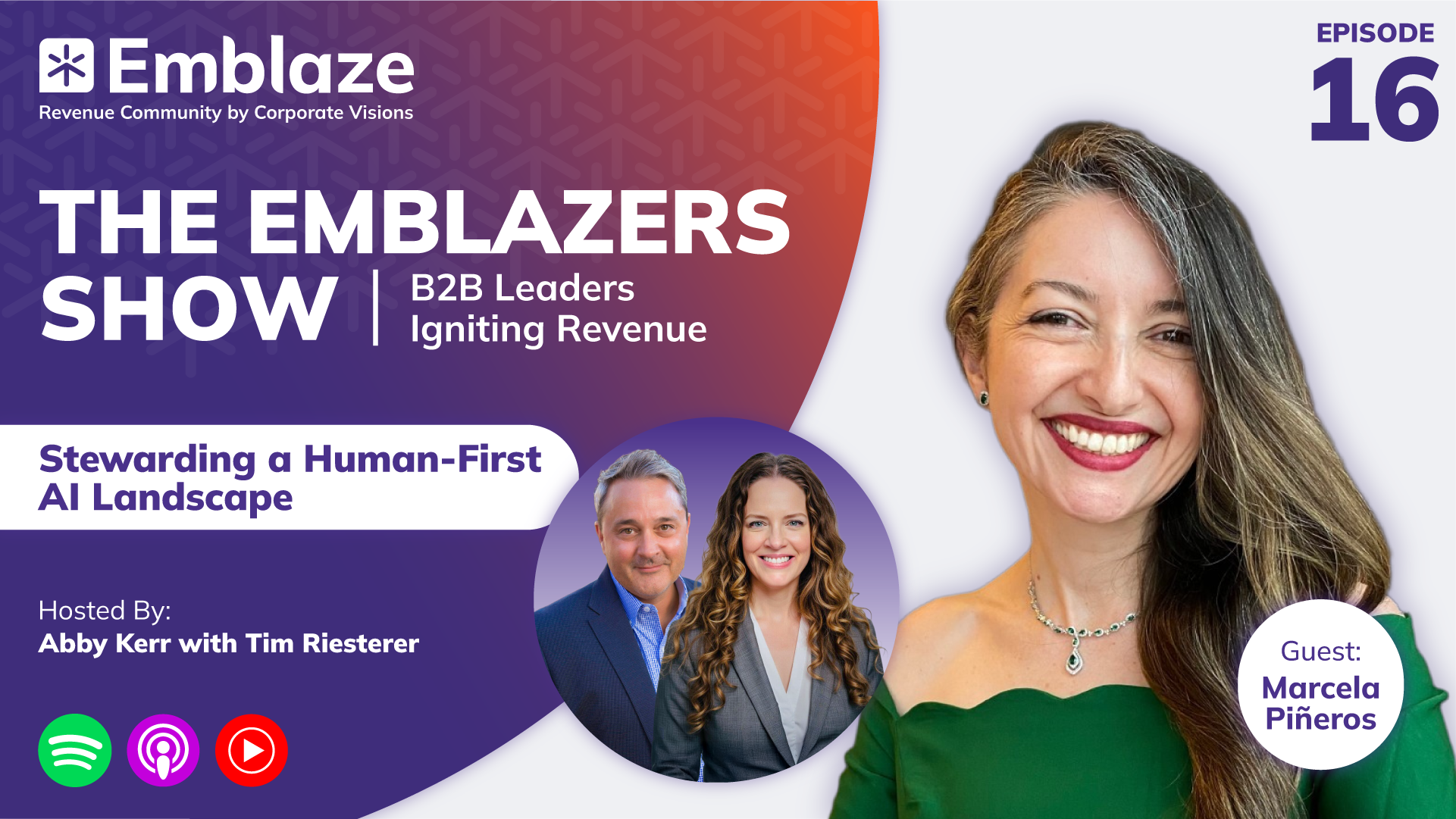
Stewarding a Human-First AI Landscape
AI strategy gets noisy when the tool list becomes the strategy.
Marcela Piñeros, Global Head of Sales Enablement at Stripe, argues that revenue teams should focus on the skills that remain valuable as tools change.
She offers three principles: see the forest rather than chase every tree, keep humans in the loop, and get clear on the real job to be done.
She also describes how enablement roles may evolve into context architects, AI enablement operations, governance leads, and AI adoption coaches, making the work more strategic, creative, and human.
Implication: Build AI capability around durable skills, clear outcomes, and trust—not mastery of the latest tool.
Listen on: Spotify | Apple Podcasts | YouTube
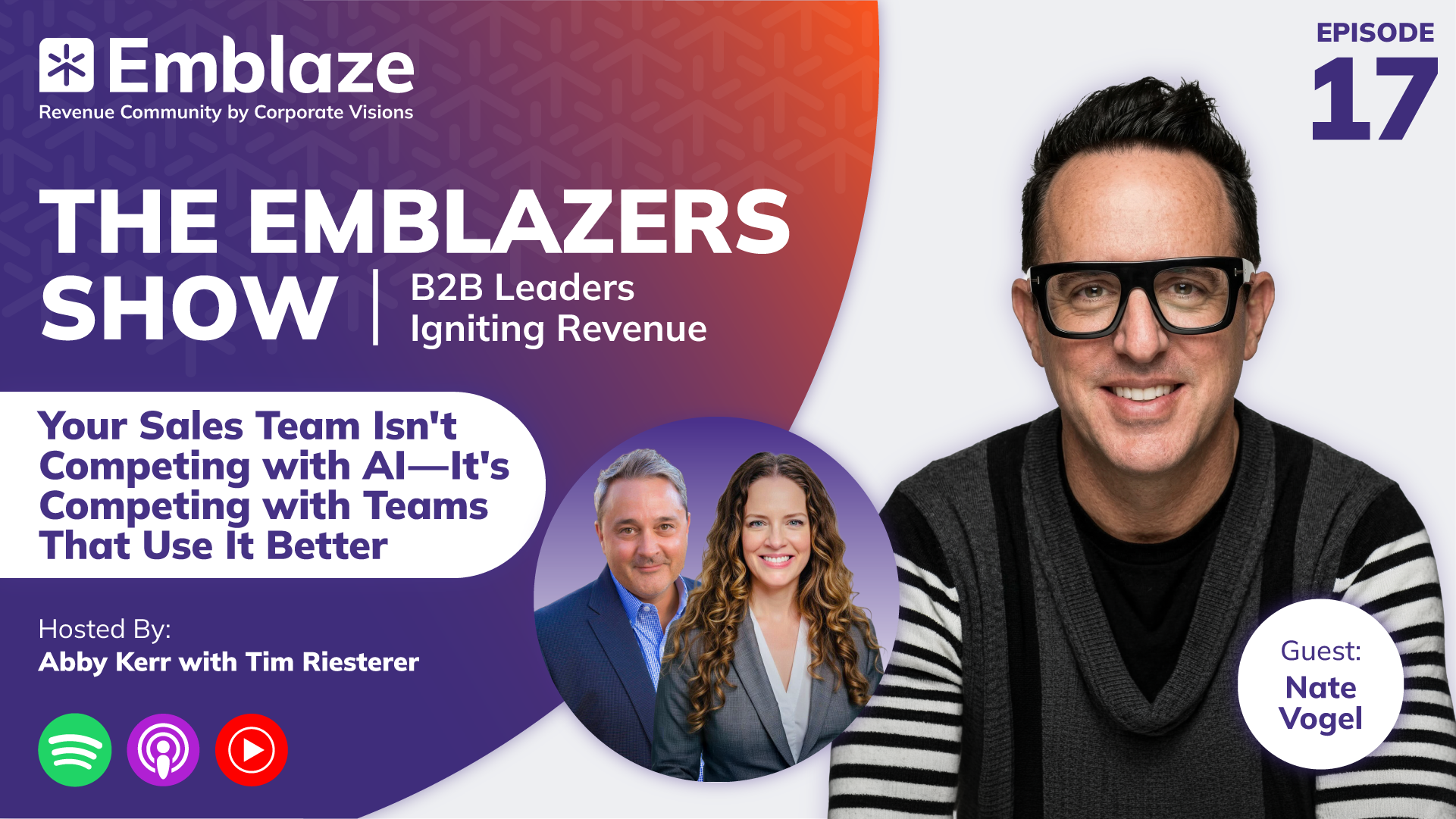
Your Sales Team Isn’t Competing with AI—It’s Competing with Teams That Use It Better
AI may improve productivity, but Nate Vogel, Global Vice President of Revenue Enablement at Constructor, argues it won’t remain a differentiator for long.
He treats tools and AI agents as part of his enablement team, runs one-on-ones with them, and turns leaders into enablement extensions so a small team can scale its reach.
That operating model frees sellers to focus on what AI can’t reliably supply: curiosity, authenticity, business acumen, problem-finding, and the ability to create a customer experience that feels earned.
Nate also makes the case for deeper technical fluency, partner enablement, and disciplined use of data to see where conversations are working and where sellers need to move from AI-generated 101 knowledge to 201- and 301-level insight.
Implication: Use AI to expand your team’s leverage, then invest in the human and technical skills that make customer interactions meaningfully better.
Listen on: Spotify | Apple | YouTube
Build the System, Not the Stack
These conversations point to the same operating principle: scale doesn’t come from adding more content, tools, or training events. It comes from making the right skills visible, connecting them to business outcomes, and reinforcing them inside everyday work.
The leaders featured here are building systems that give sellers more practice, managers better signals, buyers clearer value, and teams a more grounded way to use AI.
While AI can expand the team, but it can’t replace the judgment, technical fluency, curiosity, and trust that create a differentiated customer experience.
Your next move is to identify the performance problem first, define the human behaviors that matter, and then choose the technology that makes those behaviors easier to practice, observe, and improve.