AI is no longer the shiny “next thing” in B2B revenue. It’s the water your teams swim in.
Forecasting agents comb your systems. Outbound tools promise scale. Enablement platforms push micro-coaching into every corner of the funnel.
But if these four Emblazers Show conversations make anything clear, it’s this: AI only amplifies whatever human system you already have. If your leadership standards are fuzzy, if your prospecting is built on stale assumptions, if your sales model is misaligned, or if your team’s skills aren’t tuned to the moments that actually decide deals, AI will just expose the cracks faster.
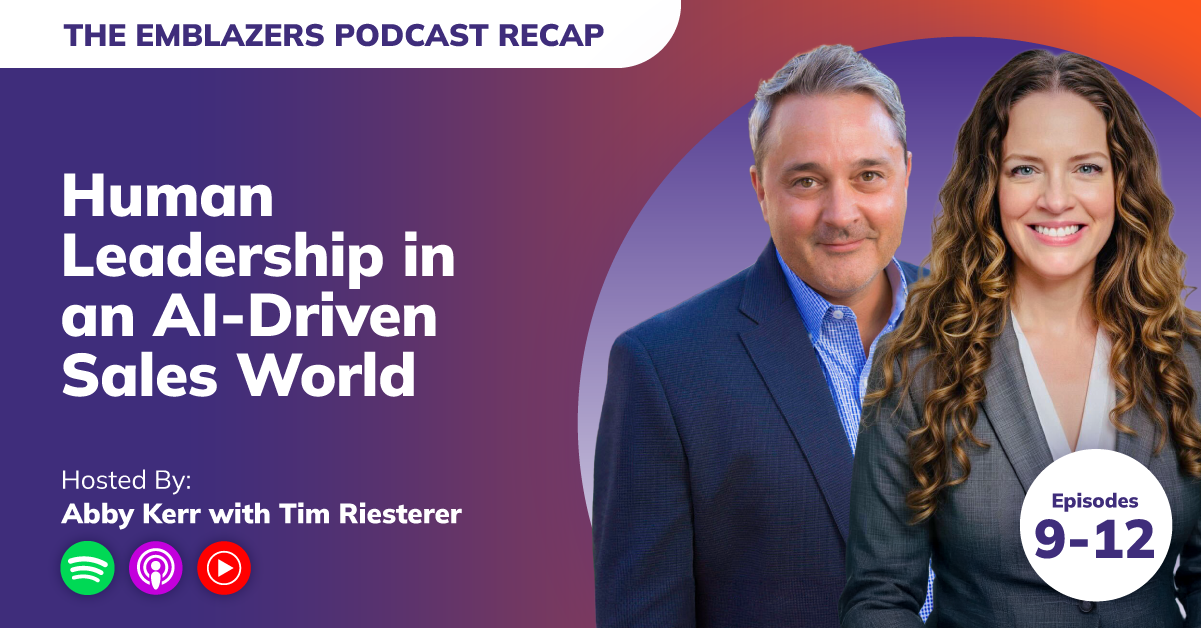
Across episodes 9 through 12, Kevin Bognar (Stripe), Becc Holland (Flip the Script), Frank Cespedes (Harvard Business School), and Tim Riesterer attack that problem from different angles.
You see a common tension: leaders are under pressure to deliver predictable growth in a world that feels “unprecedentedly unpredictable,” while their teams are being told that AI can fix almost anything.
These guests argue the opposite. The teams that win will be the ones that get more precise about where humans matter most: how you lead in an AI-powered culture, how you create demand instead of chasing it, how you use AI without surrendering your strategy, and how you scale the human interactions buyers now say they value more than ever.
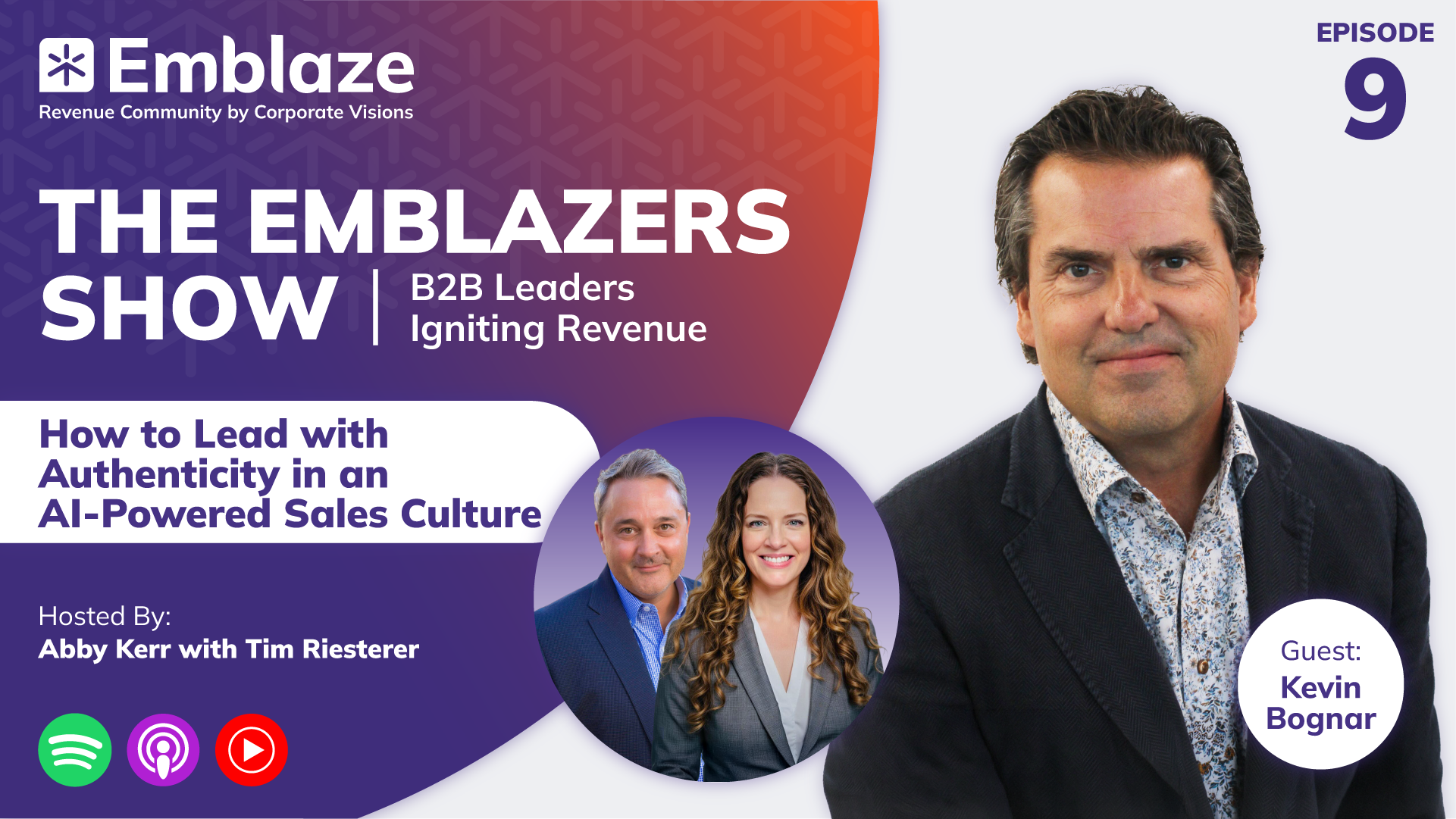
Leading an AI-Powered Sales Culture without Losing the Plot – Kevin Bognar, CRO, Stripe
Kevin Bognar’s world is a fast-scaling, AI-infused revenue engine at Stripe, powered by a largely early-career sales force that has never known a world without digital tools.
His challenge: build a culture that feels modern and human, while also driving the kind of predictability boards demand.
Kevin starts with five leadership principles, from simplification and collaboration to “world-class selling” and culture by design, not accident.
AI enters as a force-multiplier, with agents that auto-create Jira tickets, prospecting models that find lookalike accounts, and legal-checklist bots that prevent painful rework—tools that give sellers more time with customers and sharpen forecast accuracy—while Kevin leads this new generation through visibility, recognition, and community, from his shoeshine “Time to Shine” series to Stripe’s in-office rhythms, not Glengarry-style pressure.
The implication: if you want AI to make you more predictable, start by clarifying the human standards that AI should actually support. Then use AI to remove friction and noise so those standards can show up in more deals, more often.
Listen on: Spotify | Apple Podcasts | YouTube
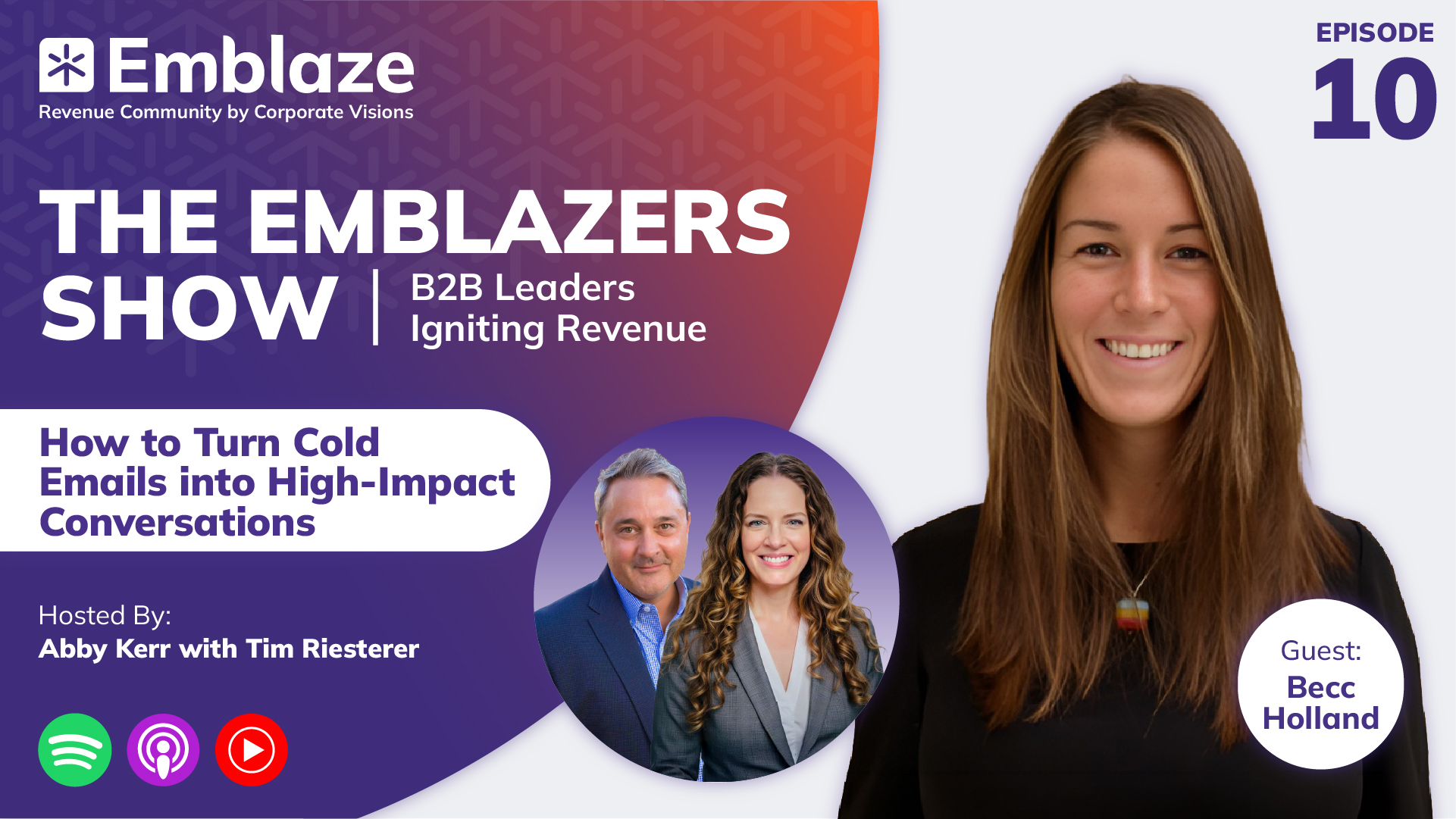
Turning Cold Outreach into Demand Creation, Not Just Noise – Becc Holland, CEO, Flip the Script
Becc Holland doesn’t mince words about traditional prospecting math. The old model, blast thousands of lightly customized emails and hope to bump into in-market buyers, no longer works when reply rates hover around half a percent and inboxes are saturated.
Her argument: revenue teams have to stop trying to capture preexisting demand and start creating new demand in every cold touch.
That means your outreach can’t just restate known pain and ask, “Do you struggle with X?” If the pain were big enough, they’d already be acting. Instead, Becc pushes sellers to surface problems buyers didn’t realize they had, using lagging KPIs (like gross margin or server uptime) and leading indicators (like backup success rates or latency) to reveal hidden risk and impact.
She gets uncomfortably practical on email deliverability, subject lines, readability, and the kinds of questions that actually earn thoughtful replies. And she’s blunt with leaders: it’s your job to own routing, sequencing, and shell-writing so reps can focus on the 10–15 percent of personalization that really adds value.
The implication: if you want more pipeline from outbound, stop measuring volume and start measuring how often your emails change how buyers think about their situation, and equip your teams with the expertise and structure to do that at scale.
Listen on: Spotify | Apple Podcasts | YouTube
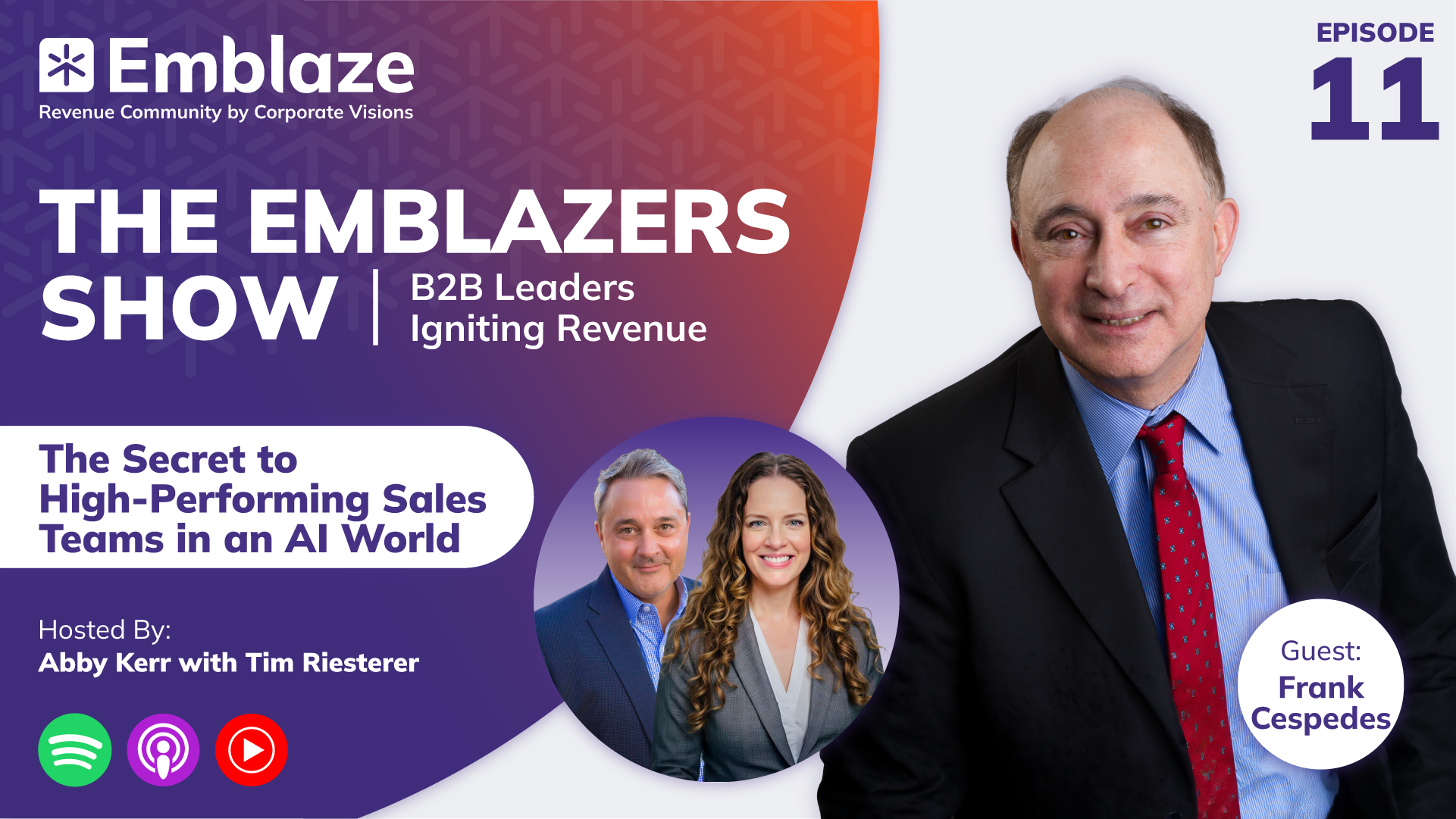
Using AI without Abdicating Strategy – Frank Cespedes, Senior Lecturer, Harvard Business School
Frank Cespedes brings a hard-nosed operator’s lens to the AI conversation. Yes, AI is a big deal, and yes, it can materially change sales performance, but only if the fundamentals are already in place.
AI is available to everyone, he argues. By itself, it’s just another cost of doing business. The differentiator is how well your sales model clarifies where you play, who you serve, and how your teams execute.
Used well, AI can dramatically increase customer-contact time by stripping away administrative work and help identify lookalike accounts that match your best customers. Used poorly—on top of dirty CRM data, fuzzy strategies, and volume-driven comp plans—it simply automates bad bets.
Frank pushes leaders to treat AI as an amplifier of good discipline, not a substitute for it. That means tightening your definitions of leads and opportunities, aligning compensation with the kinds of deals that actually build enterprise value, and shortening the gap between planning cycles and market reality through rigorous account and performance reviews.
The implication: before you ask what AI can do for you, ask whether your data, strategy, and management rhythms deserve that level of acceleration.
Listen on: Spotify | Apple Podcasts | YouTube
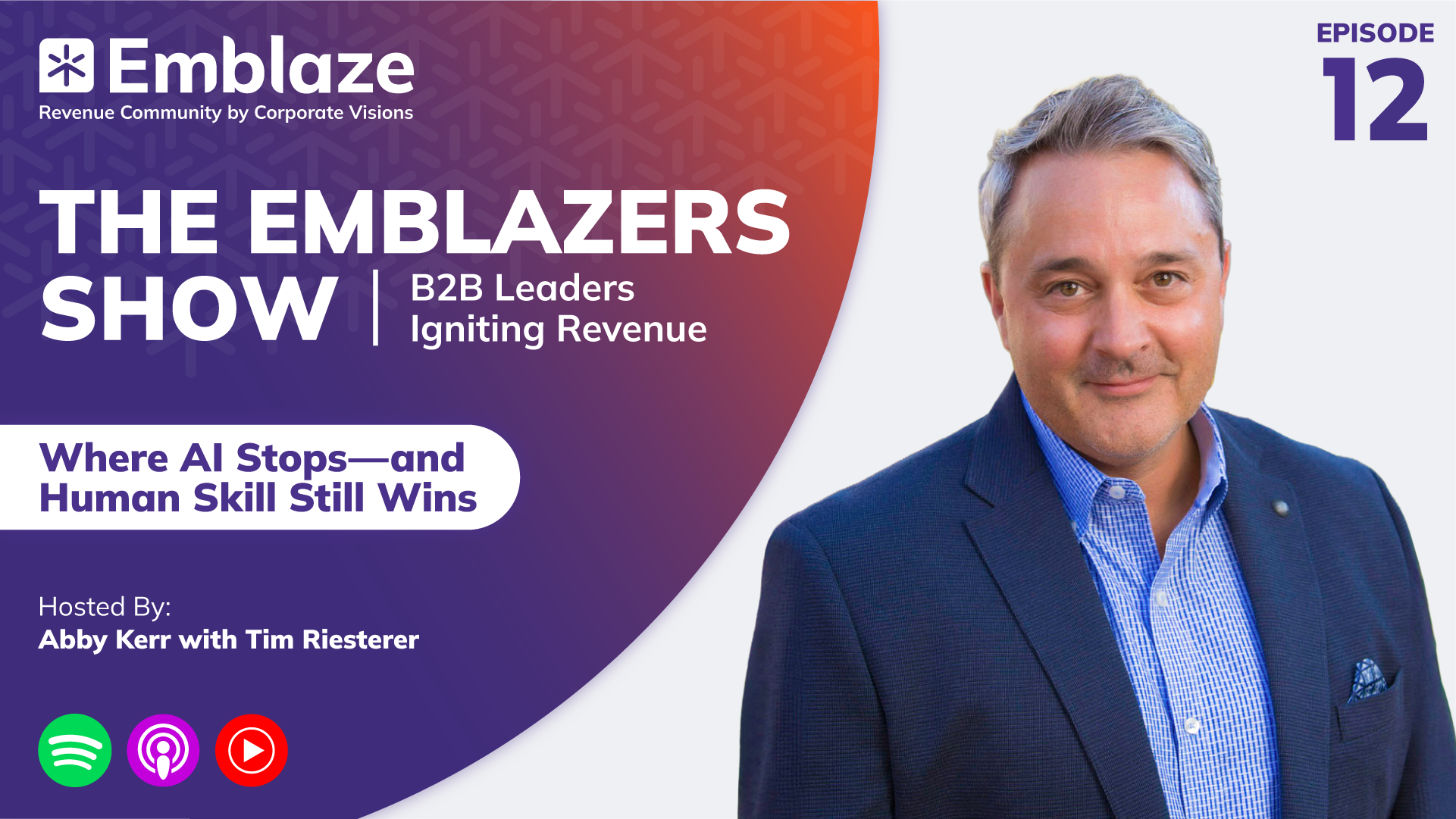
Scaling Human Skills That Still Win – Tim Riesterer, Chief Strategy Officer, Corporate Visions
Tim Riesterer closes this run of episodes with a keynote that reframes the AI debate from the buyer’s perspective.
He surfaces a striking Gartner reversal: after years of predicting “rep-free” buying, new data suggests that by 2030, 75% of B2B buyers want to prioritize human interaction over AI at critical decision points in complex, high-stakes deals. Those buyers aren’t asking for more methodology slides. Instead, they’re asking for specific human experiences that actually move decisions.
Drawing on a database of 150,000 B2B wins, losses, and renewals, Tim outlines eight predictive buyer experiences for acquisition and eight for retention—interactions that are measurably correlated with winning or keeping business.
He then connects the dots to how you assess, improve, and scale those human skills. With performative simulations (think “SAT for sales”) and AI-enabled stage-by-stage “agents” that integrate steps, skills, and stories, you can finally measure who’s good at the interactions that matter and target development accordingly.
The implication: AI’s real value in sales isn’t replacing humans, it’s making your human interactions more consistently great at the exact moments your buyers now say they care about most.
Listen on: Spotify | Apple Podcasts| YouTube
Building Human-Centered, AI-Enabled Revenue Systems
Taken together, these four episodes argue for a different kind of “AI strategy.” Not a tools race, but a leadership choice: decide which human experiences you want to be known for, then let AI and process serve those—not the other way around.
If your team is working hard but results still feel inconsistent, the fix is unlikely to be “more AI” or “more activity.” It’s more precision.
Define the standards. Teach the skills. Clean the data. Then let AI do what it’s best at—freeing humans up to do the parts only they can.