Solutions and such do some things and some other things here Maecenas sed diam eget risus varius blandit sit amet non magna. Aenean lacinia bibendum nulla.
You’re measured on different outcomes—but your success depends on the same buyer decisions. This is where you find the programs and proof built for your goals.
Choose your role to see what that looks like in practice.
When teams rely on opinions, content gets noisy and inconsistent. Our resources are grounded in buyer evidence—so you can sharpen decisions, messaging, and execution.
Find insights, articles, webinars, and more evidence-backed resources to grow revenue.
7 Science-Backed Ways to Be a More Memorable Seller
Madeline Cunningham /
August 27, 2026 /
Digital Selling, Sales Skills
Buyers rarely choose a solution in the room with you. They compare options, revisit the problem later, and explain the decision to other stakeholders.
If you want buyers to choose your solution, they need to remember it. Most sellers assume the key points about their solution will stick if the conversation goes well. But buyers are busy and may not be paying close attention throughout the meeting, especially in a digital setting.
So how do you make sure your solution is the one your buyers recall when their decision takes shape?
Make Your Message Stick Beyond the Conversation
Memory fuels decisions. Buyers revisit the conversation later, often without you there to explain it. If they don’t remember why your solution matters, they can’t carry that message into the next stage of the decision, repeat it to other stakeholders, or ultimately keep your solution in consideration.
The seven tips below show you how to make your message easier for your buyers to remember.
1. Decide What Your Buyers Should Remember
Neuroscience research shows that after 48 hours, buyers forget about 90 percent of what you communicate. The fragments they retain can have little to do with the decision you want them to make.
To keep the right idea from getting lost, focus on the core message you want your buyers to remember. You can do this by building a 10% message—a short, action-oriented statement that captures the takeaway you want buyers to remember and act on. Use it to ground the conversation in one clear idea, supported by three or four points that connect your solution to a business outcome buyers care about.
With a strong 10% message, sellers can explain the main points of their solution, why it matters, and what should happen next. It should be simple enough for buyers to repeat accurately and connect to the business outcome at stake.
To deploy it, you need to return to your 10% message throughout the conversation. Make it the anchor for your agenda, then build each part of the presentation around it. Research found how effective this approach is. In one Emblaze study researchers asked three different groups of participants to view a 20-minute presentation. In one version, the 10% message was repeated six times. A second version repeated it 12 times. And the third version repeated the 10% message 20 times. More repetition helped participants remember the message with greater clarity. Forty-six percent of people who saw the main message repeated 20 times remembered it with precision, which was the highest of any of the groups.
Repeat your 10% message throughout your sales presentation to help buyers remember your main message.
Without having your 10% message as an anchor, buyers can leave remembering a clever example, a product detail, or a passing comment that has little to do with the decision. Identify the takeaway first, then give every part of the conversation a job in reinforcing it.
2. Use Sequence to Shape Memory
Buyers need to see what your solution lets them do, why that matters, and which capabilities make it possible. The order in which you explain these things affects what buyers remember.
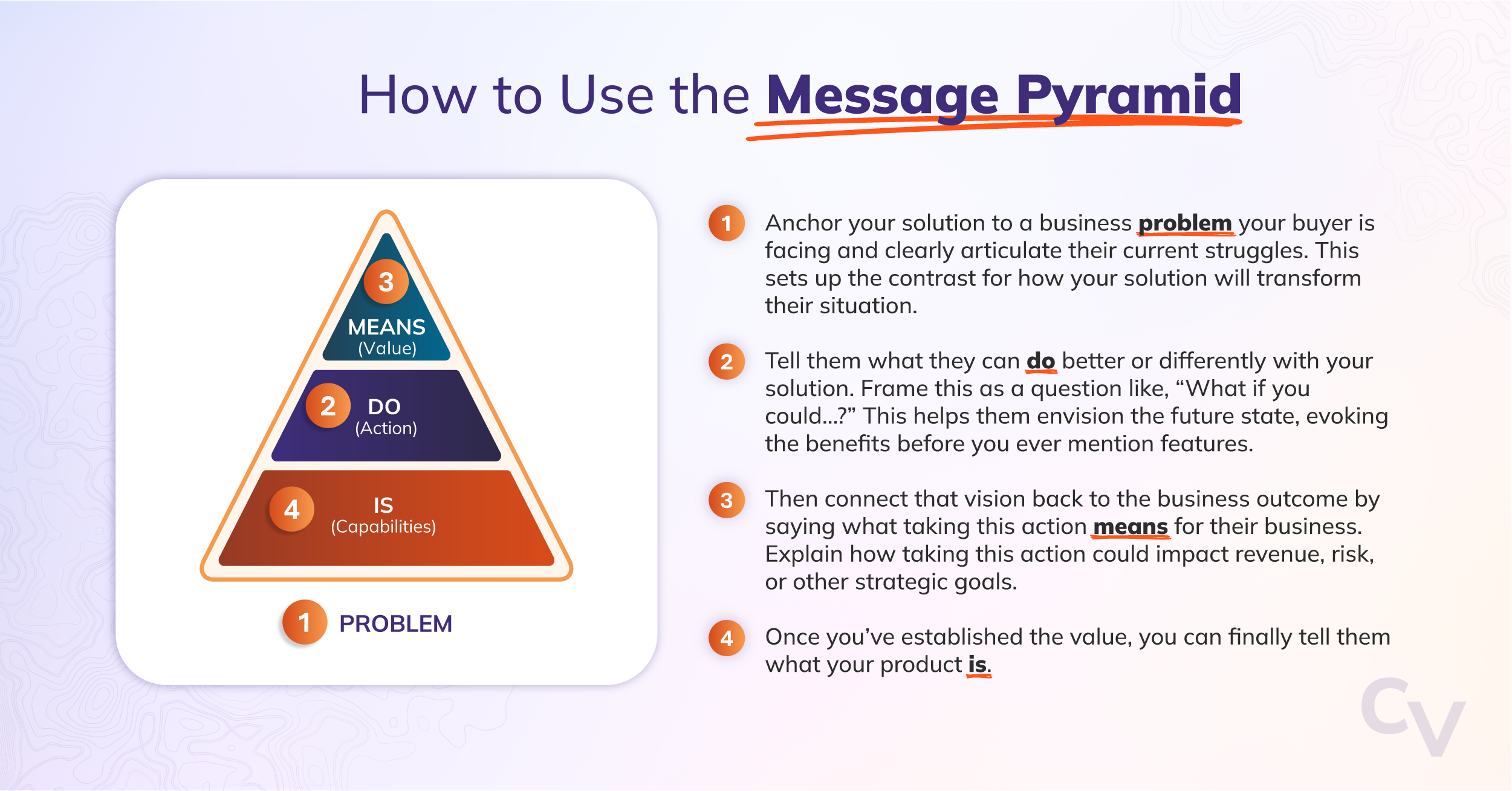
In an Emblaze neuroscience study of complex B2B content, researchers tested six ways to order those elements. The strongest sequence started with what buyers could do, connected those applications to business outcomes, and then explained the capabilities behind them. This Do–Means–Is sequence produced the highest memory score 48 hours later and the strongest synchronization across buyers. The study tested the order of these solution elements within the presentation, not the structure of the entire presentation.
When you introduce the main features of a complex solution, lead with what buyers can do, connect it to the outcomes they care about, then explain the capabilities that make those outcomes possible.
Here’s how to use that sequence in your sales:
3. Make the Value of Change Concrete
Clear information isn’t automatically memorable. Buyers hold on to ideas that give them a reason to care and a way to imagine the consequences.
Research from Daniel Kahneman shows that buyers often use intuition and emotion to shape a decision, then use logic to justify it. Facts can support that decision, but facts alone are difficult to remember. Connect the facts to a risk, consequence, motivation, or visible change in the buyer’s situation. Buyers can then see why the issue matters, what happens if nothing changes, and what outcome the solution makes possible.
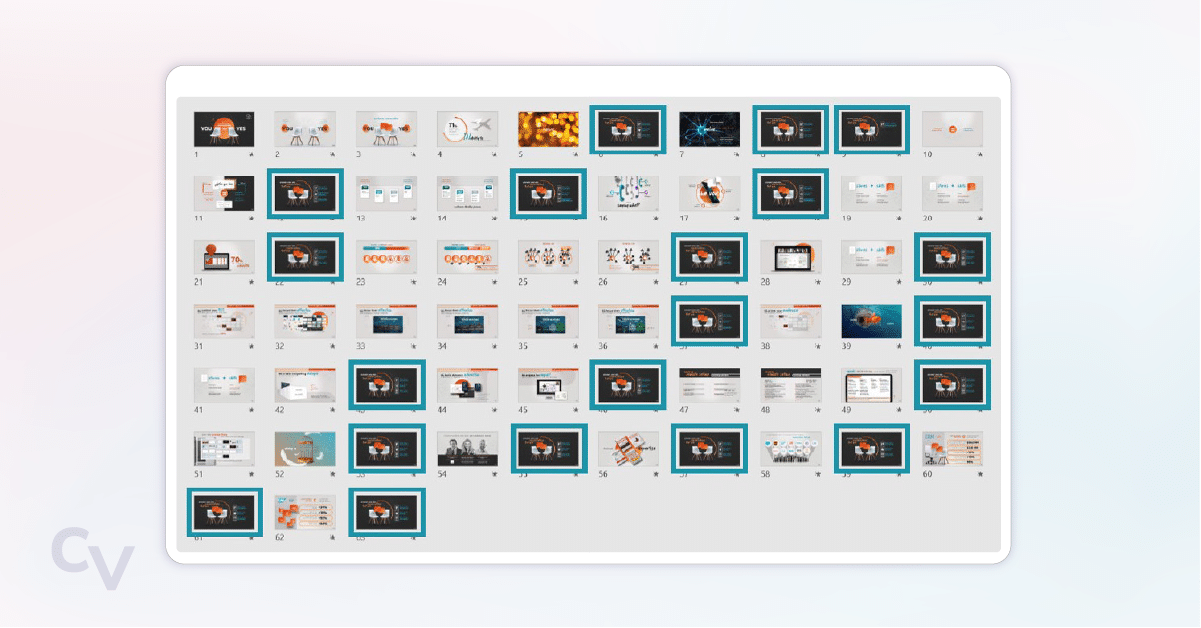
Memorable sellers make the stakes visible by showing buyers the consequences of continuing with the current approach and the outcomes a change could produce. See an example here:
Use the same approach with abstract claims. “Our solution drives transformation” gives buyers little to picture. A customer story or a specific before-and-after moment shows what the concept looks like in practice, so buyers can understand it and explain it later.
4. Embrace Complexity
Sellers often treat a buyer’s short attention span as a reason to flatten their message. But even though buyers face more competition for their attention, simple content rarely earns it.
You don’t need to reduce a substantive idea to something thin and forgettable. You need to direct attention deliberately.
Research supports this. In one study, buyers who saw a more complex presentation remembered the main message with 15 percent more precision 48 hours later and retained 33 percent more concepts overall.
The study also examined how people from different countries handled complexity. When the presentation was in participants’ native language, native speakers remembered more from the complex version, while non-native speakers showed no negative memory effect.
So, avoid the instinct to simplify everything. Buyers can handle, and remember, complex information.
See some practical guidelines from presenting complex information here:
5. Guide Attention with Visuals in Your Presentation
The way you use visuals shapes what buyers notice and what they remember.
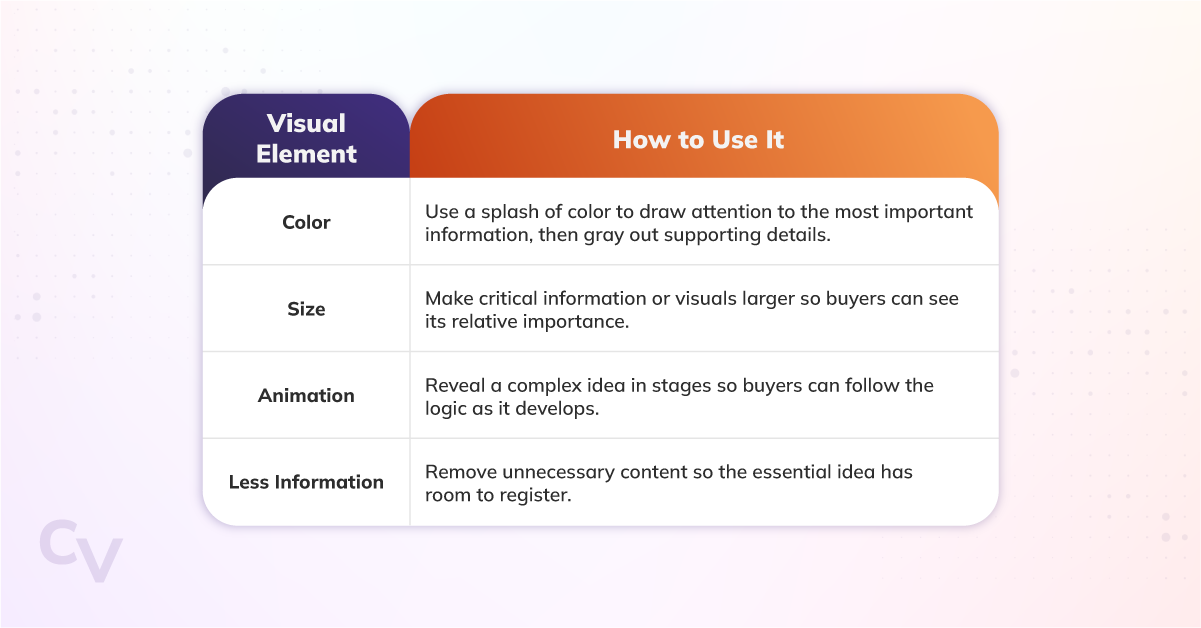
Dr. Carmen Simon, a cognitive neuroscientist and Corporate Visions research partner, describes this as “return on attention.” When you invest in the certain visual elements, buyers can focus on the idea, process it, and recall it later.
Use color, size, animation, and less unnecessary information to direct attention to the part of your slides that carries the story.
Learn more about how to use these elements and the science behind them in this video:
You don’t need to include every kind of visual stimulus on every slide. But you should use some to direct buyers to what you want them to notice and remember.
6. Use a Human Touch in Design and Delivery
While AI can speed up parts of sales content creation, it doesn’t automatically make the result easier to remember.
In one study, participants watched the same sales presentation in one of three conditions:
Human-designed slides with a human presenter
AI-designed slides with a human presenter
AI-designed slides delivered by an AI presenter
Researchers measured attention, cognitive load, emotion, and long-term memory rather than relying only on what participants said they preferred.
Participants who saw human-designed slides delivered by a human presenter had the strongest long-term memory scores 48 hours later. The presentation focused on software that B2B organizations use to find insights in large amounts of data and included three customer examples. The group that had the human-designed slides and human-delivery remembered almost all three examples, while participants who saw AI-designed slides delivered by an AI presenter barely remembered one.
A buyer who remembers a customer example can retell it to peers or use it to support their decision internally. When you apply human judgment to the design and delivery, buyers can process the message more easily and are more likely to remember it.
7. Don’t Just Talk Through Slides
What you do with the message can matter as much as the message itself. Buyers need a way to follow the idea, not just receive a polished presentation.
One study found, buyers who watched a whiteboard presentation showed a 16 percent improvement in memory compared with buyers who watched a PowerPoint presentation or heard someone talk through a single slide. In a separate neuroscience study, business professionals showed a 91 percent difference in visual attention to important elements in favor of whiteboarding versus slides.
Movement adds another layer. That same study found that participants who drew along with a whiteboard presentation showed a 21 percent memory advantage over passive viewers, including 22 percent better memory for statistics. When participants watched slides, those who took handwritten notes remembered 15 percent more overall than passive viewers and 80 percent more statistics.
So, invite your buyers to participate. Annotate as you explain the idea, ask them to take handwritten notes, or use a whiteboard to reveal the logic in real time. As buyers engage with the idea through their eyes, hands, and attention, they’re more likely to remember it.
Learn more here:
Give Buyers Something to Remember
Buyers revisit the problem, compare options, and explain their thinking to other stakeholders after the conversation ends.
The ideas they can recall and repeat are the ones that stay in the discussion. Start with one clear message, connect it to a problem buyers recognize and a consequence they can picture, then reinforce it through the sequence, visuals, and delivery of the conversation.
When buyers remember and carry your message into the next stage of the decision, they’re more likely to keep your solution in the consideration.
Most sellers claim to sell with insights, but few do it well. See what separates visionary insights from recycled analyst data, and how to deliver them so buyers act.
Learn how precise sales prospecting helps sellers build better pipeline by building a digital presence, earning qualified meetings, and winning back lost customers.
Prolonged discovery and scripted demos slow deals down. These 12 science-backed sales tips and tricks show you how to shorten your sales cycle, create urgency, and win more revenue.
Madeline Cunningham, Content Marketing Manager, is a content and communications leader with a track record of helping organizations strengthen communications, improve processes, and drive revenue impact. With experience supporting multimillion-dollar RFPs and enterprise-level marketing initiatives, Madeline brings a strategic, revenue-focused lens to storytelling.