Sales prospecting is the work of identifying the right buyers, earning their attention, and creating early conversations that deserve to advance.
That definition sounds simple. In practice, it gets messy fast.
Your sellers can send more emails, make more calls, and book more meetings without improving the quality of what enters pipeline. In many teams, that is exactly what happens. Activity rises. Calendars fill. But confidence in pipeline does not.
The assumption behind that activity is simple: if outreach goes up, pipeline should follow.
That logic has gotten harder to defend.
HubSpot reports that 96 percent of prospects research companies and products before engaging with a sales representative, and 71 percent prefer independent research over talking to a rep. By the time outreach lands, buyers may already have formed an opinion about whether a seller is worth their time.
Prospecting is no longer just about getting in front of more people. Your sellers need to earn attention in an environment where buyers screen first, respond later, and often decide whether to engage before a conversation ever starts.
Why Sales Prospecting Matters More Than Most Teams Think
Prospecting happens before discovery, before demos, and before a deal has enough shape to show up credibly in forecast.
That is exactly why it deserves more scrutiny than it usually gets.
When poor-fit opportunities enter your pipeline early, every later stage gets noisier. Sellers spend time chasing accounts that were never likely to move. Managers coach deals that should have been qualified out. Forecast discussions turn into debates over deal hygiene instead of deal strategy.
In other words, prospecting is the first quality control point in revenue creation. Without discipline here, sellers waste valuable time chasing opportunities that were never worth pursuing.
The Three Prospecting Competencies That Improve Pipeline Quality
Instead of waiting until discovery, messaging, negotiation, or expansion to get precise about seller behavior, you should move that precision upstream to the moment pipeline begins. That means showing up credibly before outreach begins, earning meetings with the right buyers, and re-engaging closed-lost accounts with a message that matches why the customer left in the first place.
1. Build a Digital Presence
Before a seller gets heard, they often get screened.
Buyers and stakeholders look at profiles, digital signals, and evidence of credibility before they reply. In some cases, they’re not deciding whether the outreach message is brilliant. They are deciding whether the seller looks worth engaging at all.
That is the invisible filter.
When a seller’s digital presence gives no reason to trust their perspective, response rates can drop before message quality ever has a chance to matter. Teams that overlook this tend to misdiagnose the problem. They rewrite email copy when credibility broke down much earlier.
Sellers need to build a buyer-facing digital presence that works before outreach starts. In practice, that means they need to:
- Turn their profile from a recruiter-focused résumé into a buyer-facing resource
- Showcase who they help, what outcomes they drive, and why they’re credible at a glance
- Share insights and proof that signal relevance to hidden decision-makers before outreach begins
- Expand their influence beyond direct contacts so more of the buying group sees and trusts their thinking
Sellers get a better chance of getting a meeting when they have a strong digital presence. Sales leaders also gain something more concrete to coach than generic advice about being more active on LinkedIn.
2. Win Meetings with Qualified Prospects
A booked meeting is easy to celebrate. It’s also easy to overvalue.
Prospecting creates noise when sellers optimize for access without testing whether the buyer, problem, and timing justify the conversation. That is how teams end up with calendars that look full and pipelines that don’t convert.
A better standard starts earlier. Sellers need to target more precisely, lead with relevance, and qualify a buyer’s problem before time gets wasted on both sides. The point is to earn high-quality meetings with buyers who have a real reason to keep talking.
Sellers need to do more than personalize a subject line or push harder for a meeting. They need to:
- Target prospects based on account markers, relevant roles, and real business challenges
- Lead outreach with data and insights that connects to a real problem and ask questions that give buyers a reason to engage
- Qualify the buyer’s problem early by deciding whether they have an issue that you can actually solve
- Decide with confidence when to progress, keep exploring, or qualify out
This is where prospecting starts to connect directly to pipeline quality. When sellers qualify earlier, managers get cleaner opportunities to coach, forecast discussions improve, and the business spends less energy on activities that never had much chance of becoming revenue.
3. Win Back Lost Customers
Most teams treat closed-lost accounts as a graveyard or a generic follow-up list.
That leaves money behind.
Former customers and past opportunities already come with context, history, and some level of prior credibility. That makes them attractive. It also makes them easy to mishandle. Sellers often reach back out to lost customers with messages that sound defensive, vague, or indistinguishable from a standard acquisition pitch.
The stronger approach starts with diagnosis. Why did the customer leave? What kind of loss was it? What has changed in their world since then?
A study from Emblaze and Dr. Leff Bonney of the Florida State University Sales Institute tested win-back messages with more than 300 B2B sellers. One of the central findings is that message effectiveness changes based on why the customer left.
In practice, that means sellers need to tailor their message to the reason the customer was lost in the first place.
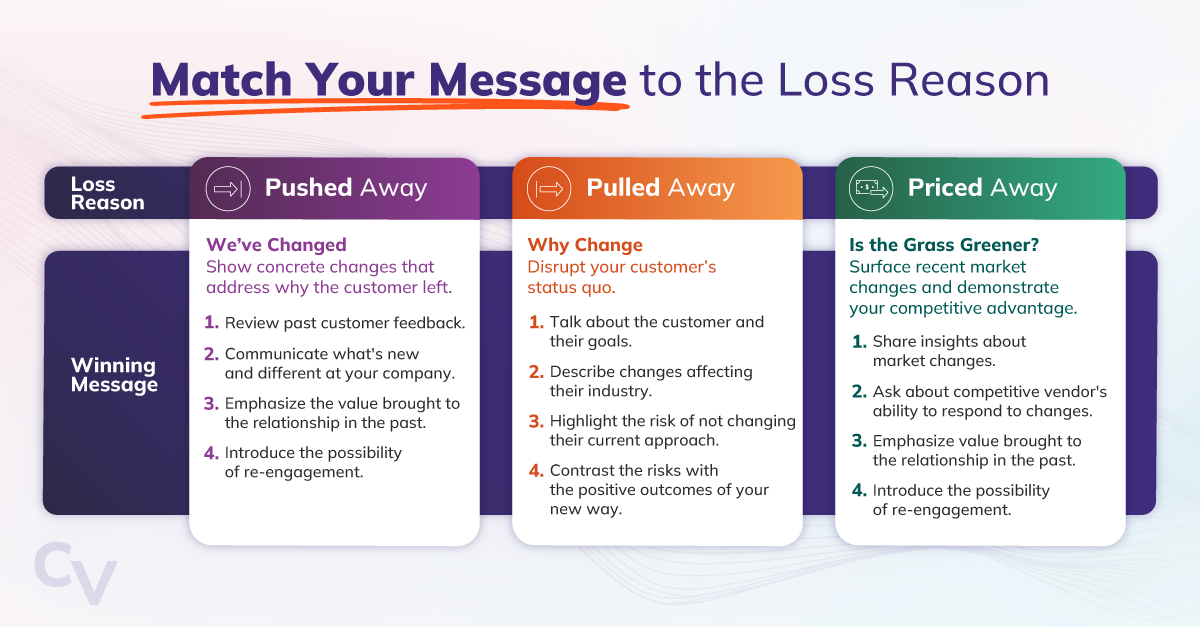
The bigger point is that closed-lost accounts should not sit outside your prospecting strategy. When sellers can diagnose why the business was lost and match the message to that context, they have a better chance of reopening conversations that still hold value. That gives teams a more deliberate way to recover pipeline they would otherwise leave behind.
Why These Competencies Work Better Together
These three competencies map to a more modern prospecting funnel.
First, sellers need credibility before outreach.
Then they need to earn and qualify early conversations with the right buyers.
Then they need a deliberate path back into closed-lost accounts that still hold value.
That is a more coherent system than treating prospecting as a loose collection of channels and tactics. It also connects more naturally to the rest of the sales motion. The same discipline you apply to buyer conversations later in the cycle should shape how sellers create pipeline in the first place.
How to Measure Prospecting Success
If you want to improve prospecting, you need better measures than raw activity alone.
Calls made, emails sent, and touches completed can tell you whether sellers are doing the work. Those signals cannot tell you whether the work is producing conversations worth advancing.
Response rates, meetings held, opportunities created, and pipeline generated tell you more about whether prospecting is creating real momentum. These measures matter because they connect effort to business outcomes.
Qualified-out rates deserve attention, too. When sellers remove low-potential prospects early, the pipeline gets cleaner and the team can spend more time on opportunities that can actually close.
Turn Prospecting Skill Gaps into Pipeline Growth
Once prospecting is broken out into the specific competencies that drive better pipeline, you can focus on training and coaching where they will actually change outcomes.
That starts by looking more closely at the moments that shape pipeline earliest: how sellers show up when buyers research them, how they decide which meetings deserve pursuit, and how they re-engage accounts that still hold value but need a different message than the one that failed the first time.
When you inspect those moments with more precision, prospecting becomes more than motion. It becomes a cleaner way to create pipeline, a better way to focus coaching, and a stronger way to raise the standard for what enters your funnel.