Solutions and such do some things and some other things here Maecenas sed diam eget risus varius blandit sit amet non magna. Aenean lacinia bibendum nulla.
You’re measured on different outcomes—but your success depends on the same buyer decisions. This is where you find the programs and proof built for your goals.
Choose your role to see what that looks like in practice.
When teams rely on opinions, content gets noisy and inconsistent. Our resources are grounded in buyer evidence—so you can sharpen decisions, messaging, and execution.
Find insights, articles, webinars, and more evidence-backed resources to grow revenue.
11 Surprisingly Effective Sales Techniques, Backed by Research
Tim Riesterer /
June 24, 2026 /
Sales Skills
Who couldn’t use an arsenal of effective selling techniques? If you truly want to improve how you sell, look no further than this research-backed collection of the very best sales techniques.
What makes these sales techniques “the best?”
The short answer is that these B2B sales techniques aren’t based on personal experience, unexamined folklore, or any so-called “best practices.”
One thing that’s clear from research studies through our Emblaze community is that the right answer is often the most counterintuitive one.
Best practices also are inherently “lagging practices.” It can take years to identify something as a best practice, and by that time, it’s a common practice.
Science, on the other hand, is objective and timeless. It’s entirely focused on the buyer’s psychology, biases, motivations, and behaviors. The science doesn’t lie. Even if these evidence-based sales techniques look counterintuitive, each one has been vetted by behavioral research studies and shown to be the most effective approach when selling to B2B decision-makers.
At Corporate Visions, we’ve:
Conducted 60+ research studies and field trials in partnership with leading Ph.D. researchers to put popular selling best practices to the test
Analyzed buyer feedback from 150,000+ won and lost B2B deals to learn about buyers’ decision-making patterns and preferences, and observe how they change over time
Based on all this research and evidence, we’ve identified 11 of the most effective B2B selling techniques right now.
What Are the Best B2B Sales Techniques?
The best B2B sales techniques are the ones that move buyers off the status quo, make your value meaningfully different from the alternatives, and lower the perceived risk of change. In practice, that means sellers should use these techniques to create urgency, introduce Unconsidered Needs, sharpen differentiation, and help buyers feel confident acting right now.
Most sellers assume the sales process ends one of two ways: you win, or your competitor does. But that’s not the full picture.
In reality, at least 40 percent of deals in pipeline end in “no decision.” Not because the buyer chose someone else—but because they chose to do nothing at all.
Inertia is the silent killer of your pipeline. Your prospects’ default choice is to stay with their status quo. And until you make their current situation feel unsafe or unsustainable, they’ll keep doing what they’ve been doing—because it feels easier, cheaper, and safer than change.
What the Science Shows: Behavioral economics identifies this as Status Quo Bias, where people subconsciously favor their current situation—even when better options are available—because the perceived risk of change outweighs the perceived pain of staying the same.
Sales Techniques that Disrupt the Status Quo:
Lead With Contrast, Not Comparison: Don’t start by pitching your solution. Start by showing what’s changed in the buyer’s world that makes their current path unsafe or insufficient.
Quantify the Cost of Staying the Same: Use data, trends, or peer benchmarks to reveal the hidden losses of inaction. Show what it’s costing them—financially, competitively, or reputationally—to do nothing.
Create a Buying Vision for Change: Guide buyers from complacency to concern by connecting emerging business risks to their strategic goals.
Make Change Feel Achievable: Once the need for change is clear, paint a picture of what success looks like with you—and make that path forward feel safe, credible, and urgent.
Key Takeaway: The biggest threat to your deal isn’t your competition—it’s your customer’s comfort zone. To win, you must first make the status quo unsafe. When you disrupt their current state and reveal the hidden costs of inaction, you don’t just sell your solution—you sell the need for change.
2. Introduce Unconsidered Needs
If you base your sales message on what your prospects tell you they need, you’re already behind.
Every one of your competitors is hearing the same things from those buyers, and responding the same way—connecting their solution’s features to the same self-reported problems. The result? Commoditized messaging.
When buyers see no meaningful difference between options, they default to the safest one—the status quo. Your “voice of the customer” data may feel helpful, but if it only reinforces what buyers already know, you’re only echoing their thinking, which dilutes your persuasive impact.
What the Science Shows:Emblaze research found that when sellers introduce provocative Unconsidered Needs—unmet, underestimated, or unknown problems that are holding your buyers back from their desired outcomes—their persuasive impact increases by 10 percent compared to messages that simply validates known needs. This works because it activates a sense of risk to your buyer’s strategic goals, triggering urgency to take action.
If your buyers are hearing the same thing from every vendor, your solution becomes a commodity.
Learn more about Unconsidered Needs in this short video:
How to Use Unconsidered Needs:
Lead with Insight the Buyer Hasn’t Heard Before: Start with an insight your buyer hasn’t considered—something that reframes how they see their current situation or reveals an unseen obstacle that’s keeping them from their goals.
Connect Unconsidered Needs to Your Solution: Show how your offering addresses the Unconsidered Needs you introduced. This creates the emotional and rational urgency to change—and helps your message stand out from your competitors. When you connect what your prospect has been missing to what only you can provide, your capabilities stop sounding interchangeable, setting you apart from other commodity providers.
Key Takeaway: Buyers don’t change when you tell them what they already know—they change when you show them what they’ve overlooked. By uncovering Unconsidered Needs, you give them tangible reasons to change and add urgency to the decision.
3. Tell Sales Stories with Contrast
Unconsidered Needs are potent tools to show your prospects the need for change. But what comes next? How do you build a buying vision that connects to your solution?
To create a powerful buying vision for change, tell stories that highlight the gap between the “before” and “after.” The value is in the contrast.
When you show stark contrast between the buyer’s current (and flawed) approach and the improved new way, they’ll see more value in changing from their status quo—and imagine themselves in the better state you describe.
What the Science Shows: Behavioral science shows that people make decisions by comparing options, not by evaluating them in isolation. This is called contrast framing—a concept rooted in Prospect Theory (Kahneman & Tversky). When buyers see clear contrast between “what is” and “what could be,” the emotional and economic value of change becomes real.
This same principle applies in executive-level conversations. When you identify missing opportunities that put an executive’s strategic goals at risk—and justify those with an ROI story that blends logic and emotion—you increase their motivation to act now rather than later.
Sales Techniques that Create Contrast:
Anchor the Story in Strategic Gaps: Highlight the Unconsidered Needs that directly affect the buyer’s top-level business outcomes.
Show the “Before” and “After”: Use a clear, visual story arc that contrasts the current situation with the improved future state your solution enables.
Justify the Decision: When presenting, especially to executives, quantify both the cost of the current state and the gain of the future state.
Key Takeaway: When you tell stories that make the cost of inaction visible and the reward of change tangible, you give your buyers a clear and compelling reason to act.
4. Avoid the Parity Trap in Sales Conversations
In crowded categories, where most solutions look and sound similar, buyers struggle to spot the difference. And when everything else feels equal, price becomes the only differentiator in their minds.
Without a unique value proposition, your deal turns into a commodity comparison or a side-by-side bake-off—a race to the bottom where nobody wins.
What the Science Shows:Emblaze research confirms that most sellers struggle to communicate uniqueness. In one study, 88 percent of marketers and sellers said they weren’t confident their buyers understood what made their solution truly different or valuable.
The research also identified a way to help your solution stand out: use Telling Details when you talk about it. Telling Details add specific, concrete, and emotionally resonant language to describe your buyer’s business problem, the capabilities that solve it, and the value those capabilities deliver.
Using this more specific and detailed language adds depth to your message, making it more concrete and believable. The extra details enhance your story and help your prospect better “experience” what you’re describing. That, in turn, boosts their confidence that your solution offers the most value.
Sales Techniques to Differentiate Your Value:
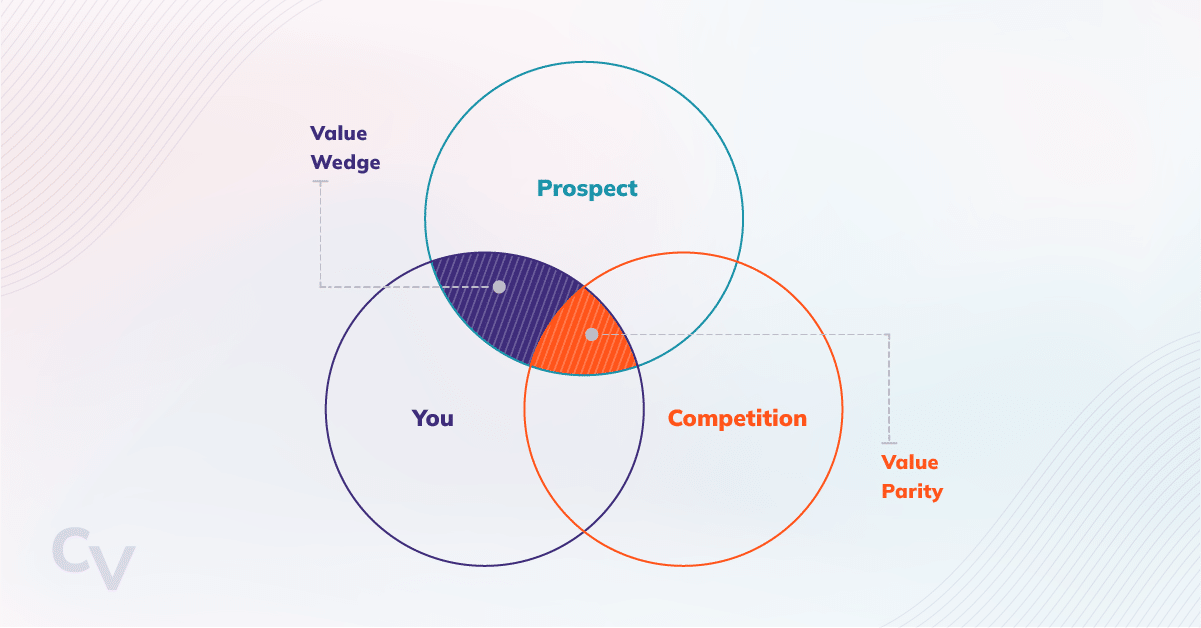
Define Your Value Wedge: Focus your message on where your unique strengths intersect with what’s most important to your buyer—and where competitors can’t easily compete.
Your value wedge is what you offer that matters to your prospect and sets you apart from the competition.
Your Value Wedge must meet three essential criteria:
It’s unique to you. Communicate a message that’s completely different than your competitors.
It’s important to your buyer. Provide value by highlighting gaps and opportunities in the way your prospect is doing things today, and then show how your approach will resolve those issues.
It’s defensible. Document proof points to demonstrate how other companies overcame similar challenges by adopting your proposed solution.
Key Takeaway: When your differentiation message is specific, detailed, and buyer-focused, you escape the parity trap, strengthen your perceived uniqueness, and make price a smaller part of the decision.
5. Make Your Buyer the Hero
There’s a large body of research about the cognitive effects of stories for motivating behavior change. And in a selling context, stories are a powerful way to illustrate your solution’s value to your prospect.
But every story needs a hero. The question is: who is the hero in the story you’re telling?
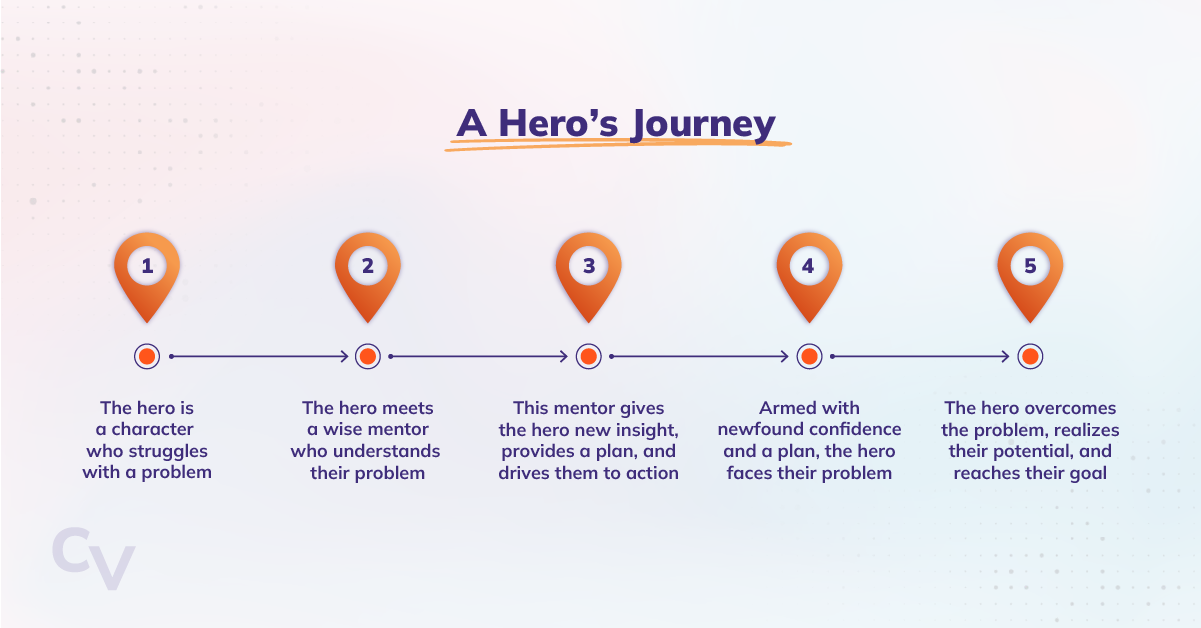
A typical hero’s journey goes something like this:
The hero’s journey is a classic storytelling model that improves outcomes when applied to sales conversations.
Many sellers instinctively position themselves or their product as the hero—the expert who understands the buyer’s world and leads the charge to victory. It feels natural to use inclusive “we” language, suggesting that you and your buyer are in it together. But that’s a mistake.
What the Science Shows:Emblaze research on you-phrasing reveals that small shifts in pronouns can make a big difference in persuasive impact. Messages written in “you” language—where the buyer is the active subject of the story—make prospects feel more personally responsible and empowered to act.
The study found that switching from we-phrasing to you-phrasing increases a buyer’s sense of urgency and ownership. Why? Because you-phrasing casts the buyer as the hero of the story—the one facing the challenge, making the decision, and achieving the win. In contrast, we-phrasing positions the seller or the solution as the main actor, which unintentionally distances the buyer from the action.
Storytelling Sales Techniques That Work:
Put the Spotlight on Your Buyer: Replace phrases like “we will help you” with “you can.” Make the buyer the active subject in your messages and conversations.
Model the Hero’s Journey: Tell the story of a hero (your buyer) confronting a challenge and achieving their goals, thanks to the new insight and capability you provide.
Create Ownership: Use phrasing that makes the buyer feel personally accountable for solving the problem. Your role is a mentor. You guide and equip the buyer with what they need, but they still need to take action.
Key Takeaway: Your buyers must feel personally responsible for solving the problem in front of them. When you use you-phrasing to make them the hero of the story, you activate ownership and urgency to act.
6. Steer Pricing Discussions in Sales Negotiations
When it comes to pricing, perception is reality. Your buyers will always anchor on the first number they hear—and that number frames every pricing conversation that follows.
So, where should that anchor come from? If you’re messaging it right—from you. When you make the first offer and set the reference point, you shape how buyers perceive your value before negotiation even begins.
What the Science Shows: This dynamic is driven by a cognitive bias known as the Anchoring Effect. First identified by Nobel Prize–winning researchers Daniel Kahneman and Amos Tversky, anchoring describes people’s tendency to rely too heavily on the first piece of information they receive when making decisions under uncertainty.
Even when buyers know they’re being anchored, their brains can’t help but use that first number as a mental shortcut. Every subsequent discussion—discounts, concessions, comparisons—gets judged against that original figure.
That’s why it’s so important to set the anchor first. By positioning your first offer as a credible, high anchor within the buyer’s “range of reason,” you establish a reference point that makes your ultimate price feel fair, defensible, and worth it.
Learn more about negotiation strategy in this short video:
Price Negotiation Techniques That Work:
Know Your Three Numbers: Before any negotiation, your sellers must be crystal clear on:
First Offer: The highest defensible price within the buyer’s Range of Reason.
Target: The mutually satisfactory outcome that meets both sides’ success criteria.
Walk-Away Point: The minimum acceptable amount before the deal becomes unprofitable.
Start High—Within Reason: Open with the first offer. A high anchor sets expectations and strengthens perceived value.
Defend with Confidence: Ensure sellers can clearly justify the first offer with relevant proof points—outcomes, ROI data, or customer results that support your value.
Key Takeaway: When you set the first number in a pricing discussion, you set the frame. Establish a high, credible anchor that reinforces your worth, and you’ll shape how buyers perceive every number that follows.
7. Appeal to Emotions (Not Just Data)
There’s a longstanding myth that executives are strictly rational in their decision-making—influenced only by data, quantitative results, and ROI. But that’s simply not the case.
Even at the executive level, decision-making is deeply emotional. Rational analysis comes later—usually to justify a choice that’s already been made on instinct and emotion. That’s why leading with logic alone often fails to motivate change.
What the Science Shows: Emblaze research found that executives are just as influenced by emotion and framing as anyone else. In one study, decision-makers were asked to choose between two identical recovery plans after an economic downturn. The only difference was how each plan was framed:
Gain Frame: “This plan has a one-third probability of saving all three plants and all 6,000 jobs, and a two-thirds probability of saving none.”
Loss Frame: “This plan has a two-thirds probability of losing all three plants and all 6,000 jobs, and a one-third probability of losing none.”
Despite the message being mathematically identical, the results were striking: executives were 70 percent more likely to choose the risky option when the situation was framed as a loss rather than a potential gain.
This is the principle of Loss Aversion, a cornerstone of Prospect Theory (Kahneman & Tversky). Humans are two to three times more likely to take action to avoid a perceived loss than to pursue an equivalent gain. In other words, fear of loss is a stronger motivator than hope of reward.
Learn more about the research in this short video:
Executive Selling Techniques that Work:
Frame Inaction as a Real Risk: When presenting to executives, don’t just highlight upside potential—make the cost and risk of staying the same explicit and urgent.
Lead with Consequence, Follow with Control: First, reveal what’s at stake if they maintain the status quo. Then, show how they can regain control with your solution (but don’t jump into features).
Connect to Strategic Risk: Tie your message to high-level business imperatives—profit margins, market position, compliance, or reputation.
Create a Vision for Risk Resolution: Once you’ve exposed the threat, guide the buyer toward a clear, achievable path to eliminate it—with your solution at the center.
Key Takeaway: When you frame the status quo as a risk to be avoided, you trigger urgency at the highest level. Since you help them see and solve it, executives see the tangible value of your solution, and why they shouldn’t wait to approve the deal.
8. Don’t Challenge Existing Customers
For most companies, 70–80 percent of revenue comes from existing customers in the form of renewals and upsells.
Yet, nearly 60 percent of sales and marketing leaders admit they use the exact same messaging for renewal and expansion as they do for new customer acquisition.
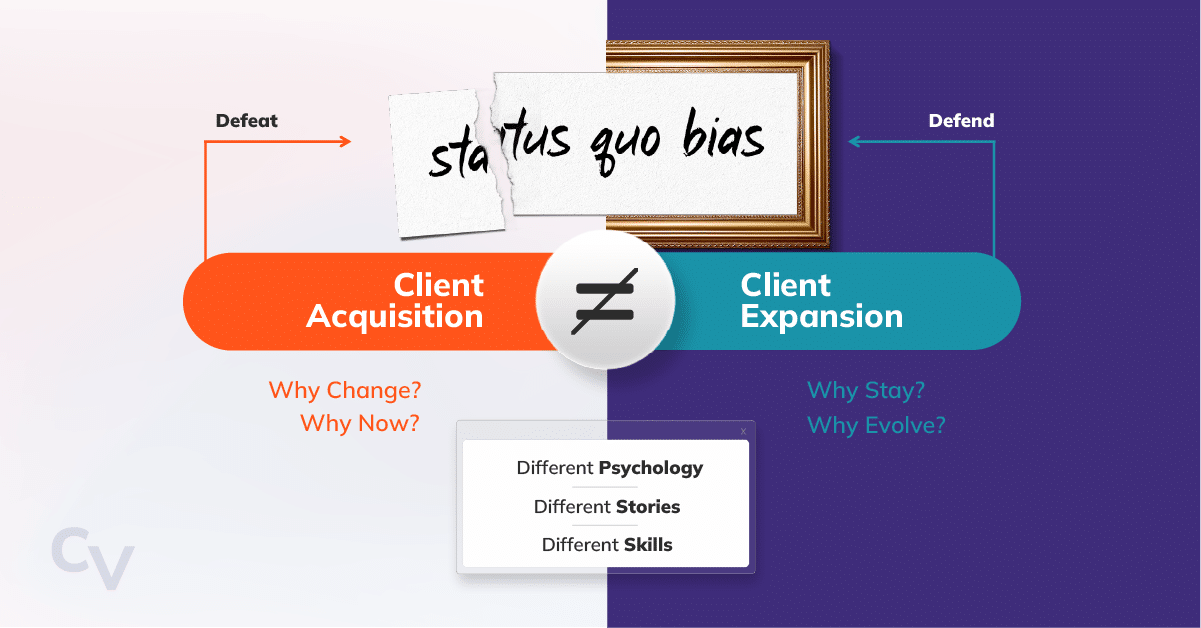
That’s a problem. Because the psychological motivations of customers could not be more different than prospects in a sales context.
What the Science Shows:Emblaze research found that renewal and expansion conversations require a completely different messaging approach. When you use the same provocative, challenger-style message you’d deliver to a new prospect—one designed to disrupt the status quo—you actually increase the risk that your customer will shop around by 10–16 percent.
Here’s why: When you’re selling to new prospects, you’re the outsider. Your goal is to challenge their current approach and create tension that motivates them to change.
But when you’re selling to existing customers, you’re the insider. You are the status quo. And your goal shifts from creating contrast to bolstering confidence. You need to reinforce your customer’s prior decision to choose you in the first place, and defend the stability and safety of staying with their status quo.
With prospects, use a provocative message to challenge their status quo. With customers, do the opposite and reinforce it.
Expansion Sales Techniques That Win Revenue:
Recognize the Role Reversal: As the incumbent, your mission is to protect your position, not disrupt it.
Create Confidence, Not Concern: Replace provocative tension with positive contrast. Show how staying with you is safer, smarter, and more rewarding than switching.
Share Hard Truths Tactfully: Share your perspective on the customer’s market position and how they can stay competitive from your position as a trusted advisor—building on the momentum you’ve already created together.
Key Takeaway: When you’re the outsider, disrupt the status quo. But when you’re the insider, you are your customer’s status quo. In expansion and renewal conversations, reinforce their natural Status Quo Bias and defend the reasons why you’re still the safest choice.
9. Take a Problem-Minded Approach to Discovery
By the time you meet, buyers have sifted through pages of content and compared vendors. They have an idea of what problem they need to solve—and they might feel confident—but they’re often wrong.
If your discovery conversations doesn’t align your solution to your buyer’s real problem, you risk reinforcing their flawed assumptions and pushing a solution that won’t help.
Discovery is a diagnosis, not a checklist. You win when you help buyers make sense of what’s really happening—separating symptoms from causes, and aligning on the problem they need to solve. Only then can you credibly connect your solution to the outcome they need.
What the Science Shows: Buyer feedback from over 150,000 deals shows the same pattern: poor needs discovery and misalignment on the problem statement are the most common and costly seller missteps.
In fact, sellers and buyers misalign on the problem statement 54.5 percent of the time. In wins, alignment jumps to 68 percent, while in losses, it plummets to just 23 percent. But when both parties are more confident in the shared problem statement, win rates improve by up to 38 percent.
Sellers who actively gain agreement on the problem buyers need to solve are using a problem-minded approach to discovery. This approach correlates strongly with higher win rates, yet only 12.9 percent of sellers adopt it.
Sales Discovery Techniques to Gain Alignment with Buyers:
Take a problem-minded approach to sales discovery by using the RE-ALIGN Framework:
Use the RE-ALIGN framework in discovery conversations to get you and your buyer in agreement on their main problem.
Research: Gather information about your buyer so you know what questions to ask in the discovery conversation—and why.
Evaluate: Review insights from previous conversations to develop a well-informed perspective on your buyer’s situation.
Ask: Understand your buyer’s view of their problem.
Listen: Demonstrate active listening, empathy, and adaptability.
Inspect: Assess your buyer’s confidence and accuracy.
Get Agreement: Align on the problem statement.
Next Steps: Plan your next move in the sales conversation.
Key Takeaway: When you help your buyer diagnose their situation better than they can on their own, you immediately elevate your value and establish yourself as a trusted advisor.
10. Build Consensus by Sequencing Sales Insights
The B2B buying process has become increasingly complex over the last decade. In 2024, 6sense found that the average buying group includes at least 10-11 stakeholders.
Decisions happen by agreement. If you want to win the deal, you need alignment across the group.
Consensus depends on collective memory—what the group remembers together. If stakeholders walk away recalling different details or interpreting your message differently, the process stalls. When you guide how they perceive, encode, and recall the information, you make it easier for them to align on a decision.
Control the sequence of your words, visuals, and ideas. When you present information in the right order, you prime buyers to remember—and act on—your message in a unified way.
What the Science Shows:Emblaze research found that information presented in a specific Data–Insight–Question (DIQ) pattern consistently produces stronger emotional engagement, higher motivation to act, and deeper trust among stakeholders. These buyers also showed greater brain synchronization, which led to more consistent recall of the core message, a critical ingredient for group agreement.
How to Use DIQ in Your Sales Presentation:
Data: Begin by sharing relevant data related to an external factor that’s important to your buyer’s business.
Insight – Next, turn that data into an insightful message by placing the information within the context of your buyer’s current situation.
Question – Only after presenting an insight should you ask a reflective question to provoke a dialogue.
Key Takeaway: When you control the flow of information using a DIQ structure, you increase your chances that multiple decision-makers will remember your message, come to an agreement, and decide to act on your solution.
11. Focus Attention to Build Memory
Buyers forget most of what they hear. In fact, research shows that after just 48 hours, they’ll remember only about 10 percent of your presentation. And if you don’t control that 10 percent, the little they remember will be completely random.
Neuroscience confirms that attention drives memory, and memory drives decisions. The more intentionally you guide your buyer’s attention, the more likely they are to recall—and act on—the what you want them to.
What the Science Shows: Research from cognitive neuroscientist Dr. Carmen Simon reveals how pivotal of a role memory plays in buying decisions. By shaping what buyers pay attention to, you ensure they walk away remembering exactly what you want them to do.
In one study, when presenters repeated their main message 20 times in a 20-minute presentation, nearly half (46 percent) of participants remembered that key point with precision two days later—compared to only 10% recall without deliberate repetition.
Research also shows that dynamic movement and annotation—rather than static slides—help sustain attention, reduce fatigue, and make complex information easier to process. And when presenters elaborate with relevant details instead of oversimplifying, recall increases by up to 24 percent, particularly with executive audiences who value depth and nuance.
Sales Techniques That Focus Attention and Improve Memory:
Identify your 10% Message: Define the single most important takeaway you want buyers to remember and repeat. Emphasize it with clarity, repetition, and supporting evidence.
Reinforce Through Repetition and Visuals: Repeat your 10% message both verbally and visually. Use slides, gestures, and tone to draw focus to it every time it appears.
Guide Attention with Movement: Use animation, annotation, or visual progression to keep your buyer’s brain engaged throughout your presentation.
Create a Consistent Theme: Build your presentation around a central metaphor or concept that visually and verbally reinforces your 10% message.
Add Relevant Detail: Don’t oversimplify. Adding meaningful, specific details helps the brain form richer, more retrievable memories.
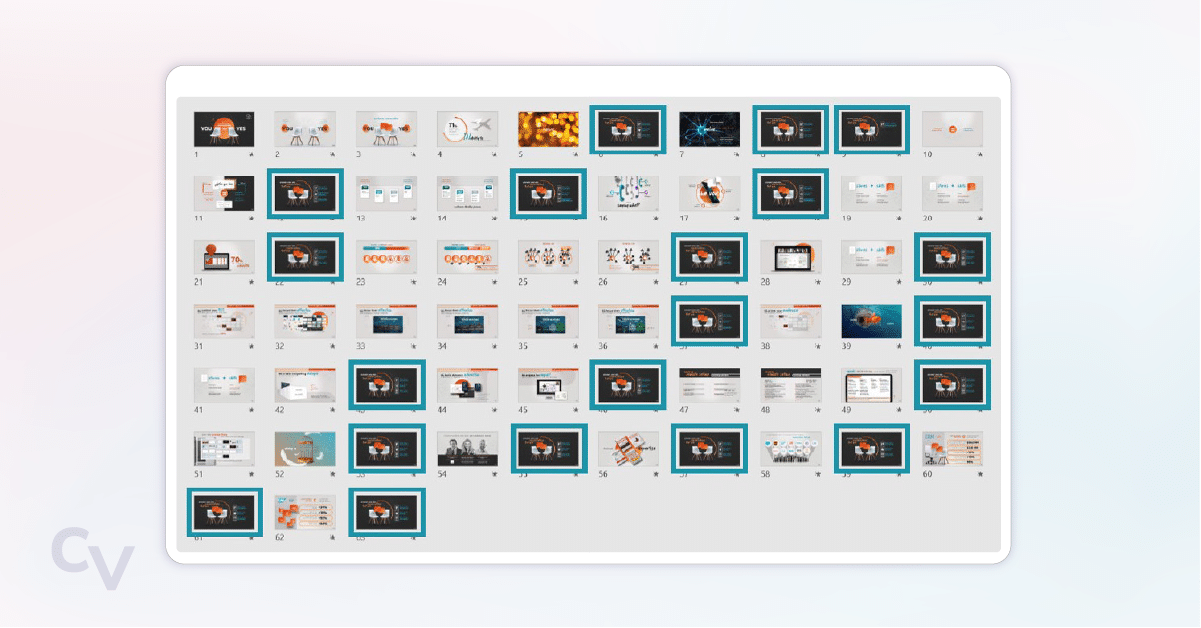
Repeat your 10% message throughout your sales presentation to help buyers remember your main message.
Key Takeaway: When you focus your buyers’ attention on the information that you want them to remember and act on, you can better guide them to make a decision in your favor.
Sales Techniques Backed by Decision Science
So-called “best practices” won’t hold up across the range of buying decisions you need to influence in the Customer Deciding Journey. Your buyers’ questions, behaviors, and motivations change from one moment to the next.
If you truly want to improve how you sell, you need to master a diverse set of sales techniques like these, sharpened with situational awareness to know when and how to adapt to each situation.
Most sellers claim to sell with insights, but few do it well. See what separates visionary insights from recycled analyst data, and how to deliver them so buyers act.
Learn how precise sales prospecting helps sellers build better pipeline by building a digital presence, earning qualified meetings, and winning back lost customers.
Tim Riesterer, Chief Strategy Officer at Corporate Visions, is the sought after expert on evidence-based revenue growth using counterintuitive approaches. Known for his candid thought leadership and engaging keynotes, he’s spent decades testing and refining go-to-market strategies that put buyers squarely at the center. Tim is the author of four insightful books, including Customer Message Management, Conversations that Win the Complex Sale, The Three Value Conversations, and The Expansion Sale.
Master the Great 8 Sales Competencies
Analysis of buyer feedback from more than 150,000 B2B decisions shows that there are eight sales competencies that are most predictive of success when trying to win new logos. Learn what they are and how to coach your seller on each one.